
1,605 words, 8 minutes read time.
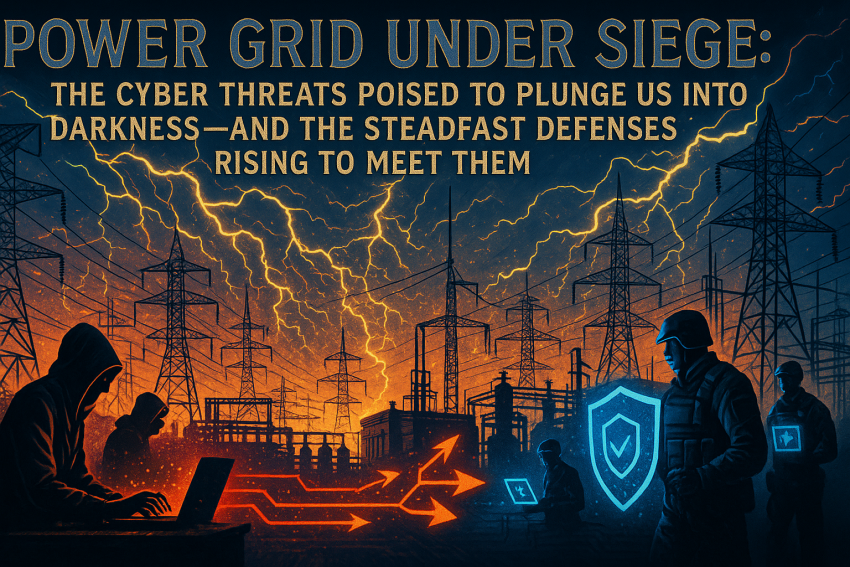
In the high-stakes arena of cybersecurity, the electric grid commands attention like no other target. It’s the unyielding backbone sustaining our daily lives—from the local gathering spot to the emergency rooms that stand as beacons of hope. Disrupt it, and it’s far more than a temporary flicker; it’s a cascade of uncertainty—communities stalled in shadow, challenges multiplying in the quiet hours, and the deep call to steadfast resolve to keep the flow unbroken. Those high-stakes exercises we’ve seen unfold reveal how a single calculated breach can echo into widespread failure. These aren’t distant warnings whispered in meetings; they’re the deliberate strategies of determined foes—nation-states with unwavering focus, actors driven by disruption. In this straightforward reckoning, we’ll uncover the advances they’re making, the hard-earned wisdom from conflicts past, and the resolute safeguards we’re forging. If you’re a SOC analyst navigating endless streams of indicators or a CISO advocating for essential resources, this is your essential briefing. Let’s stand firm.
The Grid’s Exposed Flanks: Why It’s a Prime Target for Relentless Adversaries
Imagine the grid as a vast defensive network: towering substations as key strongholds, endless lines of transmission weaving through the terrain, and central command posts secured deep within. It’s designed for enduring strength, not elusive threats—aging SCADA systems from eras long past operating like trusted but weary sentinels, IT and OT environments intertwined in a complex bond, and dedicated teams stretched across vast responsibilities, where even a momentary oversight can shift the balance.
This structure offers clear openings to those who seek them. Regulatory frameworks like NERC’s standards provide vital structure in the U.S., but guidelines alone can’t outpace adaptive opponents. State-sponsored operations from afar, principled challengers with strong convictions, opportunistic groups—they all converge here because the consequences far outweigh the entry cost. Compromise the grid, and it’s not merely information at stake; it’s foundational stability shaken, communities tested, and enduring impacts felt across the board.
Verizon’s DBIR reports a 20% rise in incidents targeting the energy sector last year, with supply chains emerging as critical vulnerabilities. Spanning millions of miles, achieving perfect security remains an ideal, not a reality. Dismissing the risk? That’s an invitation we can’t afford.
The Adversary’s Arsenal: Cyber Tactics Primed to Overwhelm the Grid
Opponents don’t advance with overt declarations; they maneuver with precision and patience, slipping through unseen gaps. From patterns observed in numerous engagements, MITRE’s ATT&CK framework for ICS provides the clear map. In plain terms: these are the key maneuvers in their repertoire, matched with proven responses drawn from the field.
- Supply Chain Infiltration: Reminiscent of SolarWinds, but intensified. Compromised elements enter through trusted vendor channels, transforming HMIs and RTUs into hidden agents that subtly alter critical parameters like voltage. Response: Scrutinize suppliers thoroughly—adopt SBOMs in line with NIST SP 800-161 to trace and verify every component.
- Ransomware Onslaught: These operations extend beyond data isolation; they seize OT systems to amplify pressure, halting operations at pivotal moments. Groups following LockBit’s model: gain entry, secure control, demand resolution. Colonial Pipeline disrupted fuel; for grids, it’s widespread interruption. Monitor closely—deploy EDR solutions calibrated for ICS protocols like Modbus, identifying unusual patterns in protected segments.
- State-Sponsored Persistent Operations: The Ukraine precedent set by Sandworm—targeted lures delivering BlackEnergy, enabling remote control over essential functions. Extended presence: leveraging native system tools for cover, surges in DNP3 communications to obscure movement. For operators: Establish baselines for protocol activity; deviations signal the need for immediate action.
- DDoS Overloads: Saturate access points—ICS interfaces or perimeter gateways—to create diversions while deeper advances proceed. The 2007 Estonia events served as a stark example; today’s expanded IoT presence simplifies execution. Counter it: Implement traffic throttling and behavioral analysis—focus on rhythms and anomalies, not isolated events.
- Internal Compromises: The unforeseen ally—discontented personnel or inadvertent errors exposing access. Ponemon research indicates 30% of incidents originate from within. Fortify: Enforce zero-trust principles, treating every request for entry as one requiring validation.
- Exploits in Legacy Systems: Unaddressed weaknesses in established equipment like Siemens controllers, vulnerable to chained attacks akin to Stuxnet—linking software flaws to hardware manipulation for unintended consequences. Contain them: Apply network segmentation at a granular level, prioritize updates where possible, and isolate irreplaceable assets.
Commit these to memory. They’re the framework of the challenge—understand it, and you can counter it effectively.
Lessons from the Front: Incidents That Forged Our Resolve
Strength is refined in adversity. These grid encounters—examined in exhaustive detail—serve as enduring guides from the heart of the struggle.
Ukraine, the harsh winter of 2015: Coordinated efforts using KillDisk and BlackEnergy. Access via refined phishing, control over VPNs seized, essential switches disengaged—leaving 230,000 without power amid the cold. Dragos’ thorough review? Prolonged observation followed by tailored disruption tools. Key insight: Traditional separations fall short; actively pursue irregularities in ICS behavior with unwavering focus.
Oldsmar, 2021: A utility parallel to grid risks—remote tools like TeamViewer exploited, process adjustments pushed to hazardous extremes. Envision that in a power context: surges propagating, equipment strained beyond limits. Follow-up assessments highlighted multi-factor authentication and detailed logging as foundational steps. The boundary between stability and crisis is exceedingly narrow.
Colonial Pipeline, spring 2021: DarkSide’s grip on vital infrastructure—fuel shortages rippling across regions, everyday routines upended. The intrusion path holds direct relevance: phishing entry to elevated privileges to operational halt. Mandiant’s analysis: Extended undetected presence. For those in leadership: Prioritize structured exercises per CISA recommendations, customized to grid scenarios, conducted without fail each quarter.
These accounts aren’t mere history; they’re strategic blueprints. We learn, we strengthen, we press on.
Strengthening the Defenses: The Relentless Effort to Secure the Grid
From reflection to action. This isn’t about polished presentations; it’s collaborative determination, partnerships built through shared trials. CISA’s Joint Cyber Defense Collaborative brings together government and industry for timely intelligence sharing. NERC’s CIP standards establish core requirements—from boundary protections to timely disclosures—but sustained effort defines true security. NIST’s Cybersecurity Framework, adapted for ICS in SP 800-82, offers the roadmap: Identify risks, protect assets, detect threats, respond decisively, and recover with greater resilience.
In practice, adherence to the Purdue Model is non-negotiable: Clear divisions between IT and OT levels, enforced by one-way data flows to prevent reversal. Field-based collaborative exercises? Testing teams probe while defense teams refine—often revealing 40% gaps in detection capabilities. Solutions like the Dragos Platform actively seek out ICS indicators; we’re integrating them layer by layer.
On the global stage, the EU’s NIS2 Directive enhances accountability through stricter reporting; the U.S. Department of Energy invests billions in modern, secure infrastructure. The unyielding reality: SANS surveys show 50% shortages in OT cybersecurity expertise. We’re challenged on multiple fronts—but such trials build unshakeable capability.
Starting point: Conduct a full inventory of your ICS environment today. MITRE’s ICS ATT&CK matrix aligns threats to your specific landscape—accessible, precise, and essential.
Your Toolkit: Actionable Strategies for Grid Defenders
Weary from alert triage? Battling for boardroom support? Stepping into the arena for the first time? Here’s your refined set of measures—honed through experience, focused and direct.
- For Analysts: Integrate tools like Nozomi or Claroty for continuous OT oversight. Define normal operational patterns; any shift prompts deeper investigation. Essential addition: Link with CISA’s Automated Indicator Sharing for proactive intelligence—anticipation is your strongest ally.
- For CISOs: Present risks in clear, impactful terms—reference NotPetya’s $10 billion global toll as a compelling case. Advocate for zero-trust implementations: Identity verification as the cornerstone, effective across diverse systems. Build team readiness: Regular simulations develop instinctive responses.
- For Those Entering the Field: Pursue ICS-focused certifications such as GICSP. Participate in utility vulnerability programs—hands-on experience that builds true proficiency.
Security is a calling of endurance, gentlemen. Press forward with purpose.
Standing Watch: Ensuring the Grid’s Vital Pulse Endures
We’ve surveyed the field: Threats calibrated to disrupt our foundations, countermeasures shaped by faithful perseverance. And from the intensity of these engagements, one truth emerges—we prevail through unified determination. Not through flawless technology alone, but through disciplined vigilance, sound strategy, and the commitment to preserve what matters most. The established frameworks, the shared knowledge, the forward momentum: These are ours to uphold.
Your perspective? What’s the grid challenge that called forth your deepest focus—the indicator that demanded unwavering attention through the night? Or the defense that turned potential loss into victory? Share your insights in the comments; let’s build on each other’s wisdom.
Seeking more grounded perspectives from the field? Subscribe to the newsletter for direct, thoughtful updates: Join the Conversation. If you’re fortifying your operations or value further dialogue, connect with me: Reach Out.
Remain watchful, brothers. Together, we uphold the light.

Sources
- Verizon 2023 Data Breach Investigations Report (DBIR)
- NIST SP 800-82 Rev. 3: Guide to Operational Technology (OT) Security
- CISA Joint Cyber Defense Collaborative (JCDC)
- MITRE ATT&CK for Industrial Control Systems (ICS)
- Dragos Year in Review 2022: OT Cybersecurity Report
- NERC Critical Infrastructure Protection (CIP) Standards
- Mandiant Report: Colonial Pipeline Ransomware Attack
- ICS-CERT Alert on Ukraine Power Grid Attack (2015)
- SANS Institute: Operational Technology Security Workforce Challenges
- Ponemon Institute: Cost of Insider Threats Global Report 2023
- U.S. Department of Energy: Grid Modernization Initiative
- Schneier on Security: Cybersecurity for the Electric Grid
- CrowdStrike 2023 Global Threat Report
- Black Hat USA 2016: Weaponizing the Power Grid
- DEF CON 28: The Hacker and the State – Lessons from Stuxnet
Disclaimer:
The views and opinions expressed in this post are solely those of the author. The information provided is based on personal research, experience, and understanding of the subject matter at the time of writing. Readers should consult relevant experts or authorities for specific guidance related to their unique situations.