
1,010 words, 5 minutes read time.
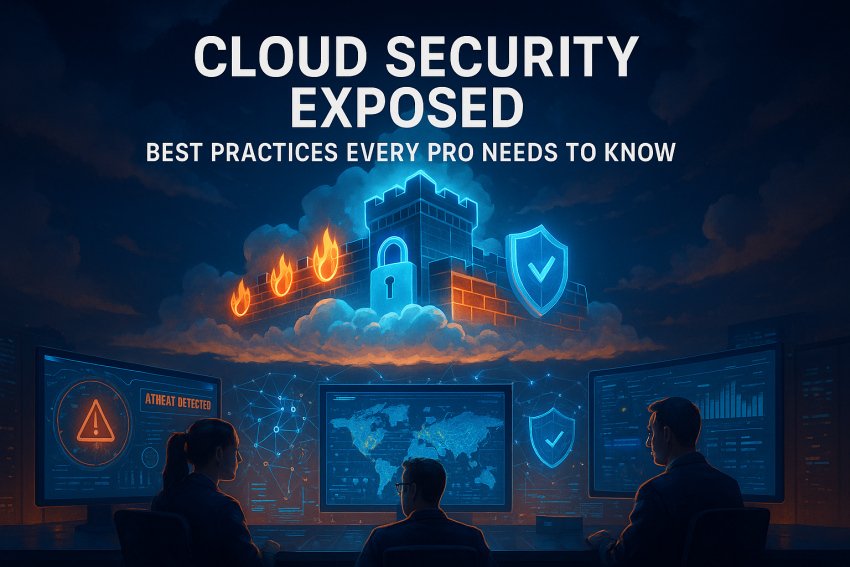
I’ve seen cloud misconfigurations that made me grind my teeth. I’ve been on incident response calls where a mismanaged S3 bucket led to a six-figure data leak before anyone even realized it. If you think the cloud is inherently safe because your provider says so, you’re playing a dangerous game. The reality is brutal: cloud security isn’t a checkbox—it’s a battlefield, and your data is the target. In this post, I’m going to walk you through cloud security best practices, including identity management, encryption, monitoring, and threat hunting, all based on real-world experience. No marketing fluff, no “cloud is magic” nonsense—just practical advice from someone who’s stared at alerts at 2 a.m. while wondering how a simple misconfiguration escalated into a full-blown breach.
Understanding the Cloud Security Landscape in 2025
The cloud isn’t a single entity; it’s a collection of models, each with its own risks and responsibilities. IaaS (Infrastructure as a Service) lets you manage the OS and applications while the provider handles hardware, but misconfigured security groups can expose critical services in seconds. PaaS (Platform as a Service) means you manage applications while the platform handles the OS; improper permissions can leak databases or pipelines. SaaS (Software as a Service) places most technical responsibility on the provider, but users remain the weak link. Weak credentials or successful phishing attacks can compromise the system.
Understanding the shared responsibility model is crucial. Security isn’t fully outsourced; you are accountable for what you put in the cloud, how it’s configured, and how it’s monitored. Real-world lessons include the Capital One breach of 2019, where firewall misconfigurations exposed sensitive customer data, and thousands of publicly exposed S3 buckets that prove human error is often the weakest link.
Foundational Principles for Cloud Security
Defense in depth is my first rule. You can’t rely on a single control; think of it as building multiple moats around your castle. Network segmentation, identity and access management (IAM), endpoint hardening, application security, and continuous monitoring must all work together to slow down and detect attackers before they reach sensitive data.
IAM is the gatekeeper of your cloud kingdom. Enforce least privilege, require multifactor authentication, and continuously audit for unusual activity. Overprivileged accounts are the open doors attackers love to walk through. Encryption is non-negotiable: protect data at rest, enforce TLS in transit, and rigorously manage keys. A compromised key is far worse than unencrypted data—it’s a master key to your kingdom.
Continuous monitoring and logging are lifelines. Cloud-native tools like CloudTrail for AWS or Activity Logs for Azure are powerful but require context and human oversight to turn raw data into actionable intelligence. Compliance matters too. HIPAA, GDPR, and PCI DSS aren’t bureaucratic hurdles—they define minimum standards that protect your organization and your users. Aligning your controls with regulations and auditing frequently is the difference between surviving an incident and paying millions in fines.
Practical Best Practices for Securing Your Cloud Environment
Infrastructure security isn’t just about firewalls or deploying a WAF; it’s about understanding network flows and failure points. I’ve responded to incidents where a single misconfigured security group exposed internal databases. One rule change could have prevented it entirely.
Application security needs to be integrated into DevSecOps from the start. Scan containers, enforce secure coding, and fix vulnerabilities before production. I’ve seen production containers exploited simply because automated scans weren’t enforced. Data security and backup strategies are your lifeline against ransomware and human error. Immutable backups, regular snapshots, and secure deletion procedures can save your organization. I’ve recovered systems in the cloud hit by crypto-ransomware, and the teams that survived unscathed had proper backups, tested and encrypted.
Proactive threat hunting separates amateurs from pros. Waiting for alerts isn’t enough. Search for unusual API calls, privilege escalations, and suspicious data exfiltration patterns. Cloud-native tools like GuardDuty or Security Center are useful, but context is king. Cross-reference logs, threat intelligence feeds, and MITRE ATT&CK techniques relevant to cloud workloads to prevent minor incidents from snowballing.
Never underestimate the human factor. Insider threats, credential phishing, and social engineering remain some of the most effective attack vectors in cloud environments. Education and monitoring are just as important as technical controls.
Common Mistakes That Put Your Cloud at Risk
Assuming the provider handles everything is the most common error. Ignoring insider threats, underestimating phishing, or mismanaging privileges can all lead to catastrophic breaches. Poor monitoring or alert fatigue means breaches can go unnoticed for months. The reality is simple: cloud security is as much about human discipline as it is about technology.
The Future of Cloud Security
The threat landscape is evolving. AI-driven attacks may automate misconfiguration discovery. Supply-chain attacks increasingly target cloud pipelines. Multi-cloud architectures create visibility challenges that demand unified policies and real-time monitoring. SOC teams will need automation, threat intelligence, and adaptive strategies to stay ahead of adversaries who are constantly evolving. Those who treat cloud security as a philosophy rather than a product will survive and thrive.
Conclusion: Build Your Cloud Fortress
Cloud security is brutal, but it is manageable if approached methodically. Focus on layered defenses, disciplined IAM practices, proactive monitoring and threat hunting, and solid data protection strategies. Implementing these practices consistently will help you sleep better at night knowing your cloud environment isn’t just a shiny facade—it’s a fortress.
Subscribe to my newsletter for more in-the-trenches insights: https://wordpress.com/reader/site/subscription/61236952. Share your experiences, lessons, or questions in the comments, and connect with me for consulting or further discussion: https://bdking71.wordpress.com/contact/.

Sources
- NIST Cybersecurity Framework
- CISA Cloud Security Guidance
- MITRE ATT&CK Framework
- CrowdStrike Threat Reports
- Verizon Data Breach Investigations Report (DBIR)
- KrebsOnSecurity
- Schneier on Security Blog
- Mandiant Threat Intelligence Reports
- DEF CON Conference Talks
- Black Hat Briefings
- ISACA Cloud Security Resources
- Gartner Cloud Security Research
- OWASP Cloud Security Guidelines
Disclaimer:
The views and opinions expressed in this post are solely those of the author. The information provided is based on personal research, experience, and understanding of the subject matter at the time of writing. Readers should consult relevant experts or authorities for specific guidance related to their unique situations.