
3,046 words, 16 minutes read time.
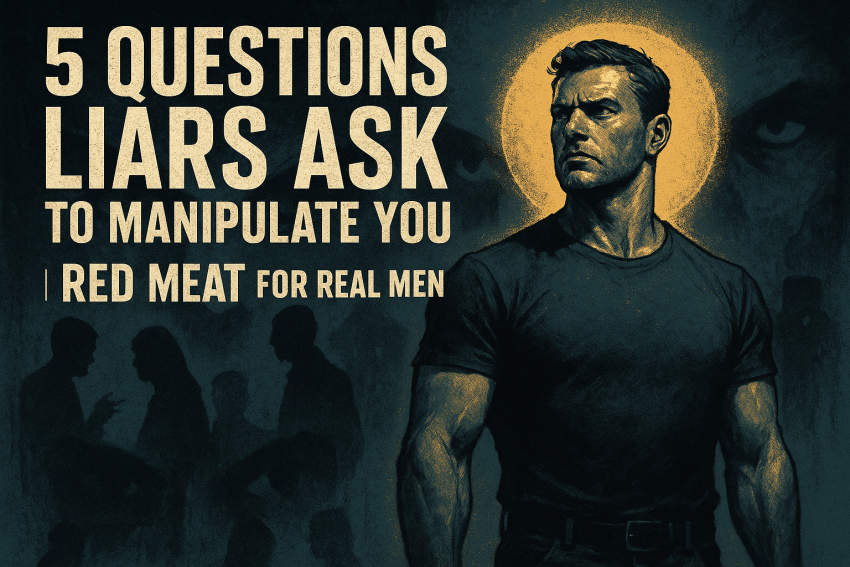
Ever been asked a question that felt innocent but left a pit in your gut? A smile. A soft tone. And the second you answer, you realize you just walked into a trap you can’t win? That’s the art of the liar. They don’t hit you head-on—they sneak in through words. And if you fall for it, you start doubting yourself, apologizing for things you didn’t do, fighting battles that aren’t yours to fight.
God’s Word calls deception what it is—poison. Jesus said it straight: “Then you will know the truth, and the truth will set you free” (John 8:32). Truth is freedom. Lies? Chains. Today, I’ll walk you through five of the most dangerous questions manipulators use—and show you how God equips a man to respond calm, strong, and unshakable.
Question 1: “Why Are You So Sensitive?”
Sounds harmless, right? Like they’re just worried about your feelings, maybe trying to “check in” on you. Wrong. This is the first bullet fired by the manipulator’s arsenal, aimed straight at your confidence and clarity. What they’re really saying is: “You’re weak. You’re imagining things. The problem isn’t me—it’s you.” It’s subtle, sneaky, and designed to make you second-guess everything you see and feel.
Think back. Relationships where pointing out something wrong gets brushed off with a laugh or a sigh. Work situations where questioning ethics earns the line, “Don’t overreact, it’s just business.” Friendships where you sense betrayal, only to be told, “You’re too sensitive.” That’s not care. That’s a weapon being aimed at your mind, your instincts, and your ability to protect yourself. It’s a trap, and if you fall for it, it’s easy to start apologizing for noticing the cracks in reality rather than holding the liar accountable.
But Scripture flips the script. Sensitivity is not weakness—it’s strength. Hebrews 5:14 tells us, “But solid food is for the mature, who by constant use have trained themselves to distinguish good from evil.” Awareness, discernment, the ability to see subtle danger—it’s what separates men who are prepared from men who are blindsided. Proverbs 27:12 warns, “The prudent see danger and take refuge, but the simple keep going and pay the penalty.” A man who notices the cracks others miss is not paranoid. He’s not imagining things. He’s alive to reality, and that vigilance is a weapon of protection, guided by God’s truth.
Think of the financial analyst who spotted the subtle inconsistencies in the books—mocked as paranoid—and later uncovered a multi-million-dollar fraud. The spouse who sensed a subtle shift in behavior, dismissed as “overreacting,” only to discover betrayal months later. In both cases, sensitivity saved what mattered most: integrity, trust, safety.
So next time someone throws that line at you—“Why are you so sensitive?”—don’t defend, don’t justify, don’t apologize. Stand tall. Meet their gaze with calm clarity. Say it like you mean it: “I’m not being sensitive. I’m being observant.” Three simple words, but they reclaim your power. They let them know that you see, you discern, and you are not to be manipulated.
Awareness is your weapon. Discernment is your armor. God gave you eyes to notice what others overlook, and wisdom to act on it. Stand firm, stay alert, and let truth guide your perception. A man who walks this way is not a victim—he is a sentinel, unshakable and ready for whatever comes.
Question 2: “You Trust Me, Right?”
Oh, here’s the classic: soft voice, expectant eyes, the words rolling off like a challenge disguised as concern: “You trust me, right?” Wrong. That’s not trust—it’s a demand. Trust is earned, not begged for. A man who pressures you for faith before proving himself is already showing his true colors. He’s not confident in his integrity; he’s hoping you’ll surrender your judgment, your discernment, your power.
The Bible calls out this exact dynamic. Matthew 7:15–20 says, “By their fruit you will recognize them.” 1 John 4:1 warns, “Test the spirits to see whether they are from God.” Trust isn’t a verbal promise—it’s a trail of consistent actions. It’s day after day proving that your word and your deeds match. A man who hides the numbers in the books or hides his phone while demanding faith is showing you that the fruit of his actions doesn’t line up with his words. That’s your cue: don’t hand over your trust blindly. Stand on God’s truth and your own discernment.
Picture it: a business partner who keeps books in shadows, a lover who dodges questions but leans in with a soft “You trust me, right?” Don’t flinch. Don’t panic. Don’t apologize. Recognize the manipulation for what it is.
Here’s your response: “Trust is earned through consistency. Are you asking me to ignore my judgment?” Boom. Just like that, the spotlight flips. You’re no longer the one bending, second-guessing, or panicking—you’re standing tall. They’re now forced to justify themselves, to show the fruit of their character, instead of hoping to exploit yours.
God equips a man to see clearly, to act decisively, to protect what matters. Proverbs 2:11 says, “Discretion will watch over you, understanding will guard you.” Trust wisely. Act boldly. Let God’s Word be your shield, your compass, and your sword. When you respond with clarity and confidence, manipulators lose their power, because their games only work on men who doubt their own eyes.
Question 3: “Are You Accusing Me of Something?”
Clever. Flip the frame. Suddenly, you—the seeker of truth, the man trying to understand reality—are cast as the villain. One moment, you’re raising a valid concern; the next, you’re being accused of attacking, accusing, or questioning them unfairly. It’s a classic manipulator’s trick. They want to shift the focus off their own behavior and make you doubt yourself, panic, or backpedal. They’re trying to make you feel small, defensive, even guilty for simply noticing what’s happening in front of you.
Proverbs 18:17 cuts through this tactic: “The first to speak in court sounds right—until the cross-examination begins.” The first person to claim the moral high ground often sounds convincing—until the truth is examined. This is exactly what manipulators exploit: they want you to be the first one to apologize, overexplain, or justify your feelings. But Scripture also shows us how to hold the line. John 18:23 tells the story of Jesus under false accusations: when confronted by lies and twisted words, He didn’t panic. He didn’t argue angrily or bow under pressure. He held the line. Calm. Clear. Unshakable.
This is the response God calls every man to cultivate. Silence is a weapon. Composure is armor. Don’t rush to fill the empty space with defensiveness or explanations. Don’t let their panic, guilt-tripping, or emotional manipulation dictate your pace. Hold your ground. Watch, observe, and let God’s clarity guide your response. Then, when the moment is right, speak—but do it with precision, not emotion: “Should I be?” Just three words. Simple. Direct. Unshakable.
Those three words do more than defend you—they flip the frame. Suddenly, the manipulator is forced to confront their own actions, because the spotlight is no longer on you. The game changes. Their plan to destabilize you fails because you are standing firm, rooted in truth and guided by God’s wisdom. This is not arrogance. It’s disciplined discernment. It’s the strength of a man who refuses to be baited into chaos.
Think about real life. A boss who tries to deflect responsibility by accusing you of being accusatory, a spouse or partner twisting your questions into attacks, a friend who gaslights every concern—these are the everyday battlefields where this tactic appears. Men who understand God’s truth and walk in integrity respond differently. They pause. They evaluate. They allow God’s wisdom to guide their words. They don’t react to manipulation—they respond with power rooted in righteousness.
James 1:19 reminds us, “Everyone should be quick to listen, slow to speak and slow to become angry.” That’s exactly what a man practicing this principle does. He listens, observes, and refuses to give power to lies. He doesn’t react impulsively. He doesn’t allow his emotions to control his response. Instead, he channels God-given discernment and authority into every word, every pause, every decision.
This kind of response isn’t weakness—it’s power under control. It’s the strength of a man who knows that truth is on his side and that God equips those who stand firm in righteousness. Manipulators thrive on chaos, on guilt, on panic—but when you respond with calm clarity, grounded in Scripture, they lose their power. They cannot operate in the light. They fear the man who sees clearly, because he cannot be shaken by lies.
So next time someone tries to flip the frame on you, take a breath, stand tall, and let God’s Word guide your response. Your silence is strength. Your composure is authority. And when you speak, let it be precise, unshakable, and rooted in truth: “Should I be?” Three words, but a lifetime of freedom and clarity begins the moment you speak them.
Question 4: “Would I Ever Lie to You?”
This question is designed to make you feel guilty for noticing inconsistency or dishonesty. “Would I ever lie to you?” On the surface, it sounds concerned, almost wounded—but the real reason it’s asked is fear. Fear of exposure, fear that the truth is coming to light. A person confident in their integrity doesn’t need to ask this. Their actions, day after day, prove their honesty.
The Bible reminds us that truth cannot stay hidden forever. Luke 8:17 says, “For there is nothing hidden that will not be disclosed, and nothing concealed that will not be known or brought out into the open.” Proverbs 19:9 warns, “A false witness will not go unpunished, and he who breathes out lies will not escape.” Lies cannot survive in the light, and God honors those who stand in the light.
When faced with this question, don’t get drawn into defending or reassuring the liar. Stand firm, grounded in discernment and faith. Your response should shift the focus back to reality: “The question is not whether you would lie. The question is whether your actions show honesty.” Three simple statements, but powerful. They place the burden of proof back where it belongs—on the person whose words and behavior don’t match.
Consider the practical applications: a colleague consistently missing deadlines but insisting, “Would I ever do anything wrong?” A partner caught in small deceits asking for blind trust. In each case, a man who walks in integrity doesn’t bend. He observes. He waits. He evaluates. He lets God’s truth guide his judgment. The liar cannot manipulate him because his power doesn’t come from emotion—it comes from God, from wisdom, and from the daily practice of living with honesty.
Truth is fearless. Lies fear exposure. And a man who walks in God’s light, anchored in discernment and conviction, cannot be shaken. Stand in truth. Watch for actions, not words. Let Scripture guide your eyes and your heart. When you do, you respond not with anger or defensiveness, but with authority, clarity, and peace.
Question 5: “Can’t We Just Move On?”
This is the final card in the manipulator’s deck. When denial and excuses fail, when distraction and charm no longer work, they try exhaustion. “Can’t we just move on?” On the surface, it sounds peaceful, like they’re ready to let go. But the real motive is control. They want you to quit asking questions, stop probing, and give up before the truth is exposed. They’re hoping your patience runs out, your resolve weakens, and your vigilance fades.
God calls men to stand firm in truth, not to let fatigue or pressure dictate justice and clarity. 1 John 1:9 reminds us, “If we confess our sins, He is faithful and just to forgive us our sins and to cleanse us from all unrighteousness.” And Ephesians 4:25 commands, “Therefore each of you must put off falsehood and speak truthfully to your neighbor.” Peace built on lies or avoidance is not peace—it’s deception. Real resolution only comes when the truth is faced, acknowledged, and acted upon.
Think about the practical examples. A company embroiled in scandal asks employees to “focus on the future, not the past.” A spouse tries to gloss over betrayal, urging, “Let’s just move on.” In both cases, the plea is not for healing—it’s for silence. It’s an attempt to bury the truth before it can be seen clearly.
As a man walking in faith, you do not bend to pressure. You do not let exhaustion dictate your judgment. Your response must anchor in truth and patience: “I’ll move on when I understand what happened, not before.” Strong. Simple. Firm. Three short sentences that declare: my peace is built on clarity, not convenience. My judgment is guided by God, not manipulation. My integrity cannot be rushed.
Walking in this kind of truth requires discipline, awareness, and courage. It’s the kind of strength that God rewards—the steadfastness of men like Joseph, who stood against temptation (Genesis 39), Nehemiah, who rebuilt walls despite opposition (Nehemiah 6), and Daniel, who refused compromise even in exile (Daniel 6). These men knew that surrendering to pressure or manipulation was never an option. They anchored their peace in God, in truth, and in courage.
So when someone tries to end the questioning too soon, when they demand your silence or plead for your compliance, remember: your responsibility is not to protect the liar from exposure—it’s to protect truth, integrity, and the people and things entrusted to you. Stand firm. Let God’s Word guide your judgment. Act with patience, courage, and clarity.
A man who refuses to be rushed, who demands clarity before moving on, is a man walking in God’s authority. Manipulators hate this because their games only work when you surrender to doubt, fatigue, or fear. When you remain steadfast, calm, and guided by Scripture, you reclaim your power. Your peace does not come from ignoring lies—it comes from facing them boldly, knowing God equips you to act in integrity.
Truth has no deadline. Lies have no power in the light. Stand unshakable. Speak clearly. Move only with understanding. That is the path of a man of God.
Men, This Is Your Call
Leadership, responsibility, influence—they make men targets. But God calls you to strength under restraint, awareness, courage, and action rooted in truth. Joseph didn’t cave to temptation (Genesis 39). Nehemiah didn’t stop rebuilding walls (Nehemiah 6). David faced betrayal with faith (1 Samuel 24).
Biblical masculinity is not aggression. It’s discernment. Integrity. Courage. Protection of what is entrusted to you—family, work, reputation, honor. A man rooted in Scripture is unshakable.
Walking as Men of Truth
Prayer, Scripture, accountability, brotherhood—these sharpen your discernment. Jesus faced traps and questions with authority (Luke 20:20–26). Your daily battlefield? Business. Marriage. Friendships. Every day is a test of truth versus deception.
Don’t react in fear or guilt. Respond with clarity. Let God’s Word guide your eyes, ears, and decisions. Stand firm. Speak truth. Protect what is right.
Conclusion: Stand Unshakable
The five manipulative questions—“Why are you so sensitive?”, “You trust me, right?”, “Are you accusing me of something?”, “Would I ever lie to you?”, “Can’t we just move on?”—are traps. But God gives men power, clarity, and courage.
Awareness is strength. Trust is earned. Guilt can’t replace truth. Peace follows accountability, not silence. Walk in Scripture. Walk in integrity. Stand unshakable.
Brothers, here’s your call: don’t let manipulation control your mind, your heart, or your home. Guard your awareness. Lead with courage. Live in truth.
If this hit home, subscribe to my newsletter, Join the conversation—leave a comment, share your story, or reach out directly. Stand firm. Choose truth. Choose God. Walk unshakable.

Notes from the Author:
Red Meat for Real Men
Ever had to deal with a liar? You know the type—they smile, act concerned, and somehow make you question yourself while they get away with everything. Men, let’s get real. Liars don’t just appear—they hunt for doubt, guilt, and weakness. They want you off balance, questioning your instincts, apologizing for noticing the cracks in reality.
You’ve got to stay sharp. Life isn’t soft, and the world doesn’t hand out mercy to men who fold under manipulation. That’s why I’m giving it to you straight. Here’s the hard truth every man needs to walk unshakable:
- Seeing the cracks isn’t paranoia—it’s protection.
- Sensitivity to danger is strength, not weakness.
- Trust isn’t given; it’s earned every single day.
- Don’t apologize for noticing what others ignore.
- Silence can be louder than a shout.
- Actions always outshine words—watch closely.
- Guilt is a weapon; don’t take the bait.
- Pressure is temporary; truth is permanent.
- Stand firm. Pause. Respond with clarity, not panic.
- Walk in God’s light—lies fear exposure, you don’t.
Take these lessons, memorize them, and make them part of your daily armor. Life will try to bend you, twist you, and make you doubt what you see. But a man rooted in truth and discernment doesn’t just survive—he dominates. He sees clearly. He acts decisively. He refuses to be manipulated.
Remember, walking in God’s light isn’t soft—it’s sharp. It’s strong. It’s unshakable. And that’s exactly the kind of man He calls you to be.
Sources
- Bible Gateway – Scripture in multiple translations
- OpenBible – Verses on Honesty
- GotQuestions – What does the Bible say about discernment?
- GotQuestions – What is spiritual warfare?
- Crosswalk – What is the Armor of God?
- Desiring God – Don’t Be Deceived
- Ligonier – The Bible’s Warnings Against Deception
- Focus on the Family – Recognizing Manipulation in Marriage
- Christianity.com – What Does the Bible Say About Lying?
- The Gospel Coalition – How to Spot a False Teacher
- Blue Letter Bible – Study Tools
- Christian Post – The Need for Spiritual Discernment
- GotQuestions – What are spiritual disciplines?
- Billy Graham Evangelistic Association – Truth and Lies
- CRU – Christian Devotionals on Growth
Disclaimer:
The views and opinions expressed in this post are solely those of the author. The information provided is based on personal research, experience, and understanding of the subject matter at the time of writing. Readers should consult relevant experts or authorities for specific guidance related to their unique situations.