
1,452 words, 8 minutes read time.

I was thirty-two when I hit rock bottom, but the descent had started years before. The man I used to be—Derek Vaughn—wasn’t someone you’d ever want to meet in an alley or a church pew. Angry, proud, violent, and loud about the righteousness I thought I had. My fists were quicker than my prayers, and my theology was just a weapon I used to cover the shame I didn’t want to face.
I grew up hard. The kind of hard where you learn to keep your emotions stuffed so deep they suffocate. My dad bounced when I was a kid, and I got used to being unwanted. Mom did her best, I think, but between boyfriends, drugs, and survival, she didn’t have much left for me. I learned from the streets and some bitter church men who preached sin louder than they lived grace. By the time I was twenty, I had carved out a version of Christianity that made me feel like I mattered—angry, judgmental, self-righteous, brutal. I called it truth. But it was just a mask.
You want the truth? I was full of hate. But hate feels powerful when you’ve never known love. And when you’re drowning in shame, power is the only thing that makes you feel like you won’t disappear.
I remember the night that changed everything. A man walked into a bar I used to haunt, one of those guys I’d always said didn’t belong in our country, let alone our town. I saw his face and felt the old fire rise. He looked like the type I’d been told was an enemy of God. I followed him out. I didn’t just beat him—I beat him for every ounce of pain I ever swallowed as a kid. When I stood over him, bloody and broken, I actually whispered, “I did this for You, Lord.”
A camera caught it. No surprise. I went to trial. The evidence was clear. They called it a hate crime. I called it judgment. The judge didn’t care what I called it. He gave me 12 years.
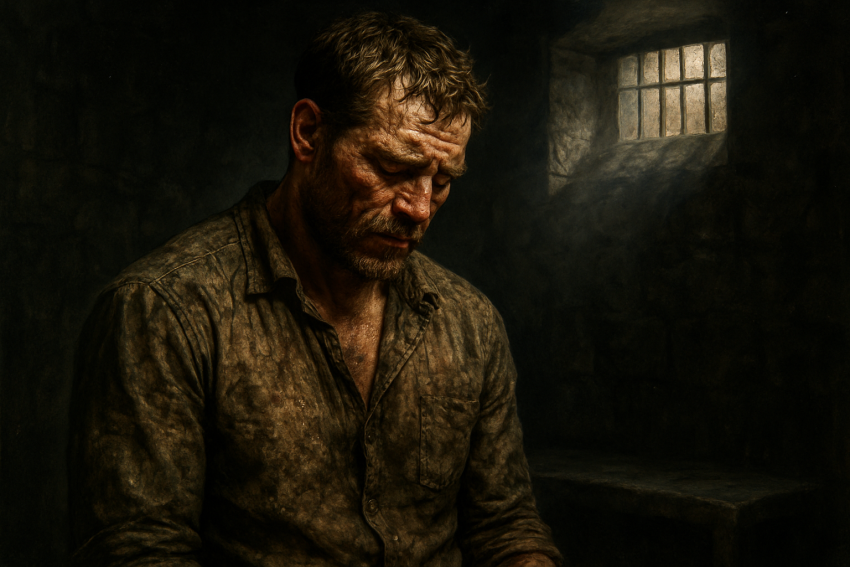
Prison stripped me bare. The first few months, I clung to my theology. Told myself I was a persecuted prophet. But alone in a cell, your lies start to rot. I couldn’t sleep. Kept seeing the man’s face. Then the dreams came—dreams where I was the one bleeding, crying for mercy, and no one came.
One day, I found a Bible in the chapel, dusty and untouched like me. I opened it, hoping to find verses I could use to reinforce my pride. But instead, I landed in Acts. Paul. The killer turned apostle. I read about him breathing threats, dragging people off in chains. And then Jesus knocking him off his high horse, blinding him, and asking, “Why are you persecuting me?”
I dropped the book. My hands were shaking. I knew that voice. I’d heard it in my cell, in my guilt. I’d been Saul. But would I ever be Paul?
Over the next year, I kept reading. Something shifted. I started confessing things I’d never said aloud. To God, then to a chaplain, then to other inmates. I joined a small group Bible study, all broken men like me. We didn’t know how to fix ourselves, but we figured maybe Jesus did.
I started preaching. First just testimonies in the yard. Then they gave me a room and a weekly service. I didn’t know what I was doing, but I knew what grace felt like. It felt like breathing for the first time in years.
Some guys mocked me. Others broke down crying. One night, a guy who used to run with a gang told me, “I thought I was too far gone until you opened your mouth. If God can use you, maybe He can still work with me.” That line stuck. If God can use me…
I got out after ten years on good behavior. Probation was rough. I couldn’t find steady work. Churches were polite, but cold. People remembered headlines more than testimonies. I almost gave up. Almost.
But I kept preaching. On corners, online, in halfway houses. When probation ended, I started getting invites out of state. I preached in places I once cursed. I told them about Saul. And I told them about Derek.
Sometimes people ask me, “Was it worth it? All the loss, the prison time, the shame, the nights you cried yourself to sleep wondering if God even heard you?”
Let me tell you about one night.
I was in a tiny chapel in a prison in Oklahoma. The A/C was busted. Sweat poured down my back as I spoke. A guy in the front row looked like he hated every word. Arms crossed. Scowl deep. But I kept going. Talked about how shame twists a man, how it makes you think you have to become something to matter. How God doesn’t ask for your strength—He asks for your surrender.
At the end, that same guy came up. Eyes full of tears. Said, “I was gonna end it tonight. Then you started talking like you knew me. You saved my life.”
Was it worth it?
Every second.
See, Paul said in 1 Timothy 1:15, “Christ Jesus came into the world to save sinners—of whom I am the worst.” That’s my verse now. And not in a false humility way. I know what I’ve done. But I also know Who called me.
So yeah, I still wrestle with shame. Some days it whispers louder than the truth. But I don’t fight it alone. And I don’t hide it anymore. I bring it to the foot of the cross, every day if I have to.
Because God’s not looking for perfect men. He’s looking for real ones. Men who will get honest. Men who will let Him redeem the wreckage. Men who will preach with scars instead of pretending they never bled.
I’m Derek Vaughn. I should be dead, or worse. But I’m alive. And I’ve got a story to tell. Maybe it sounds a little like yours. If it does, maybe this is your knock off the horse. Maybe Jesus is asking you, “Why are you still running?”
Don’t wait for prison to hear Him.
He’s calling you now.
Author’s Note
Derek Vaughn’s story is a modern-day version of what happened to the Apostle Paul—a guy who was violent, prideful, and judgmental, but got knocked off his high horse by God in the most brutal way possible. Like Paul, Derek wasn’t some perfect hero. He was a man fighting his own demons, drowning in shame and inadequacy, trying to act tough and in control but falling apart inside.
That’s the real fight for so many men today—the battle against feeling like you’re not enough. Society tells us to be strong, to man up, to keep our weaknesses locked away. But all that does is pile shame on shame, and before you know it, you’re so deep in your own lies and excuses that real life slips through your fingers. Derek’s story doesn’t sugarcoat that. It shows the ugly truth about what happens when you hide behind pride, judgment, and a fake faith that’s just a cover for your brokenness.
Paul’s story from the Bible reminds us that God doesn’t need us to be perfect—He needs us to be real. Real about the mess, the failure, the fight inside. Derek’s journey proves that grace can find you in prison cells, in your darkest nights, in the wreckage of your life. But it demands one thing: honesty. Not just with God, but with yourself.
If you’re wrestling with shame, pride, or fear of being exposed, know this—it’s okay to be cracked. You don’t have to fake it anymore. God’s not interested in your perfect story; He’s after the real one, the one where you let Him in. So, if you’re ready to stop hiding, to face the truth, and to start walking in grace, then this story is for you.
I challenge you to lean into that messiness. Don’t run. Don’t fake it. Be real. Join the conversation and share your story, or just ask the hard questions. Subscribe to the newsletter and get connected with others who are done pretending. It’s time to stop running from grace—and start living it.

Sources
Disclaimer:
The views and opinions expressed in this post are solely those of the author. The information provided is based on personal research, experience, and understanding of the subject matter at the time of writing. Readers should consult relevant experts or authorities for specific guidance related to their unique situations.