
2,207 words, 12 minutes read time.
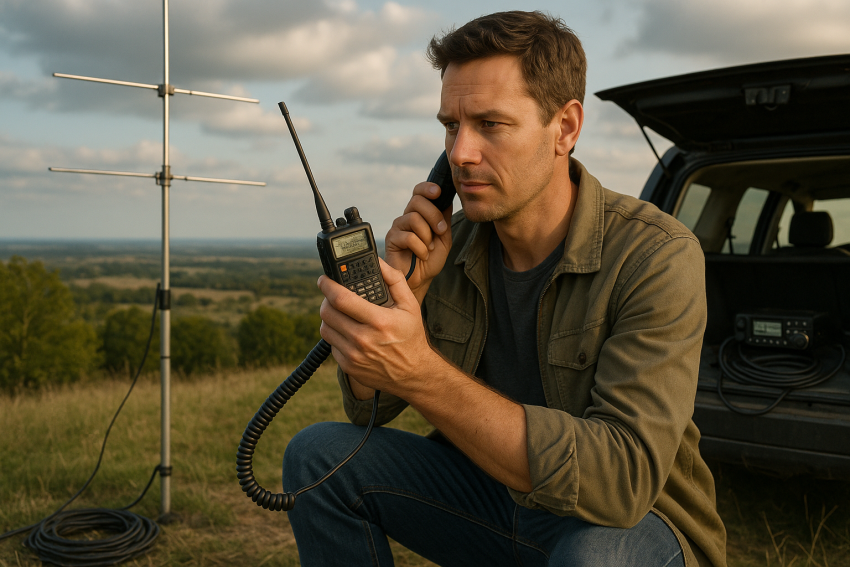
There’s a timeless satisfaction in building or tuning a piece of gear, throwing up an antenna, twisting the dial, and catching voices or Morse code signals from across the state—or halfway around the globe. For generations, men have found adventure, brotherhood, and challenge in the world of amateur radio. And though technology has evolved dramatically, the heart of the hobby beats just as strong. If you’ve ever felt that pull, odds are you’ve looked into getting licensed. But before you jump headlong into studying test pools and buying your first rig, it pays to truly understand the different classes of amateur radio licenses. Because in many ways, these licenses shape your entire journey through the hobby.
What follows isn’t just a dry catalog of requirements. This is a guide by someone who’s spent years in the ham community, has sweated through the exams, and still gets a thrill from hearing a distant station fade in over the noise. My goal is to help you see not only what these license classes are, but why they exist, what doors they open, and how you might chart your own course up the ladder—from local chatter to worldwide communication.
The Ladder of Licenses: Technician, General, and Amateur Extra
If you’re in the United States, the Federal Communications Commission (FCC) recognizes three active classes of amateur radio licenses: Technician, General, and Amateur Extra. Each class represents a new level of technical knowledge and privileges. You’ll also hear talk about older, discontinued licenses—Novice, Technician Plus, and Advanced—but those are no longer issued. We’ll come back to them later.
This three-step structure wasn’t always how things worked. Back in the golden era of ham radio, there were more rungs on the ladder, each designed to shepherd a newcomer from simple local contacts up to complex, worldwide operation with higher power and more modes. Over time, as the hobby modernized and fewer people were learning Morse code (once mandatory), the FCC consolidated the structure. Today, it’s simpler, but still rigorous enough to keep our bands vibrant and orderly.
Technician Class: The Gateway License
For most men stepping into amateur radio, the Technician license is their first milestone. It’s the entry-level credential, designed to ensure you grasp the basics of radio theory, operating practices, and FCC rules. The exam is a 35-question multiple-choice test pulled from a published question pool, which changes every four years. Topics range from Ohm’s Law to antenna types, band allocations, interference prevention, and simple electronics. Even if you’re not a tech guy by trade, with some steady studying, most people can pass in a month or two.
Holding a Technician license grants you access primarily to the VHF and UHF bands. That’s the 2-meter and 70-centimeter range—great for local communication via repeaters, emergency nets, and short-range simplex. Many hams start here because it’s immensely practical. You can set up a small dual-band handheld radio (an HT) or a modest mobile rig in your truck and start talking to local clubs, weather nets, or even check in on Skywarn nets during storms. This is also where most community emergency communications begin. Being a Technician doesn’t limit you strictly to local, though. Technicians have some limited privileges on the HF bands, including portions of 10 meters, where during periods of high solar activity, you can sometimes talk worldwide.
What’s especially rewarding is that from day one, you’re joining a vibrant local community. Most areas have active clubs who hold regular nets on repeaters, offer hands-on help, and organize events like Field Day. There’s a good chance you’ll find mentors—known in the hobby as “Elmers”—who love helping newcomers get their feet wet.
General Class: Opening Up the World
If Technician is about mastering local and regional communication, General is your passport to the globe. The General license exam is another 35 questions, but this time it dives deeper into theory: things like propagation, impedance matching, advanced regulations, and safety standards. Many find it a reasonable next step after a year or so of enjoying their Technician privileges, although plenty take both exams on the same day.
What makes General so desirable is that it dramatically expands your HF (high frequency) privileges. HF bands, ranging roughly from 1.8 MHz to 30 MHz, are where magic happens. Here, signals can refract off the ionosphere and skip thousands of miles, letting you work stations across continents or even snag a rare DXpedition on a remote island. Voice communications (SSB), Morse code (CW), and digital modes like FT8 or PSK31 all become daily possibilities.
A friend of mine once put it this way: “Technician makes you useful; General makes you adventurous.” There’s truth in that. With a General ticket, you can participate in contests that bring thousands of operators together on weekends, chase elusive foreign contacts to fill out your DXCC (100 countries worked) certificate, or simply ragchew with new friends from Australia to the Azores.
Amateur Extra: The Pinnacle of Privilege and Knowledge
If General is your global travel visa, Amateur Extra is like having a diplomatic passport. The exam is a 50-question test that covers the most advanced topics in amateur radio: complex circuit theory, advanced antenna design, digital protocols, intricate operating rules, and specialized safety considerations. For many, preparing for Extra is less about immediate need and more about pride and mastery—proving to themselves they can reach the top.
Holding an Amateur Extra license gives you full access to every piece of every amateur band allocated by the FCC. Some sub-bands, particularly prized for DX hunting and contesting, are reserved exclusively for Extras. For instance, portions of the 80, 40, 20, and 15 meter bands have Extra-only slices that can make the difference during pileups or when chasing that last needed entity.
There’s also a leadership aspect. As an Extra, you can become an accredited Volunteer Examiner (VE) at all levels, helping administer Technician, General, and Extra exams to newcomers. Many Extras also take on roles as mentors, club officers, or emergency coordinators, using their deep knowledge to serve both the hobby and their communities.
What About Those Old License Classes?
Spend enough time at a hamfest or chatting with older operators, and you’ll hear about Novice, Technician Plus, and Advanced licenses. These were part of the older multi-tier system that the FCC phased out between the 1980s and early 2000s.
The Novice was originally designed to give newcomers a taste of HF, requiring them to pass a simple code test. Technician Plus was essentially a Technician who also passed the 5 WPM Morse code test, granting them HF privileges. The Advanced license sat between General and Extra, with privileges slightly less than today’s Extra but more than General.
Though these licenses are no longer issued, many operators still hold them under “grandfathered” rules. They retain their privileges indefinitely. It’s part of the rich tapestry of amateur radio’s history—a reminder that the hobby has evolved alongside technology, but still honors its roots.
How Most Guys Approach the Progression
Over the years, I’ve noticed three common paths. Some take it slow and steady: start with Technician, spend a couple of years enjoying local repeaters and events, then gradually study for General when they’re ready for more. Others get bit by the bug hard and prepare for both Technician and General on the same day, aiming to jump straight into HF. And a smaller group studies intensively for all three, passing Technician, General, and Extra in a single testing session. This isn’t as rare as it sounds, thanks to abundant online resources and study apps.
There’s no right or wrong here. A lot depends on how much time you have, how deep your technical background goes, and what excites you most. Some men are content to master VHF/UHF and serve as emergency net controllers in their towns, never feeling the itch for international contacts. Others crave the challenge of chasing DX across noisy bands or building complex homebrew antennas to pull weak signals out of the ether.
The Role of Volunteer Examiner Coordinators (VECs) and the Testing Experience
Here’s something uniquely fascinating about ham radio: unlike many professional licenses, the exams aren’t run by the FCC directly. Instead, they’re administered by Volunteer Examiner teams—local hams certified through Volunteer Examiner Coordinators like the ARRL or W5YI. This grassroots system keeps testing frequent, local, and personal. Walk into a testing session, and you’ll often find a church basement or firehouse meeting room with folding tables, hams chatting warmly, and a relaxed but respectful atmosphere. Everyone there wants you to succeed; they’re not gatekeepers but facilitators of your entry into their community.
Tests are typically paper-based, graded on the spot, and if you pass one element, you can usually sit for the next higher class immediately. Some clubs even hold special “VE marathons” where you can take all three exams back-to-back. It’s efficient, friendly, and a testament to how much this hobby relies on volunteers.
Why Bother Upgrading?
I get this question a lot from Technicians who’ve happily run local nets for years. Why go for General or Extra? The most compelling reason is sheer possibility. HF operation is like opening a door to the world. There’s something deeply satisfying about hearing a faint signal from Tokyo or the Falkland Islands on your modest wire antenna and being able to complete a contact. It’s also an arena rich in technical experimentation. Building an HF antenna from scrap wire, tuning it to resonance, and logging a QSO with someone thousands of miles away is a thrill no Internet chat can replicate.
Extra takes this to the final level, offering not only every sliver of the bands but also credibility and opportunities to give back. As an Extra, you’re qualified to serve as a higher-level VE, helping others join or progress. You can also more easily participate in serious contest teams and DXpeditions, many of which expect operators to have the maximum privileges.
The International Angle
While this article focuses on U.S. licenses, it’s worth noting that most countries have similar tiered systems. Canada, for instance, has Basic and Advanced licenses, with Advanced granting more privileges. The UK issues Foundation, Intermediate, and Full licenses. These structures all aim to balance safety, technical competence, and access to valuable radio spectrum. It also means that once you’re licensed, many countries have reciprocal agreements allowing visiting operators to transmit abroad under certain conditions—a fantastic incentive for travel.
A Few Words from Other Hams
There’s wisdom in the wider community that’s too good not to include. On a popular Reddit thread, one ham advised newcomers: “Don’t buy a ton of expensive HF gear right away. Get your license, listen a lot, figure out what excites you most, and let that drive your purchases.” Another seasoned operator on QRZ.com shared: “The most fun I had early on was building simple wire antennas and comparing them. You learn fast what works—and what doesn’t.”
And ARRL CEO David Minster has said, “Amateur radio is unique in that it’s both a personal and a shared pursuit. You can be on a mountaintop alone making a contact with Argentina, or in a room with 50 club members running a Field Day pileup. But the license classes are the structure that makes it all possible.”
Where to Go from Here
If you’ve made it this far, you’re clearly serious—or at least deeply intrigued. Here’s what I’d suggest as your next steps. Find a local club (the ARRL website has a searchable directory), attend a meeting, and start asking questions. Most clubs offer study sessions or can point you to online resources like HamStudy.org or the ARRL License Manuals. Take practice tests to build confidence. And when you’re ready, sit for the Technician. Then keep the momentum going. Each new license isn’t just a certificate; it’s a key to new experiences.
A Warm Invitation
I’d love to hear from you. What are your goals in amateur radio? Have you started studying, or are you already enjoying local nets on your HT? Drop a comment below and share your story. And if you found this guide helpful, consider subscribing to our newsletter for more articles on gear, operating tips, and interviews with seasoned operators. Together, we’ll keep the spirit of amateur radio thriving for the next generation.

Sources
- FCC — Amateur Radio License Examinations (Technician, General, Extra)
- ARRL — Overview of U.S. Amateur Radio License Classes
- Ham Radio Prep — The 3 Levels of Ham Radio Licenses Explained
- Wikipedia — Amateur Radio Licensing in the United States
- Ham Radio School — Tech, General, or Extra License… What’s the Difference?
- University of Hawaii — Classes of USA Amateur Radio Licenses
- FCC — Operator License Classes (including grandfathered)
- Wikipedia — Volunteer Examiner Coordinator (VEC)
- Ham Radio Prep — Difference Between Technician and General Class
- Wikipedia — Amateur Radio (International Licensing)
- Reddit — Advice on Getting Started: Tech → Gen → Extra
- WIRED — There’s No Better Time to Be an Amateur Radio Geek
Disclaimer:
The views and opinions expressed in this post are solely those of the author. The information provided is based on personal research, experience, and understanding of the subject matter at the time of writing. Readers should consult relevant experts or authorities for specific guidance related to their unique situations.