
1,736 words, 9 minutes read time

Introduction
Let’s be honest—most men spend their lives chasing after something. A better job, more money, stronger muscles, the approval of peers, or even the quiet respect that comes from being a man who keeps his word. We want to stand for something bigger than ourselves, to live in a way that matters, to leave a mark our families can be proud of.
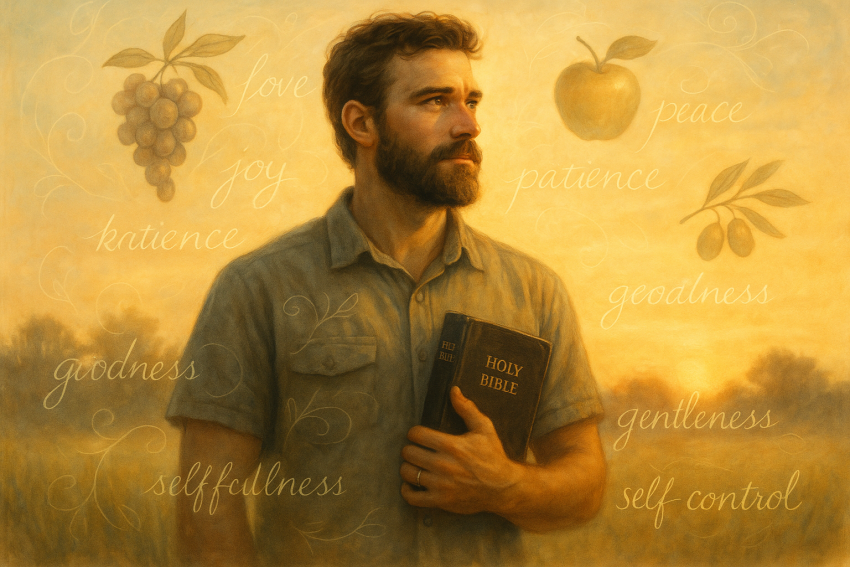
But as many of us have discovered, chasing after all the usual trophies often leaves us hollow. That’s because life isn’t ultimately about what we can accumulate, but about who we become. And there’s no clearer blueprint for the kind of men we were designed to be than the nine qualities found in an ancient letter written by the Apostle Paul: the Fruits of the Spirit.
In Galatians 5:22-23, Paul describes a set of virtues that naturally grow in those who walk with God. They aren’t just for churchgoers. They’re for any man serious about being the best version of himself—strong, steady, compassionate, and driven by values that won’t crack under pressure.
Today, we’ll explore each of these nine fruits in depth, how they can revolutionize your work, marriage, friendships, and inner life, and why even if you’re skeptical about faith, you’ll find wisdom here worth wrestling with.
The Biblical Foundations of the Fruits of the Spirit
It’s worth starting with the original context. Paul was writing to new Christians in Galatia who were tangled up in debates about rule-keeping, legalism, and appearances. They were trying to earn God’s favor by checking religious boxes—circumcision, food laws, festival observances—believing that external performance was what proved someone was godly.
But Paul turned all of that upside down. In Galatians 5, he said the real evidence of a life transformed by God isn’t rule-keeping at all. It’s character. It’s internal, not external. It’s about becoming someone so rooted in God that virtues like love, joy, and self-control naturally show up—like apples growing on an apple tree.
He contrasted this with the works of the flesh: envy, fits of rage, sexual immorality, drunkenness. The difference is striking. One list grows from living disconnected from God’s Spirit; the other is cultivated as we learn to rely on Him daily.
For men, this is crucial. We often pride ourselves on control, on being the masters of our own fate. But Paul suggests true strength doesn’t come from trying harder, but from surrendering deeper. The fruit grows in us as we keep in step with the Spirit (Galatians 5:25).
A Deep Dive into Each Fruit
Love
The first fruit, love, is the foundation for all the others. The Greek word Paul uses is agape—a selfless, sacrificial, unconditional kind of love. Not merely affection or attraction. This is the kind of love that acts for someone’s good, whether they deserve it or not.
For men, real love shows up when you stay patient with your wife after a long day, when you take time to wrestle on the floor with your kids even though you’re exhausted, when you stand by a friend during his lowest moment. It’s love that costs you something.
Jesus embodied this perfectly. And for men wanting to build a legacy, nothing outlasts love. Your career will fade, your bank account will eventually be spent, but the love you showed—day in and day out—echoes beyond your lifetime.
Joy
Joy is deeper than happiness. Happiness depends on circumstances—winning the big client, your kid scoring the goal, your team taking the championship. But joy is more resilient. It’s rooted in knowing who you are and who God is, regardless of shifting situations.
Imagine walking through a financial setback or a health crisis and still finding reasons to be thankful. That’s joy. It’s a settled assurance that God is good and still writing your story, even when the pages seem dark. Joy turns men into pillars of stability in their families and communities.
Peace
Men are under immense pressure—deadlines, bills, strained marriages, uncertainty about the future. Many of us walk around simmering with anxiety or irritation.
Peace doesn’t mean the absence of problems; it means calm in the middle of them. Jesus promised a peace “not as the world gives” (John 14:27)—one that stands firm even when life is spinning. For men, cultivating peace might look like choosing not to blow up at the kids, not to spiral into panic over work, or to sleep soundly because you’ve placed your worries in bigger hands.
Patience
We live in an age of instant everything: texts, streaming, overnight delivery. Which means patience is rarer—and more needed—than ever.
Patience is the ability to endure annoyances, delays, even injustices, without lashing out. It’s waiting for your wife to grow through her struggles without pressuring her. It’s coaching your kids without snapping when they make the same mistakes. It’s trusting God’s timing instead of forcing doors open. The patient man is powerful because he refuses to be a slave to impatience.
Kindness
Some men see kindness as softness, as something that makes you a pushover. But biblical kindness is intentional, courageous, proactive goodwill. It’s choosing to encourage your colleague when he’s overwhelmed, buying coffee for a stranger, or holding your tongue when sarcasm would be easy.
Kindness is surprisingly powerful. It builds bridges, disarms anger, opens hearts. In a world that often prizes harshness, kind men stand out.
Goodness
Goodness is moral integrity—being the same man behind closed doors as you are in public. It’s saying no to shady deals, not laughing at the crude joke just to fit in, choosing honesty even when it costs you.
Men with goodness earn deep trust. They become known as safe places, solid rocks. Goodness is a legacy that doesn’t tarnish.
Faithfulness
A faithful man keeps his word. He shows up when he says he will. He stays loyal to his wife, his kids, his friends, and his principles even when tempted to run.
In a culture that often discards commitments, faithfulness is radical. It’s the guy who still loves his spouse after decades, who sticks by his buddy in rehab, who refuses to cut corners at work. This fruit builds deep, life-long influence.
Gentleness
Gentleness isn’t weakness; it’s strength under control. It’s the man who could crush someone verbally or physically, but instead listens carefully. It’s holding your toddler’s hand tenderly, or speaking with calm wisdom in a tense meeting.
Gentleness turns mere strength into strength that serves others. And ironically, people respect and follow gentle men more than bullies.
Self-Control
Finally, self-control is the ability to master your impulses—whether that’s your temper, your sexual urges, your spending, or your phone addiction. Self-control guards all the other fruits. Without it, love becomes lust, joy becomes reckless pleasure-seeking, and patience becomes passivity.
A man with self-control is rare—and highly valuable. He can be trusted with responsibilities because he first governs himself.
What These Fruits Reveal About God’s Design for Men
These nine virtues aren’t arbitrary. They reveal God’s blueprint for authentic masculinity. The world often portrays men either as hyper-aggressive or emotionally detached. But God’s model is radically different: men who are courageous yet tender, strong yet humble, disciplined yet overflowing with love.
These fruits show that God designed men to be protectors, providers, and leaders who don’t dominate others but serve them. The best men reflect the character of Jesus—the ultimate example of a man fully alive, strong enough to face death itself yet gentle enough to weep with a grieving family.
How Even Non-Believers Can Benefit
Even if you’re not sure about God, the truth is these virtues stand on their own. Psychology backs them up. Studies show people with more gratitude (an extension of joy), patience, and self-control have healthier relationships and lower stress. Employers prize integrity and kindness. Wives and kids long for love, peace, and gentleness.
So whether you’re exploring faith or simply want to become a better man, these qualities are worth pursuing. They form the core of every meaningful relationship and successful team.
Challenges in Cultivating the Fruits
Let’s not sugarcoat it—it’s tough. These fruits don’t grow overnight. They require pruning, testing, practice. Often, God uses hard circumstances—financial struggles, marriage tensions, career disappointments—to develop them. It’s like lifting weights: the strain produces strength.
This is why Paul called it “walking by the Spirit.” It’s a daily partnership with God, asking for His help, admitting where we’re weak, choosing small moments of obedience that add up over time.
Practical ways to start include spending ten minutes each morning in quiet reflection or prayer, journaling where you lost patience or kindness that day, or finding another man to hold you accountable.
The Reward: A Life of Influence and Legacy
Men who cultivate these fruits change their families, workplaces, and communities. Your kids will remember your gentle patience more than your job title. Your friends will lean on your faithfulness. Your wife will cherish your kindness and self-control.
And long after you’re gone, your example will echo. That’s the kind of legacy worth building.
Conclusion: Your Next Step
So take a moment and ask yourself—what fruit needs the most attention in your life right now? Where do you see love or patience or self-control lacking?
Begin there. And if you’d like more encouragement and practical wisdom on becoming the man you were made to be, subscribe to our newsletter. We’d love to walk this journey with you.

Sources
- Bible Gateway – Galatians 5:22-23
- GotQuestions: What are the fruits of the Holy Spirit?
- Crosswalk: Understanding the Fruit of the Spirit
- Desiring God: The Fruit of the Spirit
- Christianity.com: What Are the Fruits of the Spirit?
- Bible Study Tools: 9 Keys to a Christian Life
- Blue Letter Bible: What is the Fruit of the Spirit?
- Ligonier Ministries: The Fruit of the Spirit
- Focus on the Family: Fruit of the Spirit
- PsychCentral: The Fruit of the Spirit (Practical Psychology Look)
- Pew Research: Religion & Public Life (Contextual Trends)
- The Gospel Coalition: Fruit of the Spirit & Christian Character
- The Navigators: Living Out the Fruit of the Spirit
Disclaimer:
The views and opinions expressed in this post are solely those of the author. The information provided is based on personal research, experience, and understanding of the subject matter at the time of writing. Readers should consult relevant experts or authorities for specific guidance related to their unique situations.