
1,699 words, 9 minutes read time.
You might think AI is something reserved for sci-fi movies, big data labs, or futuristic robots. But here’s the kicker: Artificial Intelligence is already deeply embedded in your daily routine, quietly powering many of the things you do without you even realizing it. If you’ve ever wondered how your smartphone seems to anticipate your next move or how your favorite apps seem to “just know” what you want, you’re already living in an AI-driven world.
This isn’t just some tech buzzword anymore. AI is reshaping communication, travel, entertainment, finance, health, and even how you relax at home. And if you’re a guy who’s into technology and innovation, understanding how AI blends seamlessly into everyday life is not just fascinating — it’s essential.
Let’s explore how AI is integrated into the life you’re living right now, often flying under the radar, and why it matters more than you might think.
The AI You Talk To (Without Realizing)
First off, think about how many times a day you interact with AI-powered communication tools. Voice assistants like Siri, Alexa, or Google Assistant are now household staples. They’re far from just gimmicks; they are sophisticated AI systems capable of understanding natural language, learning your preferences, and anticipating your needs. Ask your assistant for the weather, the news, or to send a text, and behind the scenes, AI is processing your voice, interpreting your request, and delivering a response almost instantly.
What’s impressive here is how these systems use natural language processing (NLP) and machine learning to get smarter over time. Instead of just recognizing keywords, they grasp the context, your tone, and even your habits. According to Forbes, AI enhances productivity by automating routine communication tasks, letting you focus on what really matters. You don’t have to memorize commands or deal with clunky menus; the AI adapts to your style, making the interaction feel almost human.
Beyond voice, AI helps correct your texts, predicts what you’re going to type next, and even filters spam from your inbox. Ever noticed how your phone suggests the perfect emoji or completes your sentences? That’s AI learning from billions of previous inputs to make your digital conversations smoother.
Businesses have caught on too. Chatbots powered by AI now handle customer service requests 24/7, providing instant answers and troubleshooting without human delay. It’s all about speed and efficiency, a pattern you’ll see repeated throughout the AI revolution.
Navigating Smarter with AI on Your Side
Traveling — whether daily commuting or weekend road trips — has been revolutionized by AI more than most people realize. The next time you check Google Maps or Waze, remember you’re witnessing AI crunching vast amounts of data: current traffic, accidents, road closures, even weather conditions. It’s not just static maps anymore; these apps actively predict traffic patterns and adjust your route in real-time to get you where you need to go faster.
Uber and Lyft use AI in even more complex ways, balancing supply and demand with dynamic pricing models. When prices surge during rush hour or bad weather, that’s AI at work managing the marketplace efficiently. Plus, matching riders to nearby drivers to minimize wait times and optimize routes is an intricate AI-driven dance happening every second.
The future is even more exciting with semi-autonomous vehicle features becoming mainstream. Adaptive cruise control, lane-keeping assistance, and emergency braking all rely on AI algorithms processing sensor data instantaneously to keep drivers safe. While fully self-driving cars aren’t yet the norm, AI’s role in automotive safety and convenience is undeniable.
Your Personalized Entertainment Curator
If you’ve ever marveled at how Netflix seems to know exactly what you want to watch next or how Spotify’s daily mixes hit your vibe perfectly, you’re experiencing AI-powered recommendation engines. These algorithms analyze your viewing or listening history, compare it with millions of other users, and predict what you’ll enjoy most.
This personalization is about more than convenience; it’s a game changer for content providers competing for your attention. As DigitalMediaNinja points out, AI recommendation systems “are crucial in enhancing user engagement and satisfaction.” They keep you hooked, discovering new content tailored to your unique tastes without endless scrolling or frustration.
Social media platforms use AI similarly. Your Facebook or Instagram feed is curated by AI that prioritizes posts it predicts you’ll find most engaging. While this can make your feed feel more relevant, it also raises questions about “filter bubbles” and how algorithms shape our perspectives. Awareness here is key to understanding the broader impact of AI.
Even your smartphone’s camera uses AI to improve photos by detecting scenes, optimizing lighting, and enhancing colors automatically. AI-powered apps now offer advanced editing features, giving anyone the tools to create polished images without professional skills.
How AI Makes Your Money Work Smarter
Online shopping is another area where AI quietly influences your decisions. The product recommendations you see on Amazon or eBay aren’t random; AI analyzes your past purchases, browsing history, and even trends among users with similar interests to suggest items tailored to you. This drives convenience but also nudges you towards purchases you might not have considered, illustrating AI’s power in e-commerce.
On the banking side, AI plays a crucial role in fraud detection. It monitors millions of transactions in real-time, spotting unusual activity and alerting you before a fraudulent charge goes through. These systems use pattern recognition and anomaly detection to protect your money continuously.
Pricing strategies for flights, hotels, and ride-sharing also depend on AI’s ability to forecast demand and adjust prices dynamically. For savvy buyers, understanding these mechanisms can help in timing purchases to get the best deals.
AI in Your Health and Fitness Journey
Wearables like Apple Watch and Fitbit are packed with AI that tracks your heart rate, sleep, and physical activity to offer personalized health insights. Rather than just logging data, AI interprets patterns and can suggest lifestyle adjustments to help you reach your fitness goals. This is personal coaching powered by data science, delivered right to your wrist.
Mental health apps are leveraging AI too, offering virtual assistants that guide users through therapeutic exercises or monitor mood changes. While not a replacement for professional help, they provide immediate, accessible support and help destigmatize mental health care.
In medicine, AI enhances diagnostic accuracy. Algorithms assist doctors by analyzing medical images, spotting issues earlier than human eyes might. This has been a breakthrough in areas like radiology, dermatology, and pathology.
AI Making Your Home Smarter
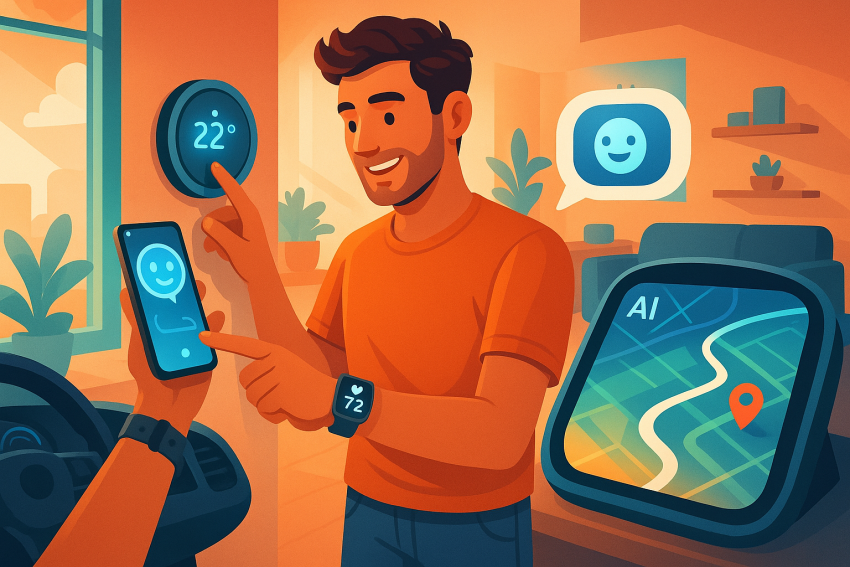
Your home is becoming a hub of AI-driven convenience. Smart thermostats learn your heating and cooling preferences, optimizing energy use without you lifting a finger. AI takes into account the weather, your schedule, and when you’re home or away, creating a comfortable environment while saving money.
Security cameras with facial recognition and unusual activity detection are becoming common, alerting homeowners immediately to potential threats. This technology reduces false alarms and improves overall home safety.
The ultimate vision is an interconnected smart home where lighting, climate, entertainment, and security systems work in harmony through AI — a lifestyle upgrade that feels like living in the future.
Ethics, Awareness, and the Road Ahead
As powerful as AI is, it’s important to recognize the ethical challenges it presents. Many people are unaware of how much AI influences their daily lives, raising concerns about transparency and control. The Pew Research Center reports that “many users are unaware of the extent to which AI influences their daily activities,” highlighting a gap in public understanding.
Bias in AI systems is a major concern. Since AI learns from historical data, it can inherit existing prejudices, sometimes resulting in unfair or discriminatory outcomes. Addressing these issues requires careful design, diverse data, and ongoing vigilance.
Privacy also comes to the forefront. AI’s effectiveness often depends on access to vast amounts of personal data, sparking debates about data ownership, security, and consent. Striking a balance between the convenience AI offers and protecting user privacy is crucial for maintaining trust.
Looking Forward: What’s Next for AI in Everyday Life?
The AI revolution is just getting started. Advances in generative AI, like GPT-4 and beyond, are pushing boundaries in content creation, coding assistance, and even art generation. Accessibility tools for people with disabilities, AI-driven environmental monitoring, and immersive augmented reality experiences promise to further transform daily living.
For those passionate about AI, staying curious and informed means not only benefiting from these technologies but also shaping the future responsibly.
Conclusion: Get Ahead by Understanding AI Today
Artificial Intelligence isn’t a distant future anymore; it’s a present reality quietly powering many aspects of your life. From the apps you use to how you travel, entertain yourself, manage money, and care for your health, AI’s impact is everywhere. By learning how AI works behind the scenes, you can better appreciate its benefits and stay alert to ethical questions and privacy concerns.
If this article opened your eyes to the AI that’s already in your pocket, your car, and your home, why not stay in the loop? Subscribe to our newsletter for the latest AI insights and updates, join the conversation by leaving a comment below, or contact me directly through the contact page. What AI-powered feature surprised you the most? Let’s talk!

Sources
- 10 Helpful Everyday Examples of Artificial Intelligence – IoT For All
- The 10 Best Examples Of How AI Is Already Used In Our Everyday Life – Forbes
- 17 Best Examples of How AI is Already Used in Our Everyday Life – DigitalMediaNinja
- Examples of AI in Everyday Life: The Unforeseen Impact on Society – Balto
- Ways You Are Already Using AI in Everyday Life – GovPilot
- 20 Uses of Artificial Intelligence in Day-to-Day Life – Daffodil Software
- AI—The good, the bad, and the scary – Virginia Tech Magazine
- The Robots are Already Here: 10 Ways You’re Already Using AI – Lifewire
- Applications of Artificial Intelligence – Wikipedia
- Public Awareness of Artificial Intelligence in Everyday Activities – Pew Research Center
- Artificial Intelligence in Healthcare – Wikipedia
- Artificial Intelligence in Social Media – Wikipedia
Disclaimer:
The views and opinions expressed in this post are solely those of the author. The information provided is based on personal research, experience, and understanding of the subject matter at the time of writing. Readers should consult relevant experts or authorities for specific guidance related to their unique situations.