
1,409 words, 7 minutes read time.
3D printing has exploded from a niche technology into a mainstream hobby and powerful industry tool. If you’re reading this, chances are you’re one of the many who’ve found joy in turning digital files into physical objects, whether it’s for cosplay, home repairs, collectibles, or small business ventures. But here’s something most printer enthusiasts don’t talk about until it’s too late: the law.
While it’s easy to get caught up in the thrill of your next print, the legal terrain surrounding 3D printing is anything but smooth. Intellectual property, firearms regulations, copyright law, and design rights all intersect in strange and unexpected ways once that extruder starts heating up. And lately, a string of real-life legal cases involving individual users—not just big corporations—has made one thing clear: just because you can print it, doesn’t mean you should.
Let’s take a detailed, grounded look at some recent legal incidents, how they played out, and what lessons they hold for the rest of us who love 3D printing. These are real cases with real names—and they show just how high the stakes can be.
One of the most widely publicized cases involving 3D printing and intellectual property was Disney Enterprises, Inc. v. Hotfile Corp.. Though the case did not involve 3D printing directly, it served as a precedent for takedown actions under the DMCA. Following that legal model, Disney and other IP holders have sent takedown notices to 3D printing platforms like Thingiverse to remove models that resemble proprietary characters and assets. In several incidents, creators of fan art models were forced to remove their uploads or face further legal action. This has become a pattern of enforcement, increasingly visible in the maker community.
In Align Technology, Inc. v. 3Shape A/S, the dispute centered on digital dental scanning and 3D printing patents. While this was a corporate-level battle, the rulings emphasized the enforceability of patents on digital and printable designs. For hobbyists replicating proprietary shapes or commercial products, this decision reinforced the risk of infringing design patents—even unintentionally.
Another case that hit close to home for many in the maker community was Stratasys, Inc. v. Microboards Technology, LLC. This case illustrated how even accessories and support systems in the 3D printing ecosystem can be protected by intellectual property rights. It signaled to hobbyists that using or replicating patented mechanisms—even those outside the actual print—could potentially draw legal scrutiny.
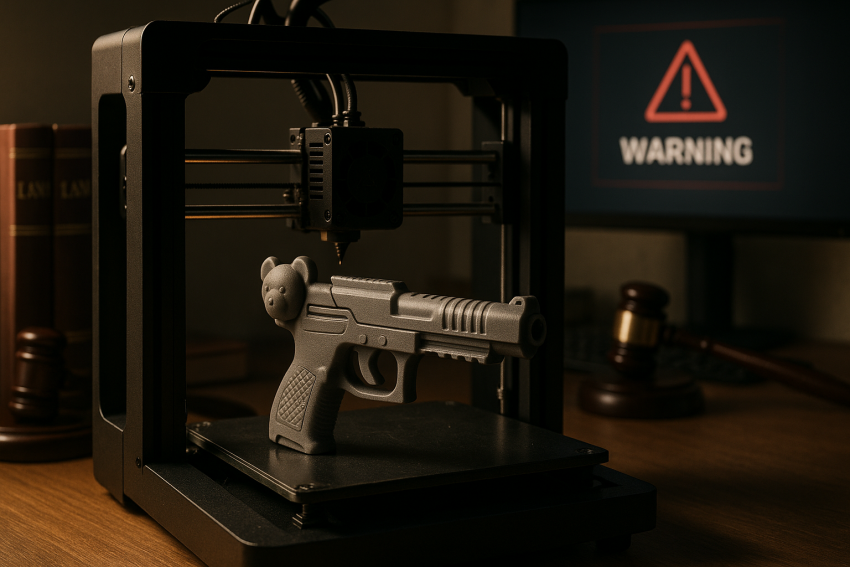
On the firearms front, Defense Distributed v. U.S. Department of State is perhaps the most infamous case involving 3D-printed guns. Cody Wilson and his organization Defense Distributed published downloadable files for 3D-printed firearms, sparking national debate. The government ordered the files to be removed, citing arms export regulations under the International Traffic in Arms Regulations (ITAR). The case bounced through courts and settlements until 2018, when the State Department agreed to allow Defense Distributed to publish the files—only to be halted again by several states suing to block the decision.
In a related matter, United States v. Eric McGinnis (2018), the defendant was convicted of unlawfully possessing a firearm made using a 3D printer. He downloaded blueprints for a .22 caliber pistol and manufactured the weapon at home. The court emphasized that even if made without traditional serial numbers, the firearm was still subject to the same laws. McGinnis was found guilty of unlawful possession of an unregistered firearm, making it clear that homemade, untraceable guns (also called “ghost guns”) can and will lead to prosecution.
In United States v. Joseph Roh, a judge ruled that a lower receiver manufactured in part with a 3D printer did not meet the legal definition of a firearm under federal law. However, this case had complex legal back-and-forth and ultimately raised alarms in Washington. The ATF and DOJ issued new clarifications and rules regarding 3D-printed components shortly thereafter, expanding enforcement against so-called “80% lowers.”
Another IP-centric case, Nike, Inc. v. Warren Lotas, though not about 3D printing per se, illustrates how aggressively companies defend the look and feel of their products. In 3D printing, mimicking the form of a sneaker or high-profile consumer product can invite similar lawsuits, especially if those products are sold commercially.
In UltiMachine, LLC v. Does 1-10, the company took legal action to stop the unauthorized distribution of firmware and designs used in their printers. The case underscored the legal protections that exist around software, circuit boards, and integrated systems used in 3D printing. Makers tinkering with firmware or cloning open-source boards need to understand licensing agreements carefully.
A more consumer-facing example is LEGO A/S v. Zuru Inc., where LEGO went after Zuru for toy products that too closely resembled their iconic block design. Although not directly tied to 3D printing, it again highlighted the risk hobbyists face when uploading and sharing toy-like models inspired by protected IP. Even with changes, the resemblance can lead to claims.
In Authentic Brands Group v. 3DPrintTech, the fashion licensing giant alleged that the company printed and sold products bearing unauthorized reproductions of brand logos and patterns. The case settled quickly out of court, but it made waves across Etsy sellers and small-batch 3D print shops, many of whom use logos without full knowledge of the risks.
These cases make it abundantly clear that ignorance is not a legal defense. Copyright, trademark, and patent protections apply whether you’re printing at home or manufacturing at scale. And when guns or regulated components are involved, the consequences can be criminal.
So how can makers stay on the right side of the law? First, avoid printing anything that looks like a weapon unless you’re absolutely certain it’s legal in your jurisdiction. Always read the licenses attached to 3D models before downloading or modifying them. Even Creative Commons licenses have variations—some allow for commercial use, others don’t. If you’re designing from scratch, steer clear of mimicking proprietary shapes, logos, or brand identities.
Platforms like Thingiverse, Printables, and Cults3D do their best to screen content, but it’s up to the user to follow the law. These platforms respond swiftly to DMCA takedown requests, and repeated violations can get your account permanently suspended. In some cases, companies have gone further, seeking user identities through court orders served to hosting platforms.
Another point hobbyists should note is liability. In the event your printed product causes injury—even if it’s based on someone else’s design—you may still be held responsible. Product liability laws are beginning to be tested in court for 3D-printed goods. Makers selling toys, tools, or household products would be wise to include disclaimers and ensure proper testing.
Insurance for 3D print shops and hobbyist sellers is starting to appear as a market, and it’s worth considering if you run a side hustle printing for others. Having proper records of where your designs came from, how they were modified, and who bought them can make all the difference in court.
In short, the age of carefree 3D printing is over. Whether it’s the courtroom drama surrounding 3D-printed firearms, takedowns over toys, or cease-and-desist letters for kitchen appliance replicas, the law is now fully engaged with maker culture.
But that doesn’t mean the future is bleak. With knowledge and care, creators can still innovate, share, and build within legal boundaries. The community just needs to level up its legal literacy.
If you’ve found this information helpful or have questions about a situation you’re facing, leave a comment below. And if you want to stay ahead of 3D printing news, legal updates, and community stories, make sure to subscribe to our newsletter. We’re all in this together—let’s print smarter.

Sources
- Markforged Ordered to Pay $17M for Patent Infringement (3DPrint.com)
- Stratasys Lawsuit Against Bambu Lab and Tiertime (3DPrintingNews)
- Defense Distributed v. U.S. Dept. of State (Wikipedia)
- Ghost Gun Case After CEO Assassination (NYPost)
- Albany Man Charged for 3D-Printed Guns (Times Union)
- Brentwood Man Charged for Making Machine Gun with 3D Printer (SF Chronicle)
- Star Athletica v. Varsity Brands (Wikipedia)
- Games Workshop vs. Valenty Warhammer Takedown (Wired)
- Loubie v. Just3DPrint (Finnegan)
- Stratasys v. Timothy Lee (IPLawMastery)
- Mega Man Model Copyright Dispute (AudioChamps)
- Golubev v. CanadaDrones.com (Michael Weinberg)
- Luigi Mangione Ghost Gun Case (Wired)
Disclaimer:
The views and opinions expressed in this post are solely those of the author. The information provided is based on personal research, experience, and understanding of the subject matter at the time of writing. Readers should consult relevant experts or authorities for specific guidance related to their unique situations.