
1,308 words, 7 minutes read time.
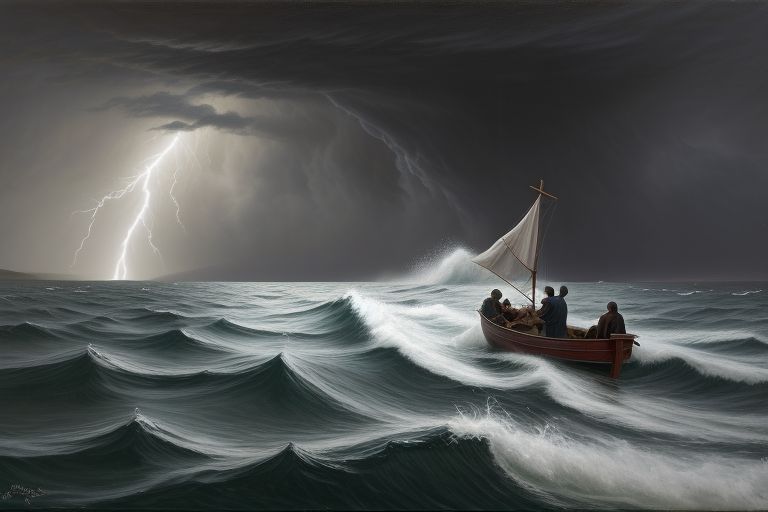
The Sea of Galilee had always been unpredictable. One moment, the water was still and serene, reflecting the moonlight like a sheet of glass. The next, the winds could shift, and violent waves would rise without warning. The disciples knew this well. Many of them had spent their lives on these waters, casting their nets, steering their boats, and reading the sky for any sign of change. But nothing could have prepared them for the storm that came that night.
It had been an exhausting day. Jesus had performed miracles, fed a massive crowd with just a handful of loaves and fish, and spoken words that stirred hearts and minds. But as night fell, He sent His disciples ahead of Him, instructing them to cross the sea while He withdrew to pray. They obeyed, though some felt uneasy. Something about the air, the distant rumbling in the sky, made the hairs on the backs of their necks stand up. Still, they pushed off from shore, their boat slicing through the dark waters.
At first, the journey was peaceful. The gentle creaking of the wooden vessel, the rhythmic splash of the oars, and the faint sounds of conversation created an almost lulling atmosphere. But then, as if on cue from some unseen force, the wind began to pick up. A gust swept over the boat, rippling the water and tugging at their robes. Someone made a passing remark about a coming squall, but no one expected what happened next.
Without warning, the sea turned violent. The waves rose and crashed against the boat, sending sprays of saltwater into their faces. The wind roared like a living thing, shrieking through the sails and snapping the ropes. The disciples, once confident sailors, now found themselves struggling just to keep the vessel from capsizing. Peter gritted his teeth as he pulled at the rudder, trying to steady their course. Andrew and James bailed water as fast as they could, but it felt useless—every wave dumped more back in.
Panic set in. The storm was relentless, unyielding, as if it had been sent to destroy them. Fear gripped their hearts, and in the chaos, an unspoken question rose among them: Where was Jesus? Why had He sent them into this? They had seen His power, His miracles, but now, at their most vulnerable moment, He was nowhere to be found.
Then, through the darkness, something appeared. At first, it was just a shadow against the chaos of wind and water. But as lightning streaked across the sky, illuminating the raging sea, they saw it clearly—someone was walking on the waves.
Terror took hold of them. Their minds could not comprehend what they were witnessing. Men do not walk on water. Was this a spirit? Some kind of omen? Voices rose in fear, their cries lost in the wind. But then, over the storm, came a voice—steady, calm, unmistakable.
“Take heart; it is I. Do not be afraid.”
It was Jesus.
Shock rippled through them, but disbelief still clung to some. Peter, ever the bold one, called out over the wind, testing what his eyes refused to believe. “Lord, if it is You, command me to come to You on the water.” There was silence for just a moment, then a single word from Jesus:
“Come.”
Peter’s heart pounded. The boat rocked beneath him, and the water raged ahead, but he obeyed. His hands trembled as he gripped the edge of the vessel and swung his legs over the side. The sea should have swallowed him whole, but it didn’t. Instead, his feet found something solid, something impossible. He was walking—walking on water.
For a few breathless moments, Peter’s eyes remained locked on Jesus. Step by step, he moved toward Him, the impossible unfolding beneath his feet. But then, reality crept in. The wind howled louder. The waves, towering and furious, demanded his attention. Fear took hold, and the miracle shattered. His faith wavered, and in an instant, he was sinking.
“Lord, save me!” The words were barely out of his mouth before a hand reached for him. Strong, sure, unwavering—Jesus caught him.
“O you of little faith,” Jesus said, His voice carrying a mix of love and gentle rebuke, “why did you doubt?”
And then, as suddenly as it had begun, the storm ceased. The wind died, the waves calmed, and the sea became as smooth as glass once more. Jesus and Peter stepped into the boat, and silence fell over the disciples. Their hearts pounded, but this time, it was not out of fear—it was awe.
They had seen Him heal the sick, feed the hungry, cast out demons. But this? This was something else entirely. Nature itself obeyed Him. The sea, the wind, the very laws of the world bowed before Him. In hushed voices, the disciples spoke the words that had been forming in their hearts for so long.
“Truly, You are the Son of God.”
As they reached the shore, something had changed. The fear that had once gripped them had been replaced with something else—trust. Their faith had been tested on the sea, and though they had faltered, Jesus had been there. He had never truly left them, not even in the storm.
It would not be the last time they would face trials. It would not be the last time their faith would be tested. But that night, on those waters, they learned a lesson that would stay with them forever. The storm had not been stronger than their God.
And neither would anything else ever be.
This story, taken from Matthew 14:22-33, is one of the most powerful moments in the New Testament. It’s a reminder of faith, doubt, and the presence of Jesus in the midst of life’s storms. The Sea of Galilee, known for its sudden squalls, serves as a perfect metaphor for the trials we all face. Sometimes, we set out on a path, believing we are doing exactly what we are supposed to, only to be hit by waves we never saw coming. Fear takes over, and we wonder where God is in the chaos.
But the truth is, He is always there. Even when we don’t recognize Him, even when we doubt, even when we start to sink, His hand is already reaching for us.
This story is often used to encourage believers to keep their eyes on Jesus, to trust Him even when life feels impossible. It’s a message that has echoed through generations, inspiring countless sermons, devotionals, and personal reflections. And it remains just as relevant today as it was that night on the Sea of Galilee.
So the next time you find yourself in a storm—whether literal or figurative—remember this moment. Remember Peter’s first steps, his faltering faith, and Jesus’ unwavering presence. Because no matter how strong the wind, no matter how high the waves, the same voice that calmed the storm still speaks today:
“Take heart; it is I. Do not be afraid.”

Sources
- Matthew 14:22-33 (Bible Gateway) – The biblical account of Jesus walking on water.
- What Can We Learn from Jesus Walking on Water? (Bible Study Tools) – A deeper study on the significance of this passage.
- Got Questions: What is the meaning of Jesus walking on water? – Explains the spiritual lessons behind the event.
- Why Did Jesus Walk on Water? (Christianity.com) – Discusses why this miracle was significant.
- David Guzik’s Bible Commentary on Matthew 14 (Blue Letter Bible) – A commentary with insights into the passage.
Disclaimer:
The views and opinions expressed in this post are solely those of the author. The information provided is based on personal research, experience, and understanding of the subject matter at the time of writing. Readers should consult relevant experts or authorities for specific guidance related to their unique situations.