
657 words, 3 minutes read time.
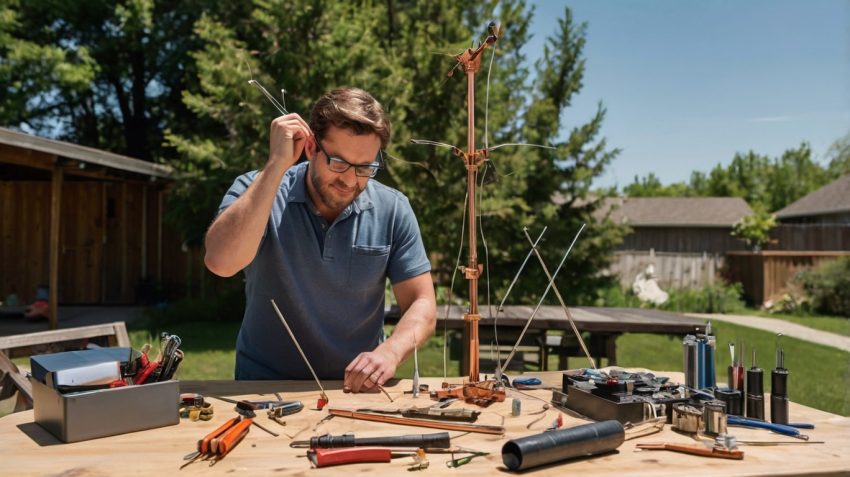
AI’s attempt to show someone building an attenna. (LOL)
Building your own antenna is a fulfilling project that not only enhances your understanding of radio frequencies but also improves your communication capabilities. Whether you’re interested in ham radio, enhancing your TV reception, or boosting your Wi-Fi signal, constructing a DIY antenna can be both cost-effective and educational. This guide provides essential tips and tricks to help beginners navigate the process of building their first antenna.
1. Understand the Basics of Antenna Design
Before diving into construction, it’s crucial to grasp the fundamental principles of antenna design. An antenna’s primary function is to convert electrical signals into electromagnetic waves and vice versa. The design and dimensions of an antenna are determined by the frequency it is intended to transmit or receive. For instance, a half-wave dipole antenna is approximately half the wavelength of the frequency it is designed for. Understanding these basics will guide you in selecting the appropriate antenna type for your needs.
2. Choose the Right Type of Antenna
Selecting the appropriate antenna type is essential for optimal performance. Here are some common types suitable for beginners:
- Dipole Antenna: A simple and effective antenna consisting of two equal-length elements. It’s versatile and suitable for various frequencies.
- Yagi-Uda Antenna: A directional antenna with multiple elements, offering higher gain and directivity. Ideal for long-distance communication.
- Vertical Antenna: An omnidirectional antenna that radiates signals in all directions, making it suitable for general-purpose use.
- Loop Antenna: A compact antenna design that can be made from a single loop of wire, offering good performance in a small footprint.
- Cantenna: A homemade directional antenna made from a metal can, commonly used to boost Wi-Fi signals.
Each of these antennas has its advantages and is suited to different applications. For a beginner, starting with a simple dipole antenna is recommended due to its straightforward design and ease of construction.
3. Gather Necessary Materials and Tools
Having the right materials and tools is vital for a successful antenna project. Here’s a list of essentials:
- Wire: Use copper or aluminum wire for good conductivity.
- Insulators: These prevent the antenna from touching other objects and help maintain its shape.
- Coaxial Cable: Connects the antenna to your radio equipment.
- Connectors: Ensure compatibility between your antenna and radio.
- Tools: Wire cutters, strippers, soldering iron, tape measure, and a multimeter.
Investing in quality materials and tools will enhance the durability and performance of your antenna.
4. Plan Your Antenna Installation Site
The location of your antenna significantly impacts its performance. Install it as high as possible, away from obstructions like buildings and trees, to minimize interference and maximize signal strength. Ensure the area is safe and accessible for maintenance.
5. Assemble the Antenna
Follow these general steps to assemble a simple dipole antenna:
- Measure and Cut: Determine the total length based on the desired frequency and cut the wire accordingly.
- Attach Insulators: Secure insulators at both ends of the wire to maintain the antenna’s shape.
- Connect Feedline: Attach the coaxial cable to the center of the antenna, ensuring a secure and weather-resistant connection.
Detailed instructions can be found in resources like the ARRL’s guide on building simple antennas.
6. Test and Tune the Antenna
After assembly, it’s crucial to test and tune your antenna for optimal performance. Use an antenna analyzer to check parameters like Standing Wave Ratio (SWR) and resonance. Adjust the antenna’s length and placement as needed to achieve the best results.
7. Maintain Your Antenna
Regular maintenance ensures your antenna continues to perform effectively. Inspect it periodically for damage, corrosion, and wear. Keep connections clean and secure, and replace any worn components promptly.
8. Learn from the Community
Engaging with the amateur radio community can provide valuable insights and support. Participate in forums, attend local club meetings, and seek advice from experienced operators. Websites like eHam.net offer articles and discussions on antenna building from various perspectives.
9. Stay Safe
Safety should always be a priority. When installing antennas, especially at heights, use
