
1,328 words, 7 minutes read time.
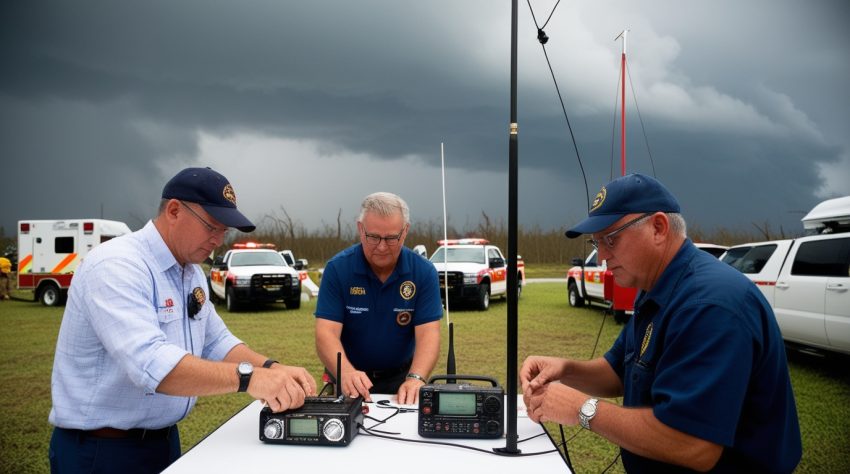
In times of crisis, when modern communication systems falter, amateur radio operators—often known as “hams”—step in to bridge the gap. Their dedication and expertise have proven invaluable during recent disasters, ensuring that vital information flows when it’s needed most. Whether it’s coordinating emergency responses, facilitating rescue operations, or simply relaying critical messages between agencies, these skilled volunteers provide a crucial link in the communication chain. They are often the unsung heroes, quietly working behind the scenes to keep communities connected when traditional systems fail.
Amateur radio, or ham radio, is a hobby for many, but during emergencies, it becomes a lifeline. Unlike cell towers and internet connections, which can be compromised by natural disasters, ham radios operate independently of centralized infrastructure. This independence is one of their greatest strengths, enabling communication even when power grids, satellite links, and wireless networks are offline. Operators can quickly set up portable stations using battery power, generators, or solar panels, ensuring uninterrupted service. Their ability to adapt to harsh conditions and innovate under pressure makes them a vital asset during disasters, where every second counts and reliable communication can mean the difference between life and death.
This capability to function outside the boundaries of conventional communication systems has made amateur radio a cornerstone of emergency preparedness worldwide. From rural communities prone to hurricanes to densely populated areas struck by earthquakes, ham radio operators have repeatedly demonstrated their value. Their ability to establish immediate connections, often linking local efforts with national or international aid, exemplifies the essential role they play in disaster management and recovery.
For instance, during Hurricane Helene in 2024, amateur radio operators in North Carolina played a critical role. With power and cellular networks down across vast areas, individuals like Thomas Witherspoon distributed handheld radios to neighbors, creating a makeshift communication network in real-time. These radios became lifelines, enabling residents to report emergencies, request supplies, and share critical information about road closures or flooding. In the absence of traditional communication methods, this grassroots effort provided a sense of stability and connectedness. The operators not only offered technical support but also reassured communities with their presence, demonstrating how local collaboration can thrive in the face of disaster.
Similarly, in the aftermath of Hurricane Maria in 2017, the American Red Cross turned to amateur radio operators to support relief efforts in Puerto Rico. With the island’s electrical grid destroyed and most communication infrastructure rendered useless, 50 amateur radio operators were deployed to establish reliable links between aid organizations and government agencies. Using their equipment, they relayed messages about supply routes, medical needs, and on-the-ground conditions, ensuring that help was directed where it was most urgently needed. Their work went beyond transmitting information; it was a lifeline for coordination, enabling faster response times and more effective resource allocation. These operators embodied the spirit of resilience, proving that when technology fails, human ingenuity and dedication can prevail.
Amateur radio also played a vital role during the Camp Fire in California in 2018, one of the deadliest and most destructive wildfires in the state’s history. With cell towers and internet services knocked out by the fast-moving flames, ham operators stepped in to assist emergency responders. They provided real-time updates about fire movement, relayed evacuation orders, and helped locate missing persons. Their ability to maintain communication in such chaotic and rapidly changing conditions was critical for saving lives and ensuring the safety of first responders.
In 2023, when a devastating series of tornadoes struck Mississippi and Alabama, amateur radio operators once again answered the call. The storms leveled entire neighborhoods, leaving thousands without power and severing conventional communication lines. Local ham radio clubs quickly activated emergency networks, coordinating with the National Weather Service and relief agencies to report storm damage and relay rescue needs. Their efforts ensured that isolated communities received timely support and vital information, showcasing the power of amateur radio to connect people even in the most desperate circumstances.
Amateur radio operators have been called upon in many more disasters across the years, stepping up when others couldn’t. Here are 15 notable instances, ordered by date:
- 2024: Hurricane Helene (North Carolina)
- 2023: Tornadoes (Mississippi and Alabama)
- 2022: Flooding in Kentucky (USA)
- 2021: Hurricane Ida (Louisiana, New York, and New Jersey)
- 2020: Wildfires in California (USA)
- 2020: Beirut Port Explosion (Lebanon)
- 2019: Cyclone Idai (Mozambique, Zimbabwe, Malawi)
- 2018: Camp Fire (California, USA)
- 2017: Hurricane Maria (Puerto Rico)
- 2017: Hurricane Harvey (Texas, USA)
- 2016: Hurricane Matthew (Caribbean and Southeastern USA)
- 2015: Nepal Earthquake (Nepal)
- 2014: Typhoon Haiyan (Philippines)
- 2012: Hurricane Sandy (East Coast USA)
- 2011: Great East Japan Earthquake and Tsunami (Japan)
This list demonstrates the global reach of amateur radio operators, who are consistently among the first to assist during disasters, providing critical communication when it’s needed most. Whether it’s floods, wildfires, or earthquakes, amateur radio continues to serve as a vital tool for disaster response worldwide.
The resilience of amateur radio lies in its simplicity and adaptability. Operators can power their equipment with car batteries, portable generators, or even solar panels, ensuring that communication remains possible even in the most remote or power-deprived areas. They can set up improvised antennas using readily available materials, such as long wires or metal poles, allowing them to transmit messages from virtually anywhere—whether it’s a damaged home, a field, or a makeshift shelter. This flexibility ensures that, no matter the disaster, amateur radio operators can provide a critical communication link when all other options fail. In a world increasingly reliant on complex infrastructure, the straightforward nature of ham radio allows it to thrive when the modern world’s technology is disrupted, proving time and again to be an irreplaceable asset during emergencies.
Moreover, the amateur radio community is well-organized and prepared for emergencies. Organizations like the Amateur Radio Emergency Service (ARES) and the Radio Amateur Civil Emergency Service (RACES) train volunteers to establish and operate communication networks for governmental and emergency officials during disasters. These organizations conduct regular drills and training exercises, ensuring that ham radio operators are ready to deploy quickly and efficiently in times of need. ARES and RACES work closely with organizations like the American Red Cross, FEMA, and local emergency management agencies, coordinating their efforts to provide seamless support when traditional communication channels are compromised. Their well-coordinated operations and professional demeanor mean that ham radio operators are always prepared to step in and provide a reliable network of communication during crises.
In addition to providing emergency communication, ham radio operators often assist with logistics, such as coordinating the delivery of supplies, relaying information about road conditions, or even locating missing persons. Their ability to communicate over long distances without the need for a central infrastructure allows them to cover vast areas, providing vital information to local emergency teams that may be cut off from larger networks. Many amateur radio operators are active in their communities year-round, building relationships with local government agencies and disaster preparedness teams, which enables them to offer specialized knowledge and assistance when disaster strikes. Their deep understanding of local geography, combined with their technical expertise, makes them invaluable assets in disaster response efforts. Whether it’s ensuring that food and medical supplies reach isolated communities or helping rescue teams navigate treacherous terrain, amateur radio operators continually demonstrate their ability to adapt, innovate, and serve in ways that go far beyond simply transmitting messages.
The increasing frequency and severity of natural disasters underscore the importance of amateur radio. As modern communication networks become more complex, their vulnerability to disruption grows. Ham radio operators, with their decentralized and flexible networks, offer a reliable alternative when other systems fail.
In conclusion, amateur radio operators play a crucial role in emergency communications. Their ability to provide reliable communication during disasters has been demonstrated repeatedly, from hurricanes in the United States to tsunamis in the Indian Ocean. As we continue to face natural and man-made disasters, the contributions of these dedicated individuals remain essential to public safety and disaster response efforts.
