
1,216 words, 6 minutes read time.
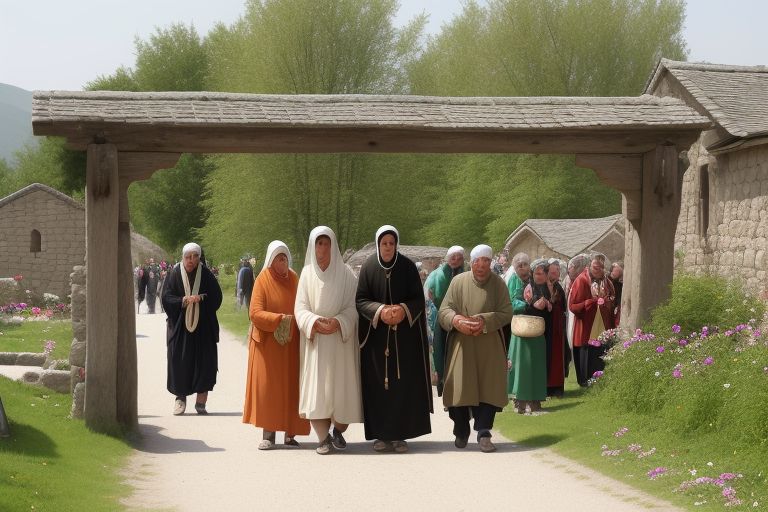
In the heart of Nain, a small village nestled among the hills of Galilee, a widow named Miriam faced the cruelest of fates. Life had not been kind to her, but she had learned to endure its challenges with quiet resilience. Years earlier, her husband, Ezra, a kind and devoted carpenter, had succumbed to a sudden illness. His death left Miriam alone to raise their only child, a son named Elior, whose name meant “My God is Light.”
Elior became Miriam’s reason to keep going. With his bright eyes and inquisitive nature, he gave her life a new purpose. As he grew, his kindness and intelligence won the hearts of everyone in the village. Miriam would often watch him at work in the fields or see him teaching younger children about the Scriptures, and she would think, This boy is a blessing from God. He will do great things one day.
But life’s cruel hand struck again when Elior fell ill. It began with a fever, and Miriam thought it would pass. She brought him water to cool his brow and recited the psalms to comfort him. “The Lord is my shepherd,” she whispered to him as he drifted in and out of sleep. But the fever persisted, and within days, Elior’s strength began to wane. He could no longer eat, and his once-bright eyes became clouded with pain.
Miriam tried everything she could. The village healer mixed herbs into bitter concoctions, but Elior’s condition did not improve. Miriam prayed fervently, begging God to spare her son. “He is all I have,” she sobbed one night, clutching her hands together until her knuckles turned white. But as the days passed, it became clear that Elior was slipping away.
On the seventh day of his illness, just as the first light of dawn spilled over the hills, Elior took his final breath. The room fell silent except for Miriam’s wails of grief. She cradled his still body, rocking back and forth as if she could will him back to life.
The villagers came to help prepare Elior’s body for burial. Miriam moved as if in a daze, her face pale and her eyes hollow. She felt like a ghost herself, hollowed out by sorrow. As the funeral procession began, she walked behind the bier, her steps heavy with despair. The villagers whispered their condolences, but their words felt distant and meaningless.
Then Jesus appeared.
He came from the other side of the town gate, walking with a group of followers. His simple robe and calm demeanor did not mark him as someone extraordinary, yet there was something about him that drew the eye. His gaze was steady, and his presence seemed to carry an unspoken authority.
Miriam barely noticed him at first, too consumed by her grief. But as Jesus approached, the crowd grew quiet. His eyes met hers, and in that brief moment, she felt something strange—an unexpected flicker of peace. He stepped closer and spoke, his voice gentle yet firm.
“Do not weep,” he said.
Miriam blinked, her tears momentarily forgotten. Do not weep? How could he say such a thing? Her son was gone. Her life, already marked by hardship, had been reduced to ashes. She wanted to cry out, to tell him how impossible his words seemed.
Then Jesus stepped forward, and the impossible began. He placed his hand on the bier, halting the procession. The crowd gasped, their shock rippling like waves through the stillness. Touching the bier was a bold act, one that defied social and religious norms. According to the Law, it would render him ceremonially unclean. But Jesus seemed undeterred, as if the rules that governed others held no power over him.
The air grew heavy with anticipation. Every eye was on him as he stood there, his hand resting on the bier. Miriam could hardly breathe. Then he turned his gaze to the lifeless form of her son and spoke words that would echo through eternity.
“Young man, I say to you, arise.”
For a moment, the world seemed to hold its breath. The wind stopped, and even the birds seemed to pause in their song. Then, against all logic, Elior stirred. His chest rose as he drew in a sharp breath, and his eyes fluttered open. He sat up, his face filled with confusion and wonder.
Miriam gasped, her hands flying to her mouth. She fell to her knees, overcome by a rush of emotions too powerful to contain. Tears streamed down her face as she reached out to touch her son, afraid it might all be a dream. But when her fingers brushed against his warm skin, she knew it was real.
The crowd erupted into chaos. Some shouted in amazement, while others fell to their knees, crying out praises to God. “A great prophet has risen among us!” they exclaimed. “God has visited His people!”
Jesus, calm and steady, helped Elior down from the bier and placed him in Miriam’s arms. She clung to him, sobbing into his shoulder, her grief transformed into a joy so profound it felt almost unbearable.
Elior, still dazed, looked around at the crowd. “Mother?” he said, his voice hoarse but alive. Miriam could only nod, holding him close.
The atmosphere in the village shifted from one of mourning to celebration. Some of the men began to dance, their feet pounding the earth in rhythm, while women sang praises to God. Children laughed and clapped, sensing the joy that radiated through the air.
Jesus watched quietly, a small smile on his face. He said nothing more, allowing the miracle to speak for itself. Then, without fanfare, he and his followers continued their journey. But the people of Nain would never forget what they had witnessed.
In the days and weeks that followed, the story of Elior’s resurrection spread far and wide. Travelers came from distant villages to hear the tale firsthand, to see the young man who had been brought back to life and to meet the widow whose sorrow had turned to joy.
Miriam, once a symbol of despair, became a living testament to God’s mercy and power. She spoke of Jesus with awe and gratitude, describing the moment he told her not to weep and how those simple words had marked the beginning of her transformation.
Elior, too, carried the miracle with him. Though he returned to his studies, he often shared his story, reminding others of the boundless compassion of the man who had given him a second chance at life. He saw his resurrection not just as a gift but as a call to live with purpose and faith.
For Miriam, the day Jesus touched the bier was more than a miracle. It was a moment when heaven itself seemed to reach down and intervene in her life. It was a reminder that even in the darkest valleys, there is hope, and that God’s light can pierce through the deepest shadows.
The day heaven touched Nain was one that no one who witnessed it would ever forget. For Miriam, it was the day she was given her son back, the day her sorrow turned to joy, and the day she knew—without a doubt—that she had encountered the presence of God.
