
5,313 words, 28 minutes read time.
The Nativity story of Jesus’ birth is one of the most cherished accounts in Christian tradition, weaving together themes of divine intervention, prophecy, and hope. Every December, millions around the world celebrate the birth of Jesus Christ, drawing from the familiar narratives found in the Gospels of Matthew and Luke. Yet, while this story is steeped in theological significance and holds deep cultural meaning, it’s also one that has sparked much discussion among historians, scholars, and theologians. How much of the Nativity story is rooted in historical fact, and how much is shaped by later theological reflection and tradition?
Throughout the centuries, various elements of the Nativity story have been scrutinized—questions about the details of the census, the role of King Herod, the journey to Bethlehem, and the famous Star of Bethlehem have all been debated. What about the humble setting of Jesus’ birth in a stable, the appearance of shepherds, and the visit of the wise men—how do these details align with the historical and cultural context of the time? Are they historically verifiable, or are they more symbolic representations of deeper spiritual truths? In this blog, we will explore the intersection of history, tradition, and faith, considering what we know about the birth of Jesus through the lens of both ancient texts and modern scholarship.
By analyzing the story of Jesus’ birth through historical, cultural, and theological lenses, we aim to shed light on the origins of some of the most popular aspects of the Nativity narrative. From the true meaning of the “inn” to the role of the shepherds as marginalized members of society, and from the mysteries of the Star of Bethlehem to the historical context of the Roman census—this exploration will offer insights into the ways the Gospel accounts were shaped by the realities of the time, while also reflecting the profound spiritual truths at the heart of Christianity.
Ultimately, we’ll reflect on the fact that while some details may remain uncertain or beyond the reach of historical verification, the message of Jesus’ birth remains clear and impactful. His arrival on earth, in humble circumstances, signifies the hope and salvation He brought to the world, and this truth continues to shape the lives of millions today. Join us as we journey through the historical evidence of the Nativity story and explore what really happened on that fateful night in Bethlehem.
The Birth in Bethlehem: Fact or Fiction?
The story of Jesus’ birth in Bethlehem is one of the most beloved narratives in the Christian tradition, with its deep theological and historical significance. According to the Gospels of Matthew and Luke, Bethlehem was chosen as the birthplace of Jesus, fulfilling the Old Testament prophecy of the Messiah’s birth in this small town, as foretold in Micah 5:2. However, over time, various misconceptions have arisen about the details of this narrative, particularly regarding the circumstances surrounding Jesus’ birth. This section seeks to address some of those misconceptions, from the nature of the “inn” to the way the Nativity is depicted in modern culture.
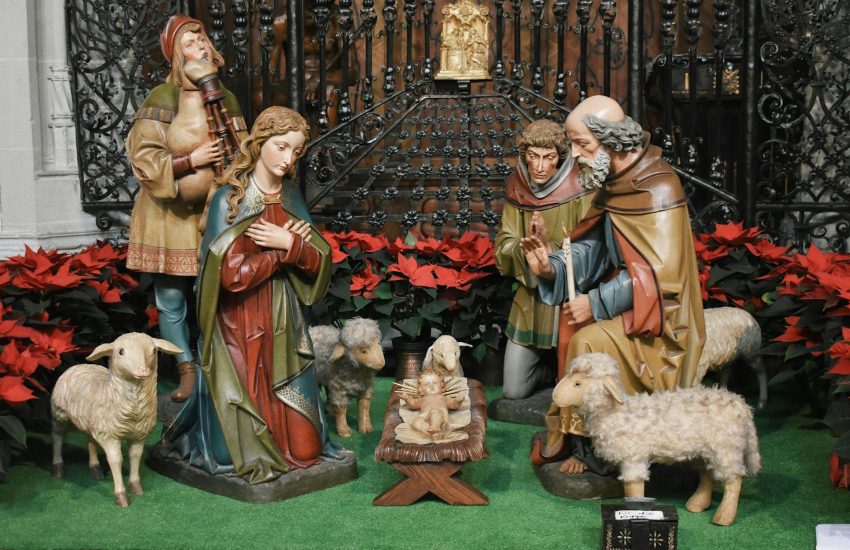
One of the most common misconceptions is the idea that Jesus was born in a “hotel” or a commercial inn, as is often portrayed in nativity scenes and popular media. The term “inn” in the Gospel of Luke (Luke 2:7) has led to some confusion. Many English translations of the Bible use the word “inn,” but the Greek word used in the original text is kataluma, which more accurately translates to a “guest room” or “upper room,” not a commercial establishment that rents out rooms to travelers. This guest room would likely have been part of a private home, and in the context of Mary and Joseph’s journey to Bethlehem, it’s likely that they were seeking shelter with relatives or friends. The overcrowded guest room, unable to accommodate them, would explain why they were directed to a lower area of the home—such as a stable or a cave—where animals were kept.
This is where the image of the “manger” comes into play. Rather than Jesus being born in a dirty, cold barn as is often depicted, the “manger” was likely a feeding trough, carved out of stone, and located in the lower section of the home. This area would have been where animals were kept, particularly in the colder months when they were brought inside to protect them from the elements. The idea of Mary and Joseph being turned away from a commercial inn may be more myth than reality. The lack of space in the guest room likely had less to do with unwelcoming innkeepers and more to do with the practicalities of crowded homes in small towns during peak times like a Roman census.
Another misconception about the Nativity is the belief that Mary and Joseph were isolated and without help during the birth of Jesus. The Gospels do not mention any midwives or other women assisting Mary during the birth, but this does not necessarily mean that they were alone. Given the cultural context of the time, it is highly probable that Mary would have had assistance from other women in the community or from family members, especially in a small town like Bethlehem. The cultural norm in first-century Judea was for women to give birth with the help of others, and it’s reasonable to assume that Mary, a young woman traveling away from her home, would have been supported by those around her in Bethlehem.
Another point of confusion stems from the timeline of Jesus’ birth. The Gospels, particularly Matthew, mention the visit of the Magi or Wise Men, who traveled to see the newborn king following the appearance of a star. Many nativity scenes mistakenly show the Magi at the manger on the night of Jesus’ birth, but the Bible doesn’t support this timeline. In fact, Matthew’s Gospel suggests that the Magi arrived sometime later, when Jesus was likely a young child, living in a house in Bethlehem (Matthew 2:11). This time gap between the birth and the visit of the Magi is often overlooked in traditional nativity depictions. The inclusion of the Magi in nativity scenes is anachronistic, as they were not present at Jesus’ birth but arrived later, guided by the star that signaled the birth of the Messiah.
While the details surrounding Jesus’ birth are widely debated, there are some key aspects that are consistent across the Gospels. For one, Bethlehem is universally agreed upon as the location of Jesus’ birth, a fact that holds theological and prophetic significance. The Old Testament predicted that the Messiah would be born in Bethlehem, and both Matthew and Luke’s Gospels support this claim. Furthermore, despite the lack of detailed historical evidence for every aspect of the Nativity, such as the exact census mentioned in Luke, the broader historical context fits well with what is known about Roman administrative practices at the time. Roman censuses were conducted regularly in Judea during the reign of Emperor Augustus, and it is plausible that Joseph and Mary would have traveled to Bethlehem for such a purpose.
In conclusion, while some of the popular depictions and misconceptions surrounding the birth of Jesus do not align with the historical or biblical text, the core narrative remains intact. Jesus’ birth in Bethlehem, his humble beginnings, and the fulfillment of prophecy are central themes of the Christian faith. The portrayal of Mary and Joseph’s journey, the “inn,” and the timing of the Magi’s visit may need to be reconsidered in light of historical and cultural understanding, but these details do not diminish the profound significance of the event. Jesus’ birth in Bethlehem, a humble town, was a fulfillment of prophecy and serves as a reminder of the humility that characterized His life and mission on earth.
References:
- GotQuestions.org. (n.d.). Was Jesus born in a stable or a house? GotQuestions.org.
- The Bible Project. (2019). The Nativity Story: Understanding the Birth of Jesus. The Bible Project.
King Herod: A Brutal Ruler
Another key figure in the Nativity story is King Herod, mentioned in the Gospel of Matthew. Herod the Great was a historical figure known for his ruthlessness, and he plays a crucial role in the Massacre of the Innocents, where, according to Matthew (Matthew 2:16-18), he ordered the execution of all male children in Bethlehem under the age of two in an effort to eliminate the newborn Messiah.
Herod’s reign is well-documented in historical records, particularly by the Jewish historian Josephus. Herod was known for his cruelty, political manipulations, and harsh rule, including the execution of his own family members. However, while Josephus chronicles Herod’s reign and brutal actions, there is no direct historical evidence of the Massacre of the Innocents. Some scholars argue that such an event might not have been widely recorded by other historians, as it would have affected only a small population in Bethlehem. Others suggest that the story could have been exaggerated or interpreted symbolically in the Gospel narrative. Despite the lack of external verification, Herod’s historical character supports the possibility that such an event could have occurred during his reign
The Census and Mary and Joseph’s Travel: The Roman Context
In the Gospel of Luke, we are told that Mary and Joseph traveled to Bethlehem because of a Roman census mandated by the Emperor Augustus (Luke 2:1-5). This journey, undertaken while Mary was pregnant, has long been a central part of the Nativity story. The census itself, as described in Luke, is the reason Mary and Joseph are in Bethlehem at the time of Jesus’ birth. According to Luke, the census required all individuals to return to their ancestral towns for registration. Since Joseph was from the line of David, he and Mary traveled from Nazareth to Bethlehem, which was the ancestral home of King David’s lineage. This trip plays a significant role in the fulfillment of prophecy, as Bethlehem was foretold as the birthplace of the Messiah (Micah 5:2).
While the specifics of the census mentioned in Luke’s account are not directly corroborated by other historical sources, historians agree that Roman censuses were indeed common and necessary during the reign of Augustus. The Roman Empire regularly conducted censuses throughout its provinces to ensure accurate tax collection and military conscription. These censuses required individuals to return to their place of origin for registration, a practice that was especially important in the provinces like Judea. The census that is mentioned in Luke’s Gospel fits well with the known Roman administrative practices. The necessity of such a census for taxation purposes provides a plausible historical context for Joseph and Mary’s journey to Bethlehem.
Despite the absence of direct evidence for the specific census mentioned in Luke, scholars do not dispute that the Roman Empire conducted such censuses during Augustus’ reign. The Roman historian Tacitus, in his Annals (written around 116 AD), provides evidence of Roman censuses and the periodic need for provinces to register their populations. The historian Josephus, who lived during the same period, also records various instances of Roman censuses in Judea. These records show that Roman governance involved regular population registrations for both taxation and military purposes, which strengthens the likelihood that the census described in Luke was consistent with Roman practices at the time. In fact, Luke’s description of the census aligns well with what we know about Roman procedures, though the exact timing of the census, and whether it was conducted in the year that corresponds to Jesus’ birth, remains uncertain.
The fact that the census required citizens to return to their ancestral homes provides an important historical detail. The return to Bethlehem would not have been a simple task for Mary and Joseph, especially considering the distance and the fact that Mary was heavily pregnant. This detail underscores the challenging circumstances that surrounded Jesus’ birth, highlighting the humility and hardships faced by his parents. Additionally, the journey from Nazareth to Bethlehem, approximately 70 miles, would have been difficult and uncomfortable, especially for Mary. Some scholars have speculated that Mary may have traveled on a donkey, though the Gospel of Luke does not specify the mode of transportation. The journey would have taken several days and was likely arduous, particularly in the later stages of pregnancy.
The timing of the census is another issue that historians have examined in relation to the birth of Jesus. Some scholars have questioned the specific timing of the census mentioned by Luke, as there are no direct records of a census under Augustus in Judea at the precise time when Jesus would have been born. However, as noted, Roman censuses were a routine practice and could have been conducted without widespread documentation, especially in the far-flung regions of the empire. There were also multiple censuses taken under Augustus during his reign, some of which may not have been recorded in detail by historians of the time. For example, the census of Quirinius in 6 AD, which is mentioned in other historical sources, is often cited in debates about the dating of Jesus’ birth. While the exact census in Luke’s account may remain a matter of historical debate, the overall Roman practice of conducting censuses is well-supported by evidence, lending credibility to the claim that a census of some kind could have prompted Mary and Joseph’s travel to Bethlehem.
It’s also important to recognize that Luke’s narrative isn’t just concerned with historical accuracy, but also with theological and prophetic significance. The Gospel writer emphasizes that Jesus’ birth in Bethlehem fulfills the Old Testament prophecy from Micah 5:2, which predicted that the Messiah would be born in this small and humble town. By framing the Nativity story around the Roman census, Luke ties the birth of Jesus to both the broader historical context of the Roman Empire and to the fulfillment of Jewish prophecy. This combination of history and prophecy underscores the idea that Jesus’ birth was both divinely ordained and set within the political realities of the time.
In conclusion, while the specific census mentioned in Luke may not be fully documented in other historical sources, the practice of Roman censuses and the requirement for individuals to return to their ancestral towns for registration is well-established. Historians and scholars generally agree that the census described in Luke fits within the broader historical and administrative context of Roman governance. The journey of Mary and Joseph to Bethlehem serves not only as a historical backdrop for the Nativity story but also as an essential element in the fulfillment of prophecy and the theological message of the Gospel.
References:
- GotQuestions.org. (n.d.). Was there a census at the time of Jesus’ birth? GotQuestions.org.
- Tacitus, Annals.
- Josephus, Antiquities of the Jews.
The Star of Bethlehem: A Heavenly Sign or Astronomical Phenomenon?
The Star of Bethlehem has fascinated scholars, theologians, and astronomers for centuries. According to the Gospel of Matthew, the star appeared to guide the Magi, or wise men, from the East to the birthplace of Jesus (Matthew 2:9-10). While the Bible presents the star as a supernatural sign marking the birth of the Messiah, scholars and scientists have long speculated that the star could have been a natural astronomical event. This duality between the divine and the natural has led to much debate, with both scientific theories and theological interpretations providing different perspectives on the star’s true nature.
Astronomers have proposed several natural explanations for the Star of Bethlehem, suggesting that it might have been a planetary conjunction, a comet, or even a supernova. One of the most compelling theories is that the star was a planetary conjunction, particularly involving the planet Jupiter. In 2 BC, an extraordinary astronomical event occurred when Jupiter appeared to pause in its retrograde motion, making it the brightest object in the sky. Known as the “king star,” Jupiter’s prominence in the night sky could have been perceived as a sign of the birth of a king. Ancient astrologers, particularly the Magi, were likely familiar with the significance of such celestial events and may have interpreted Jupiter’s movement as an omen pointing to the birth of a great leader. This alignment could explain the “star” that led the Magi to Bethlehem, where they found the newborn Jesus.
Additionally, the conjunction of Jupiter and Venus in 2 BC could have been another key factor in the star’s brilliance. In June of that year, these two planets aligned in a particularly bright conjunction, which would have been visible to anyone observing the night sky. In fact, the brightness of Venus, often referred to as the “morning star,” combined with the conjunction of Jupiter, would have created an unusually radiant appearance in the heavens. Astronomers have also noted a second important event in December of 2 BC, when Jupiter and Saturn aligned in the constellation of Pisces. This rare event, which would have made the two planets appear as one, may have further intensified the Magi’s interpretation of the event as a divine sign. The timing of these astronomical events aligns with the Magi’s journey and the timeline of the Nativity story, offering a natural explanation for the star’s appearance.
However, modern data on stars has expanded our understanding of the possibilities. One alternative theory suggests that the Star of Bethlehem could have been a nova or a supernova—a rare and spectacular explosion of a star that temporarily brightens and becomes visible even during the day. Historical records from other cultures, such as Chinese astronomers documenting a supernova in 1054 AD, show that such events were indeed visible to the naked eye and could have been perceived as signs from the heavens. While no direct records from the time of Jesus exist for such an event, the possibility remains that a similar phenomenon occurred. Some modern researchers suggest that a nova in the vicinity of Bethlehem could have been observed, brightening the sky and signaling the birth of the Messiah. This theory adds another layer of complexity to our understanding of the Star of Bethlehem, offering an alternative natural explanation that could have been perceived as miraculous by the people of the time (Patheos, 2014).
Another significant factor in understanding the Star of Bethlehem is the phenomenon of retrograde motion, where a planet appears to move backward in the sky due to the relative positions of Earth and the planet. In 2 BC, Jupiter is believed to have gone into retrograde motion, causing it to slow and appear to hover in the same spot for several days. This “pause” could explain why the star was described as standing over the place where Jesus was born (Matthew 2:9). Modern astronomy can confirm that such an event was observable during that time, which further supports the idea that the “star” was not just a common celestial object but a rare and extraordinary event. This natural explanation, however, does not discount the possibility that the event was also divinely orchestrated, reinforcing the notion that God could have used a natural phenomenon to fulfill His divine purpose.
While modern astronomical data provides plausible explanations for what the Star of Bethlehem might have been, it is important to recognize that the star’s significance in Christian tradition is not confined to a natural occurrence. Whether the star was a miraculous sign from God or an extraordinary astronomical event, its appearance marked the birth of Jesus, who Christians believe is the Savior of the world. For the Magi, who were skilled in astrology and astronomy, the star would have been seen as a powerful sign of the birth of a great king. For Christians, the star remains a symbol of divine intervention in human history. It is a reminder that God can use the natural world to communicate His plans and purpose. Whether viewed as a supernatural event or a remarkable celestial phenomenon, the Star of Bethlehem continues to be a profound and powerful symbol of the birth of Jesus and the hope He brought to the world.
References:
- Patheos. (2014). The Star of Bethlehem: Astronomical or Miraculous? Patheos.
- Molnar, M. R. (1999). The Star of Bethlehem: The Legacy of the Magi. Rutgers University Press.
The Shepherds: Humility and the Marginalized
In the Nativity story, the shepherds occupy a unique and significant role. According to the Gospel of Luke, they were the first to hear the angelic announcement of Jesus’ birth (Luke 2:8-20). While this detail is often celebrated, it also carries a deep theological message about the nature of Jesus’ mission on Earth. Shepherds were commonly seen as among the lowest in society, often marginalized and excluded from the more respectable social and religious circles. In the context of ancient Israel, shepherds were often looked down upon for their work, which required them to be in constant contact with animals and frequently away from the temple, making it difficult for them to adhere to the strict purity laws of the Jewish faith. As such, they were often considered ritually unclean and were excluded from many religious ceremonies (Baum, 2013). That God chose them to be the first to hear of Jesus’ birth is no coincidence; it is a powerful reflection of the inclusive nature of Jesus’ message.
Shepherds were not only seen as unclean, but they were also economically and socially marginalized. In a society where status was often tied to one’s wealth, education, and adherence to religious practices, shepherds were on the fringes. They were often poor, uneducated, and did not have the same social standing as other tradespeople. This marginalization is significant because it demonstrates that God’s message of salvation was not intended solely for the powerful, the religious elite, or those in higher social strata. Instead, it was offered to the humble, the poor, and the outcast, people often overlooked by society. The Gospel of Matthew highlights this theme by presenting the Magi, or wise men, as those who recognized the birth of the King. However, in contrast, the shepherds, who would have been among the least likely to receive such a message, are the first to be informed. This juxtaposition underscores the radical nature of Jesus’ mission to bring hope and salvation to all people, regardless of their social status or religious purity (Baum, 2013; Wright, 2018).
Theologically, the choice to announce Jesus’ birth to the shepherds aligns with the overall Gospel message that Jesus came to seek and save the lost, as He later says in Luke 19:10. The marginalized shepherds serve as a powerful symbol of the very people Jesus came to reach during His ministry: those who were often forgotten, judged, or rejected by others. By making shepherds the recipients of the first angelic message, the Gospel writers emphasize that Jesus’ arrival was not just for those who followed the religious laws or lived in comfort, but for those on the edges of society. The birth of Christ signifies that God’s grace is available to all people, especially the most marginalized. The shepherds’ inclusion also illustrates that the Kingdom of God is upside down, where the poor and humble are honored and the strong are made weak (Luke 1:52-53). This message can be seen throughout Jesus’ ministry, as He consistently reaches out to the disenfranchised and the marginalized (Wright, 2018).
From a cultural and historical perspective, the story of the shepherds challenges us to reconsider who we view as worthy of God’s love and grace. If God chose to reveal the greatest news the world had ever heard—the birth of the Savior—to humble shepherds, it reveals the radical inclusivity of the Christian faith. No one is beyond God’s reach, and the message of salvation is for everyone, especially those who are overlooked or dismissed by society. The shepherds’ role in the Nativity story invites us to reflect on how we view the marginalized in our own communities and to recognize that the gospel calls us to reach out to those who are often forgotten, just as God did when He chose to announce His Son’s birth to the shepherds first. This theme of inclusivity, where God’s grace extends to the lowest and the least, is central to the Christian understanding of salvation and is exemplified in the birth of Jesus (Baum, 2013; Wright, 2018).
References:
- Baum, H. (2013). Shepherds in the Bible and in Ancient Jewish Society. Biblical Studies Journal.
- Wright, N.T. (2018). Luke for Everyone. Westminster John Knox Press.
Reflection: The Harmony of Faith and Reason
The Nativity story, whether every detail can be fully supported by historical evidence or not, remains one of the most profound narratives in human history. Its theological and cultural significance extends beyond the factual verification of every event. While scholars debate the accuracy of certain aspects, such as the precise timing of the census or the Massacre of the Innocents, the overarching message of the story is clear: the birth of Jesus was a transformative event in the history of humankind. It was a divine intervention, marking the moment when God entered into human history in a tangible way. This narrative speaks to the heart of the Christian faith, offering a vision of hope, redemption, and love that transcends mere historical details. From the prophecy fulfillment in Bethlehem to the celestial signs of the Star of Bethlehem, and even the reign of King Herod, the Nativity is not just a historical account, but a powerful symbol of God’s presence in the world at a pivotal time.
The historical context of the Nativity also enriches its theological significance. Jesus was born into a turbulent time, under the rule of the Roman Empire, in a small, humble town. His birth was not marked by grandiose political power or social elite, but by simplicity and humility. This setting provides a backdrop to the Christian message of Jesus coming for the lowly, the marginalized, and the poor. Bethlehem, a seemingly insignificant place, becomes the center of God’s plan for salvation. King Herod’s violent actions and the Roman census add layers of tension and urgency to the story, reminding us that the birth of Jesus did not occur in an idealized world but in one filled with political strife and social challenges. This context deepens the understanding of the message of peace and hope that the birth of Jesus represents.
As we engage with the Nativity story, it’s important to recognize that faith and reason need not be in conflict. Christianity encourages its followers to explore the truth of the Gospel through reason and historical investigation, while acknowledging that certain aspects of the faith transcend our ability to measure and verify with conventional methods. The miraculous nature of Christ’s birth—the virgin conception, the angels, the guiding star—may not be fully explainable through historical or scientific means, but that does not diminish their significance in the Christian tradition. For believers, the Nativity is not only a historical account but also a theological truth that points to the divine mystery of God’s intervention in the world. Faith invites us to look beyond what we can prove or explain and opens our hearts to the deeper truths that shape the Christian understanding of God’s love and purpose.
The fact that the Nativity story continues to resonate with people around the world today, despite the debates over historical details, underscores its lasting impact. Whether or not we can definitively confirm every element of the story through historical records, the core message remains clear: a Savior was born, bringing hope and salvation to humanity. The Nativity speaks to the profound mystery of God’s love—offered freely, humbly, and radically to all people, regardless of their social status or historical circumstances. For Christians, the story is more than a simple account of an ancient birth; it is the foundation of their faith, offering a deep connection to the divine and a reminder of the eternal significance of Jesus’ life and teachings. Through the Nativity, we are invited into the larger story of God’s redemptive work in the world, a work that continues to unfold in the lives of believers today.
Conclusion: The Nativity Story – A Historical and Theological Intersection
As we’ve explored throughout this post, the Nativity story—while deeply rooted in religious tradition—also possesses a fascinating connection to historical events and real-world circumstances. While certain details, like the census mentioned in Luke or the Massacre of the Innocents described by Matthew, may be difficult to fully verify using external historical records, the overall narrative remains significant both theologically and historically. Whether every aspect of the story can be pinpointed through archaeology or ancient texts is open to debate, but the essence of the Nativity story transcends the limitations of historical documentation. The message it carries is timeless, reminding us of the hope, humility, and divine purpose embedded in the birth of Jesus.
The account of Jesus’ birth, more than a simple retelling of events, serves as a symbol of divine intervention, a hope-filled proclamation, and a demonstration of humility. The fact that the Savior of the world was born in a small, humble town like Bethlehem to a young couple from a lowly background is not just a historical curiosity; it reflects the heart of the Gospel message. The humble circumstances of His birth—wrapped in swaddling clothes and laid in a manger—illustrate God’s deliberate choice to reach the weak and marginalized, those whom society often overlooks. Jesus was not born into power or wealth, but into a world full of oppression and hardship. This message of hope for the marginalized resonates with all people, regardless of their social standing or life circumstances, and it continues to inspire believers today. The Nativity story speaks not only to the believers of ancient times but to us, offering hope that God’s love is for all, regardless of status.
At the same time, the Nativity story unfolds within a rich historical context that offers insight into the political and cultural environment into which Jesus was born. Events like the Roman census ordered by Emperor Augustus and the role of King Herod provide a backdrop that gives the birth narrative a grounded reality. These events, though sometimes debated in terms of precise dates and details, paint a picture of life in Judea under Roman rule, helping us understand the challenges faced by Mary and Joseph. By situating the story within this historical framework, we see that the birth of Jesus was not just a spiritual moment but a historical event that occurred within a broader social and political context. The narrative of Jesus’ birth intersects with real historical events, making it both a divine and human moment in history.
The enduring theological significance of the Nativity story cannot be overstated. For Christians, Jesus’ birth is a pivotal moment in human history, marking the beginning of God’s redemptive plan for the world. Theologically, it is the moment when God entered into human history in the most personal way possible—through the birth of a child. While historical evidence may not confirm every detail with certainty, the transformative power of Jesus’ life, death, and resurrection is the foundation of the Christian faith. The message of the Nativity continues to shape the lives of believers, offering a message of redemption, peace, and eternal hope for all who believe in the Savior.
In the end, whether we view the Nativity through the lens of historical inquiry or through the eyes of faith, its impact is undeniable. Jesus’ birth is more than a moment in time; it is the defining moment in history that changed everything, both in the past and in the present. Every year, as we celebrate the Nativity, we are reminded that despite the complexities of history and the uncertainties of certain details, the heart of the story remains unchanged. A Savior was born, and this truth continues to shape and transform the world in ways that are beyond measure. The Nativity is not just a story of long ago; it is a living truth that continues to change lives toda
