
1,032 words, 5 minutes read time.
Have you ever felt like you didn’t belong, like you were on the outside looking in? I know that feeling all too well. My name is Zacchaeus, and my story isn’t just about climbing a sycamore tree. It’s about finding a new life in the unlikeliest of places—and the unexpected ways grace can change everything.
To understand my story, you need to know what it meant to be a tax collector in those days. In Jericho, we weren’t just disliked; we were despised. I worked for the Roman Empire, collecting taxes from my own people to fill the coffers of an occupying force. It wasn’t just the money. It was the betrayal. To many of my fellow Jews, I wasn’t just corrupt—I was a traitor. And truthfully, they weren’t wrong. Most of us collected more than what was required and kept the extra for ourselves. It was how we built our wealth, though it came at the cost of our integrity and relationships. I had power, money, and influence, but I had no community. No one invited me to their tables. To them, I was unclean, irredeemable.
And then I heard about Jesus. By this point, His reputation had spread far and wide. People said He was different—that He healed the sick, restored the outcast, and even forgave sinners like me. The thought stirred something in me, a longing I couldn’t quite put into words. I wasn’t sure what I was looking for, but I knew I had to see Him.
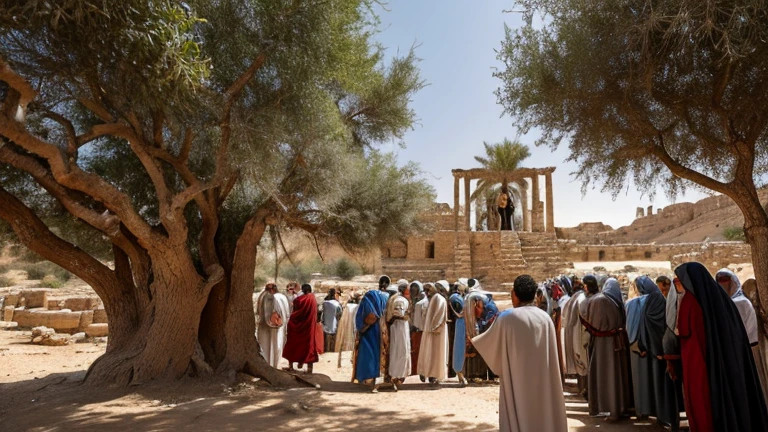
The day Jesus came to Jericho, the city was electric. People lined the streets, pressing together for even the smallest glimpse of Him. I arrived late, and it didn’t take long to realize I had a problem: I was short. There was no way I could see over the heads of the crowd. I felt a familiar pang of rejection. I was always left out, always on the margins, and today was no different. But something inside me refused to give up. Then I spotted it—a sycamore tree with low, sturdy branches. Climbing it wasn’t exactly dignified for someone of my status, but dignity was the least of my concerns. I scrambled up, scratching my hands on the bark, until I found a perch that gave me a perfect view of the road below.
And that’s when it happened. As Jesus walked by, He stopped. Out of the hundreds of faces in the crowd, He looked up at me. Me. His gaze was steady, kind, almost as if He had been searching for me all along. Then He said my name: “Zacchaeus, hurry and come down, for I must stay at your house today.”
My heart nearly stopped. How did He know my name? And why would He, a respected teacher, want to come to my house? I couldn’t stop the questions from swirling in my mind. Had someone told Him about me? Had He overheard the crowd’s disdain? Or—could it be—did He simply know? Was this the same divine insight I had heard whispers about, the way He seemed to see into people’s hearts? As I clung to that tree, the truth began to settle deep within me: He knew my name because He already knew me. Somehow, He knew my story, my failures, my loneliness—and still, He called me by name.
The crowd certainly didn’t understand. I could hear the murmurs ripple through the streets. “He has gone in to be the guest of a man who is a sinner.” They were right. I was a sinner. But in that moment, none of it mattered. I climbed down from the tree as fast as I could and welcomed Him into my home with joy.
Here’s something you might not realize: in our culture, eating with someone wasn’t just about sharing a meal. It was a deeply personal act, a sign of acceptance and fellowship. When Jesus chose to dine with me, He wasn’t just visiting my house. He was declaring to everyone around us that I was worth His time, His attention, His love. It was scandalous. For years, I had been excluded, shunned, and left to dine alone. But here was Jesus, breaking bread at my table, treating me as if I mattered.
That kind of love does something to a person. As we talked, I felt my heart begin to shift. I saw my life clearly for the first time—the greed, the dishonesty, the way I had hurt others. And I knew I couldn’t stay the same. I stood up, looked Jesus in the eye, and said, “Behold, Lord, the half of my goods I give to the poor. And if I have defrauded anyone of anything, I restore it fourfold.”
This wasn’t a promise made to earn His favor. I already had that. It was my response to the overwhelming grace He had shown me. Jesus didn’t demand that I change; His love compelled me to. And then He spoke words that have stayed with me every day since: “Today salvation has come to this house, since he also is a son of Abraham. For the Son of Man came to seek and to save the lost.”
Think about that for a moment. He called me a son of Abraham, placing me back within the family I had been cast out of. In one sentence, He restored everything I thought I had lost forever. More than that, He reminded me—and everyone else—that His mission was to seek and save the lost. People like me. People like you.
So why do I tell you this story? Because I know what it feels like to be unseen, unworthy, and stuck in the consequences of your own choices. But I also know what it feels like to be called by name, to be loved despite it all, and to start fresh. If you ever feel like you’re too far gone, too broken, or too small to matter, remember this: Jesus sees you. He’s calling you. And just like He did for me, He’s ready to change your life. You just have to come down from the tree.
