
1,251 words, 7 minutes read time.
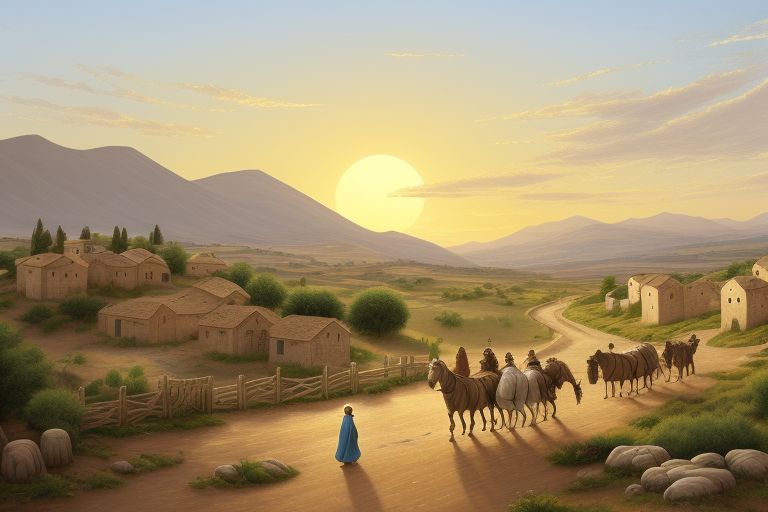
The journey of Mary and Joseph to Bethlehem, as recounted in the Bible, is more than just a part of the Christmas story; it is a profound example of faithful obedience and divine guidance. As we approach the holiday season, it’s important to look at this journey not only through the lens of faith but also through the eyes of history. What do the Bible and external sources tell us about their journey, and how does it remain relevant today?
The journey began with an imperial decree from Caesar Augustus, which required a census of the Roman Empire. This decree sent Mary and Joseph from Nazareth in Galilee to Bethlehem, the City of David, to register. While the biblical account is concise, it speaks volumes about obedience, trust, and faith in God’s plan. But what historical evidence do we have that supports this journey and the people involved?
Let’s take a closer look at the historical, archaeological, and biblical context of the journey of Mary and Joseph to Bethlehem.
1. The Roman Census and the Historical Context
In Luke 2:1-5, we read about a decree issued by Caesar Augustus that required everyone to return to their ancestral home for a census. This decree led Mary and Joseph to travel from their hometown of Nazareth to Bethlehem. While this might sound like a small detail, it’s a crucial one, and it can be historically verified.
The Roman Empire was known for its meticulous record-keeping, and censuses were a common practice during that time. These censuses were conducted not just for population control but primarily for taxation and military purposes. The Roman historian Tacitus mentions such censuses in his writings, giving us an understanding of the administrative structure of the time. Although the census mentioned in Luke 2 may not be specifically documented, the fact that Rome regularly conducted censuses during this period is well-supported by historical records.
Archaeological evidence also confirms the existence of such practices. Roman inscriptions and records from the time show that censuses were a regular part of life in the empire. The famous Rothschild papyrus and the Papyri of Egypt contain records of censuses, which strongly support the biblical narrative that a census took place, leading Mary and Joseph to Bethlehem.
2. The Journey from Nazareth to Bethlehem
The trip from Nazareth to Bethlehem, which is roughly 70 miles, was no small feat, especially for a pregnant Mary. This journey would have taken them several days to complete, and the road was not an easy one. They likely traveled through the hilly, rugged terrain of Samaria or along the Jordan River to avoid conflicts with the Samaritans, as tensions were high between the Jewish and Samaritan populations at the time.
While there is no specific archaeological evidence that definitively confirms the exact route they took, historians and biblical scholars agree that it would have been a difficult and taxing journey. We do know, however, that the Roman Empire constructed extensive road networks during this period. Archaeological evidence has uncovered well-paved roads and inns along major routes, which would have facilitated travel, though it is uncertain whether Mary and Joseph had the luxury of such accommodations.
Recent archaeological finds in the Nazareth area have confirmed the existence of a small, rural village in the first century, where Mary and Joseph would have lived. These findings provide important historical context, confirming the place where Mary and Joseph likely began their journey.
3. The Significance of Bethlehem in Prophecy
Bethlehem is often referred to as the “City of David” because it was the birthplace of King David, and this is where Jesus was born, fulfilling a prophecy from the Old Testament. In Micah 5:2, it is foretold that the Messiah would be born in Bethlehem, a seemingly insignificant town. This prophecy was fulfilled in the birth of Jesus, and it’s remarkable how the Roman census, which may have seemed like a mere administrative inconvenience, played a key role in fulfilling this prophecy.
Archaeological evidence confirms the existence of Bethlehem in the time of Jesus. The town, though small, was a significant part of the Jewish Kingdom, and it was known as the birthplace of David long before the birth of Jesus. The historian Flavius Josephus mentions Bethlehem in his writings, underscoring its importance as a Jewish city, which strengthens the historical credibility of its mention in the Gospels.
Additionally, archaeological digs in the region have uncovered remains of ancient dwellings and structures in Bethlehem dating back to the first century, supporting the idea that it was a well-established settlement at the time of Jesus’ birth.
4. The Historical Accuracy of Mary and Joseph
Beyond the details of the journey itself, the figures of Mary and Joseph have been the subject of historical and biblical scrutiny. While there is no direct, secular record of their lives outside of the New Testament, the broader context of the time provides insight into their possible existence.
Nazareth, the town where Mary and Joseph lived, was a small, rural settlement in the Galilee region. Archaeologists have uncovered homes and artifacts from the first century in Nazareth, confirming its existence as a place of residence. Although it was not mentioned in the Hebrew Bible, historical records from Josephus and other sources confirm the general history of Galilee during the time of Jesus. In particular, the Jewish War by Josephus mentions the general geography of the region, providing further context for the biblical narrative.
Furthermore, the genealogies in Matthew 1 and Luke 3 trace Jesus’ lineage back to King David, which aligns with Jewish traditions of keeping careful genealogical records. The fact that both Mary and Joseph were descendants of David adds a layer of historical credibility to the narrative.
5. The Timing and Fulfillment of Prophecy
One of the most profound aspects of the journey of Mary and Joseph is how it fits into God’s greater plan, as outlined in biblical prophecy. The journey to Bethlehem was not just a consequence of Roman imperial policy, but it was also a divine fulfillment of prophecy. Micah 5:2 prophesied that the Messiah would be born in Bethlehem, and this prophecy was realized through Mary and Joseph’s obedience.
While secular history doesn’t mention Jesus’ birth in Bethlehem directly, the historical and geographical context of the time allows us to see how God’s timing and the Roman census played a role in bringing about the fulfillment of prophecy. God used the geopolitical realities of the Roman Empire to bring about His divine plan.
Reflection and Application
The journey of Mary and Joseph was one marked by obedience and faith. They did not fully understand what lay ahead, but they trusted in God’s plan and followed His guidance. In many ways, we are called to do the same today. Even when the path is uncertain, God’s guidance is always available to us, just as it was for Mary and Joseph.
As we reflect on this story, let’s consider how we, too, can step forward in faith and trust, following God’s direction even when we don’t have the full picture. The journey may be difficult, but God’s purpose is always perfect.
Closing Thought
Just as Mary and Joseph followed God’s direction in their journey to Bethlehem, we, too, are called to trust and obey, even when the path ahead is unclear. Their journey reminds us that God’s timing and purpose are always perfect, and that, even in the most ordinary of circumstances, He is at work to fulfill His greater plan.
