
1,259 words, 7 minutes read time.
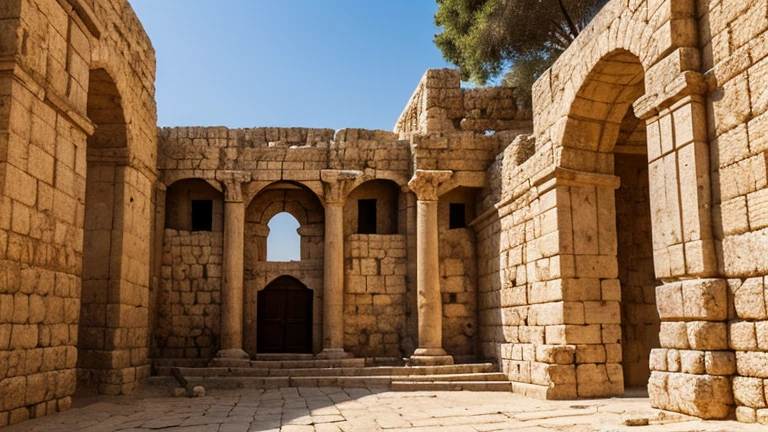
In the world of archaeology, few discoveries resonate as deeply with both historical scholarship and religious belief as the recent findings in Jerusalem’s City of David. As researchers dig deeper into this ancient landscape, they have unearthed what some experts believe could be the very site where the biblical patriarch Abraham encountered Melchizedek, the enigmatic King of Salem and priest of God Most High. This blog post will explore this significant discovery, its biblical context, and its implications for modern faith and understanding.
The Historical Context of Melchizedek
To fully appreciate the significance of this archaeological find, we must first understand who Melchizedek is within the biblical narrative. Melchizedek appears in the Book of Genesis, specifically in Genesis 14:18-20, where he meets Abraham after the latter’s victory over several kings. Described as both a king and a priest, Melchizedek brings bread and wine to Abraham, blessing him and acknowledging God’s sovereignty over Abraham’s enemies.
This moment is pivotal for several reasons. Firstly, it establishes Melchizedek as a significant figure in the biblical lineage, representing a priesthood that predates the Levitical priesthood established later in the Old Testament. This distinction highlights Melchizedek’s importance as a prototype for a higher priestly order, which the author of Hebrews would later link to Christ, making his priesthood eternal (Hebrews 7:17).
The character of Melchizedek has intrigued theologians and scholars for centuries. His priesthood, which is described as eternal, serves as a foreshadowing of Christ in Christian theology, particularly in the Book of Hebrews, where it is argued that Jesus Christ is a priest “after the order of Melchizedek” (Hebrews 7:17). This connection amplifies the importance of identifying the site where Abraham met Melchizedek.
The Archaeological Discovery
Eli Shukron, an esteemed archaeologist who has spent years exploring the City of David, believes he has discovered the location where this monumental meeting occurred. His excavations revealed a stone altar, a blood channel, and a stone pillar—features that align with ancient worship practices of simplicity. Unlike the ornate temples of Egypt or Mesopotamia, Shukron emphasizes the straightforward nature of this site, where sacrifices were made without the embellishments of gold and jewels
The stone pillar, in particular, has drawn parallels to the pillar Jacob erected in Bethel, as described in Genesis 28. This link suggests that the worship practices of Abraham and Melchizedek were characterized by a direct connection to God, devoid of the material distractions often found in surrounding cultures. As Shukron noted, “This is the house of God. No gold and diamonds. Everything is simple”
Furthermore, the excavation site includes an olive press and a designated area for sacrificial animals, supporting the notion that this was indeed a site of worship. The presence of these artifacts illustrates a practical approach to spirituality, rooted in the natural world and reflecting a desire for genuine connection with the divine.
The Archaeological Process and Findings
The archaeological team, utilizing modern excavation techniques and meticulous documentation methods, has unearthed several layers of artifacts that help piece together the historical context of the site. Among the findings are ancient pottery shards, remnants of animal bones, and tools used in sacrificial practices, all of which provide insight into the daily lives of the people who may have worshiped there
The excavation has not been without its challenges. Given the site’s location within the densely populated area of Jerusalem, the team has had to navigate both environmental and urban obstacles. However, Shukron’s team has shown remarkable resilience and ingenuity, employing techniques that allow them to preserve the integrity of the site while also ensuring that valuable data is not lost
The Implications for Modern Faith
The significance of this discovery extends beyond archaeology; it touches the realms of faith, tradition, and spiritual practice. For many believers, the idea that a physical site related to such a critical biblical event has been identified adds a layer of authenticity and connection to their spiritual heritage.
In Judaism, the meeting between Abraham and Melchizedek has long been a point of reflection, symbolizing the acknowledgment of a higher power and the practice of tithing—Abraham gives Melchizedek a tenth of all he has after receiving his blessing. This concept remains a vital aspect of Jewish and Christian practices today, where believers express gratitude and worship through offerings and acts of service.
In Christian circles, the connection to the Eucharist is profound. The sharing of bread and wine by Melchizedek with Abraham can be seen as a precursor to the Last Supper, making this discovery particularly poignant for Christians who see it as part of their spiritual lineage. This site could serve as a pilgrimage destination for many, offering a tangible connection to their faith’s origins
Broader Historical and Theological Context
The implications of this discovery extend to the broader narrative of biblical history. Melchizedek’s appearance in Genesis is unique because it signifies a break from the traditional Levitical priesthood. His priesthood, without a clear lineage or beginning, raises important theological questions about the nature of priesthood and its evolution over time.
The figure of Melchizedek has also been linked to other ancient Near Eastern traditions, where kings often served as priests. This dual role reflects a time when spiritual and political authority were intertwined, a concept that can still be seen in various cultures around the world today. The site’s discovery may help illuminate these connections, allowing for a richer understanding of how faith and governance were understood in ancient Israel
Future Excavations and Research
As Shukron and his team continue their work, there is hope that further excavations will yield more artifacts that can illuminate this period of history. The ongoing research not only sheds light on the historical context of Melchizedek and Abraham but also on the worship practices of the ancient Israelites, revealing how they engaged with their faith in a time when ritual and simplicity were key components of their spiritual lives
Moreover, the site’s potential to become a public archaeological park offers an opportunity for education and spiritual reflection. It can serve as a bridge connecting the past with the present, allowing visitors to explore the intersections of history, archaeology, and faith.
The Importance of Preservation
As with any archaeological site, the preservation of this newly discovered location is critical. It stands as a testament to the rich history of Jerusalem and its enduring significance in the religious narrative. The challenge remains to balance development and tourism with the need to protect and study these vital pieces of our collective heritage
Efforts to engage the public through educational programs and tours can foster a greater appreciation for the importance of archaeology in understanding our past. By bringing awareness to these discoveries, we encourage stewardship of historical sites, ensuring they remain accessible for future generations
Conclusion: A Sacred Intersection of Faith and History
The identification of the potential site where Abraham met Melchizedek is more than just an archaeological triumph; it represents a reconnection with a pivotal moment in biblical history. For both scholars and believers, this discovery is a reminder of the enduring power of faith and the importance of understanding our spiritual roots. As we delve deeper into our past, we find that the stories of our ancestors continue to resonate, shaping our beliefs and practices today.
The Temple of Melchizedek may very well become a focal point for those seeking to explore the complexities of faith, history, and spirituality. With ongoing excavations and research, we are reminded that our journey into understanding our past is far from over—each discovery opens new pathways to knowledge and connection.
