
1,280 words, 7 minutes read time.
Image by Ken Williams from Pixabay
In today’s world, it’s easy to be skeptical of extraordinary claims, especially those that date back over 2,000 years. But when it comes to the resurrection of Jesus Christ, is there solid evidence to back it up? In The Case for Christ, four compelling pieces of evidence emerge to help make sense of this miraculous event. These four “E’s”—Execution, Early accounts, Empty tomb, and Eyewitnesses—provide a powerful framework for understanding why many people, even skeptics, have come to believe in the reality of Jesus’ resurrection.
Let’s break down each piece of this evidence and explore what it means in a modern context.
1. Execution: Was Jesus Really Dead?
The first “E” in the case for Christ is Execution. For anyone to believe in a resurrection, we must first be sure that Jesus actually died. This may seem obvious, but some skeptics have questioned whether Jesus truly died on the cross or perhaps merely fainted. However, historical and medical evidence confirms that Jesus was indeed dead after his crucifixion.
The Roman method of crucifixion was brutal, a slow death by asphyxiation and shock. Roman soldiers were experts in execution, and there are no historical records of anyone surviving a full Roman crucifixion. Even a secular source like the Journal of the American Medical Association published a study stating, “Clearly, the weight of the historical and medical evidence indicates that Jesus was dead even before the wound to his side was inflicted.”
Additionally, first-century historians, including the Jewish historian Josephus and the Roman historian Tacitus, confirm that Jesus was crucified and died. These non-Christian sources reinforce the biblical accounts. The historical record is clear: Jesus was executed, and no credible source suggests otherwise.
2. Early Accounts: Legends Don’t Grow That Fast
The second “E” is Early Accounts. Some skeptics have argued that the resurrection is nothing more than a legend that developed over time. Legends usually take generations to form, but the evidence for Jesus’ resurrection surfaced incredibly quickly—so quickly that the legend theory falls apart.
One of the most compelling pieces of evidence is an early Christian creed recorded by the Apostle Paul in his letter to the Corinthians (1 Corinthians 15:3-7). This creed dates to within a few years of Jesus’ crucifixion and resurrection, and it explicitly states that Jesus died, was buried, and rose on the third day, appearing to over 500 people, many of whom were still alive at the time. Scholars, both Christian and non-Christian, agree that this creed is among the earliest pieces of evidence for the resurrection, dating to within months or a few years of the events.
What makes this early account so significant is the speed at which it was circulated. Historians are amazed by how early these claims appeared. The renowned scholar Dr. James D.G. Dunn stated, “This tradition, we can be entirely confident, was formulated as a creed within months of Jesus’ death.” Such a rapid spread of the core belief in the resurrection makes the idea of a later-developed legend improbable.
For context, consider that the first biographies of Alexander the Great were written 400 years after his death, yet they are considered reliable. The creed about Jesus dates back just months or a few years after his death. This kind of immediacy is unparalleled in ancient history, providing strong evidence that the resurrection was not a myth developed over time.
3. Empty Tomb: Where Did Jesus’ Body Go?
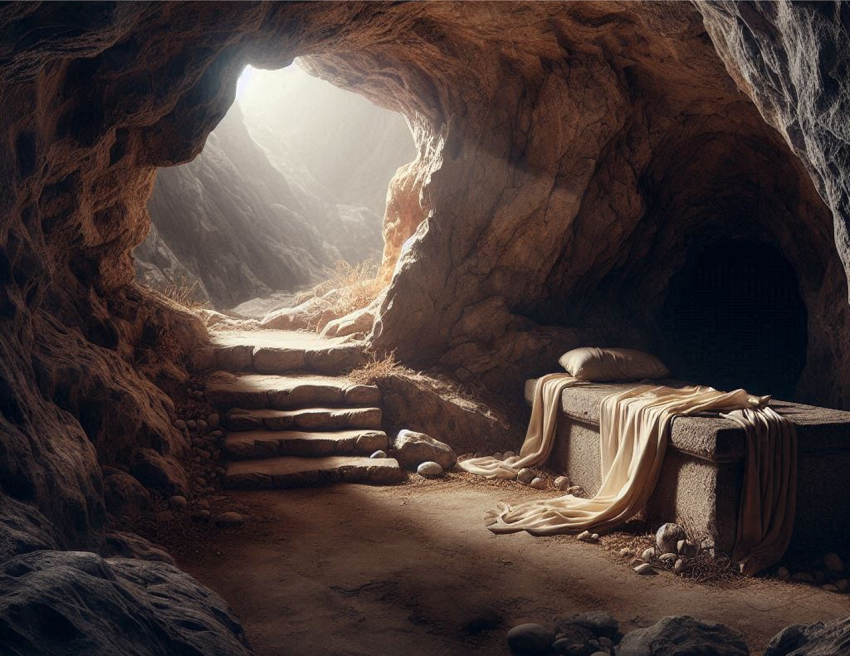
The third “E” is the Empty Tomb. The discovery of the empty tomb is a cornerstone of the resurrection narrative. Even the enemies of Jesus, both Jewish and Roman authorities, never contested that the tomb was empty. Instead, they tried to explain it away by accusing the disciples of stealing Jesus’ body.
But why would the disciples steal the body? More importantly, why would they willingly face persecution and death for what they knew to be a lie? If the body had been stolen, surely at some point, one of the disciples would have cracked under pressure. Instead, they went to their deaths insisting that Jesus had risen.
The empty tomb is also attested by several independent sources, both within and outside of the New Testament. For example, the Jewish historian Josephus indirectly confirms the events surrounding the crucifixion and the claim that Jesus’ tomb was found empty. This is significant because historians typically rely on one or two sources to confirm historical facts, but in the case of the empty tomb, we have multiple sources from different perspectives, making it a well-attested historical event.
Additionally, the location of the tomb was well known, and the fact that it was found empty was not disputed by Jesus’ contemporaries. If the resurrection were a fabrication, it would have been easy for the Jewish or Roman authorities to simply produce the body and debunk the claims. But they didn’t—because the tomb was empty.
4. Eyewitnesses: Over 500 People Saw the Risen Jesus
The final “E” is Eyewitnesses. One of the most remarkable aspects of the resurrection is the sheer number of people who claimed to have seen the risen Jesus. Over a period of 40 days, Jesus appeared to various individuals and groups, both believers and skeptics, in different settings. These appearances were so powerful that they transformed the lives of those who saw him.
The Apostle Paul, who was initially a fierce persecutor of Christians, claimed to have encountered the risen Jesus on the road to Damascus. This encounter radically changed Paul’s life, leading him to become one of the most important leaders in early Christianity. His letters, which were written within decades of Jesus’ death, provide firsthand testimony of his experience with the resurrected Christ.
What’s even more compelling is that Paul wasn’t alone. As recorded in 1 Corinthians 15, Jesus appeared to Peter, the Twelve Apostles, and to more than 500 people at one time. Many of these eyewitnesses were still alive when Paul wrote his letter, and he essentially invited people to verify their accounts by speaking to them directly.
Ancient historians typically consider themselves fortunate to have one or two reliable sources for a historical event. In the case of the resurrection, we have at least nine independent sources—both within and outside the New Testament—attesting to the resurrection appearances. This level of corroboration is rare in ancient history and provides strong evidence that these appearances were not fabricated.
Why Does This Matter Today?
The evidence for the resurrection is not just a relic of the past. It has profound implications for today. If Jesus truly rose from the dead, then his claims about himself are validated. He is who he said he was—the Son of God. This means that everything he taught about life, death, forgiveness, and eternity is true, offering hope and purpose to people today.
The resurrection also answers one of life’s biggest questions: What happens after death? The fact that Jesus conquered death offers the promise of eternal life for those who believe in him. It’s not just a historical fact—it’s a living reality that continues to change lives today.
Conclusion
In summary, the case for Christ rests on four powerful pieces of evidence: Execution, Early Accounts, the Empty Tomb, and Eyewitnesses. Together, they build a compelling argument that the resurrection of Jesus is not just a matter of faith, but of historical fact. As skeptics have found through careful investigation, the evidence points to one conclusion: Jesus Christ rose from the dead.
Whether you’re a believer, a seeker, or a skeptic, the evidence for the resurrection is worth exploring. As history has shown, it has the power to transform lives.
