
828 words, 4 minutes read time.
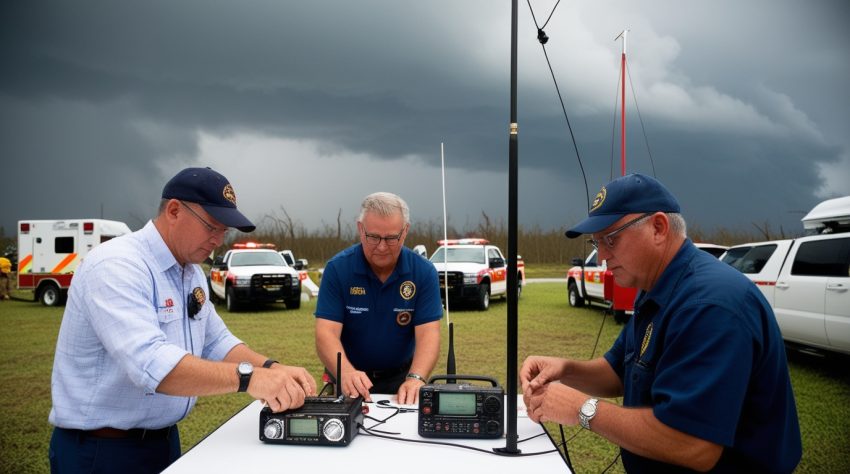
My journey into the world of amateur radio began in an unexpected place—a local Carnival. As a member of the Community Emergency Response Team (CERT), my role was to assist as a first responder, primarily serving as eyes and ears for the police officers managing the event. The Carnival was bustling, with police officers from both Lincoln Park and Wayne County working together to ensure everything went smoothly.
During a quiet moment, one of the Wayne County officers shared an insight that would forever change my perspective. He pointed out that CERT members with a Ham Radio License are incredibly valuable compared to those without. This was because licensed hams can be deployed in a wider range of situations, equipped with the ability to communicate over long distances and in various conditions.
As someone with a background in communications from my time in the U.S. Army, where I gained a solid understanding of radio and electronics, the idea of amateur radio’s potential to enhance emergency responses intrigued me. The officer’s words made me realize that amateur radio could be a fascinating way to apply my existing knowledge in a new and engaging way. I thought it would be an interesting hobby.
One of the most memorable experiences I’ve had as a ham operator was my first encounter with digital radio. I was listening to a local Fusion repeater when I stumbled upon an astonishing conversation. To my surprise, I heard voices from California, Maine, Florida, and even Dubai all participating in the same discussion. The realization that I could tune into such a diverse and international conversation from my local setup was both thrilling and eye-opening. It showcased the incredible reach and connectivity of amateur radio, highlighting its ability to bridge vast distances and connect people across the globe.
One of the aspects I enjoy most about amateur radio is working with the 2m and 70cm frequency bands. Although I hold an Extra Class license and have access to all the bands, I find these VHF and UHF bands particularly engaging. The 2m band (144-148 MHz) and the 70cm band (430-450 MHz) are fantastic for local communication and offer a lot of versatility. They’re great for both simplex operations and through repeaters, making them perfect for quick, reliable contacts over shorter distances.
What I appreciate about these bands is their accessibility and the immediate results they provide. The ability to communicate clearly and effectively over relatively short distances with just a handheld radio or simple setup is both practical and satisfying. Plus, the vibrant local repeater networks often mean there’s always someone to talk to, and it’s a great way to stay connected with the local ham community.
If you’re considering getting into amateur radio, my advice is to embrace experimentation. Don’t be afraid to try new things and take everything you hear from other hams with a grain of salt. There are some very traditional hams out there who may only appreciate modes like Morse code, but don’t let that discourage you. The digital modes offer a wealth of exciting opportunities and advancements. Dive into the digital world where you can experiment with various modes and technologies. Amateur radio is a hobby that thrives on curiosity and innovation, so explore and enjoy the journey.
When it comes to troubleshooting or dealing with technical issues, there are a lot of good—and bad—resources on the internet to assist with troubleshooting your equipment. A few years back, I purchased a new TYT 890 Digital Radio. Within the first month, I bricked it trying to update the firmware. I had used the wrong firmware based on a forum comment. It took me a few hours, but I managed to find the correct firmware and reinstall it on the radio. This experience taught me the importance of verifying information from multiple sources and being cautious with technical advice found online.
Amateur radio’s role in today’s world is much larger than many people realize. In my humble opinion, the field of disaster response wouldn’t be where it is today without the help of volunteer amateur radio operators. These individuals donate their time, equipment, and resources to assist with disaster response efforts and barely get mentioned. They are often the unsung heroes who ensure reliable communication when conventional systems fail. These people rock!
At this point, I haven’t been able to get as involved in amateur radio as I’d like due to time and work constraints. However, I would love to be more involved in the future. Since becoming a licensed amateur radio operator, I’ve found that the 2m and 70cm bands continue to be a favorite part of my hobby. They offer a balance of ease of use and functionality that keeps me engaged and excited about the possibilities of amateur radio. If you’re exploring different bands and modes, I highly recommend giving these a try—they offer a rewarding and accessible entry point into the world of ham radio.

Help Me Improve
I’d love to hear from you! If you have any tips, insights, or feedback on enhancing online presence and integrating digital strategies, please share your thoughts in the comments below. Your input is invaluable in helping me improve and provide more useful content. Thank you for contributing to the conversation!