
2,413 words, 13 minutes read time.
Disclaimer: This short story is a work of fiction inspired by the true story of Judas Iscariot. While many of the the details of this narrative are fictionalized, the lessons contained within are true and reflect the moral teachings of Jesus. If Judas Iscariot could testify to us today, I imagine his words might be something like this:
My name is Judas Iscariot. I am condemned to the shadows of my own making, and this is my confession—a bleak recounting of how I fell from devotion to betrayal, and the unending torment that haunts me.
When I first encountered Jesus, my world was illuminated by his light. I remember the first time he called me to be one of his disciples. I was captivated by his teachings and the miracles he performed—healing the sick, restoring sight to the blind, and even raising Lazarus from the dead. His presence was a beacon of hope and divine purpose, and I believed in him with all my being.
Yet, beneath my fervent belief, there was an insidious yearning for something more—a craving for power and material wealth. Our people had been under Roman occupation for generations, enduring oppression and humiliation. The longing for liberation was deeply embedded in our hearts, a fervent hope that one day a powerful leader would rise to overthrow our captors and restore Israel to its former glory. We dreamed of a savior who would deliver us from our suffering and lead us to freedom.
Satan exploited this deep-seated hope. His whispers began as mere doubts but grew into relentless temptations. One night, he visited me in a dream, appearing as an angel of light, radiant and alluring. His eyes gleamed with a deceptive brilliance. “Judas,” he said in a smooth, persuasive voice, “you are destined for greatness. Why remain a follower when you could seize control? Why be a servant when you could be a master?”
As he spoke, he conjured vivid visions before me—images of a unified and free Israel, its people rejoicing in liberation from Roman oppression. I saw myself leading a powerful movement, a pivotal figure in the overthrow of our occupiers. The people cheered as we established a new kingdom, one where I held a position of immense power and influence.
Satan’s seductive promises were not the only allure. I had been siphoning small amounts from our communal funds, a habit born from my growing greed and the desire to secure a future for the revolution I envisioned. The thirty pieces of silver seemed like a substantial addition to my secret hoard—a treasure that could be used to finance our cause, to gather supporters, and to fuel the resistance. I convinced myself that this betrayal was a necessary step, a means to an end that would justify the cost.
The idea of betrayal took root in my heart. The silver promised not just immediate wealth but the means to further our cause. I convinced myself that Jesus would understand, that he could save himself if he chose. I deluded myself into believing this was my path to a greater destiny.
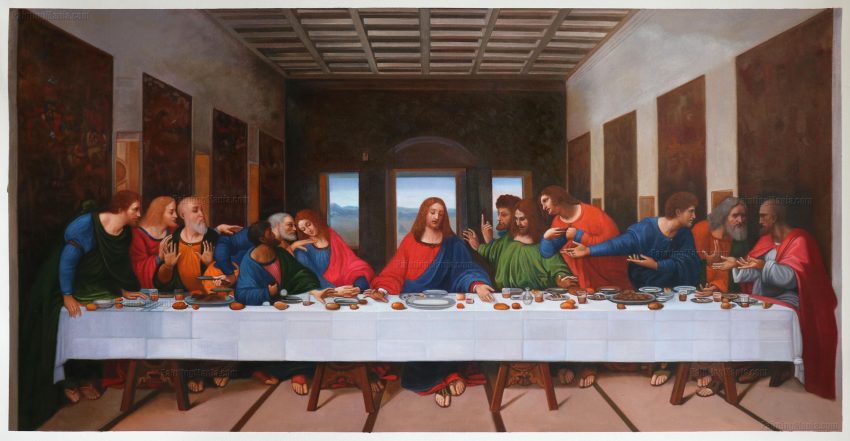
During the Passover meal, as we reclined around the table, the weight of my decision felt increasingly heavy. Just as Jesus spoke his ominous words about betrayal, a cold, oppressive force seemed to settle over me. It was then that Satan’s influence, which had already taken hold of my soul, became a palpable presence. I felt an icy grip on my heart and mind, and the whispers of temptation turned into a deafening roar.
Jesus spoke with a gravity that seemed to darken the atmosphere. “The Son of Man will go just as it is written about him,” he said, his voice steady yet laden with a profound weight. “But woe to that man who betrays the Son of Man! It would be better for him if he had not been born.”
As he spoke, I felt the malevolent force within me tighten its grip. My hand trembled as I reached for a piece of bread. Just as I did, Jesus responded to the disciples’ anxious queries about who among them would betray him. His voice cut through the air with a stark revelation: “It is the one to whom I will give this piece of bread when I have dipped it in the dish.”
The room fell into a heavy silence. I froze, my hand still reaching for the bread, as Jesus dipped it and handed it directly to me. “Judas, what you are about to do, do quickly,” he said, his gaze piercing through the shadows of my betrayal. The chilling realization that Satan’s influence had led me to this moment, and that Jesus knew my intentions even as I tried to maintain my façade of innocence, was overwhelming. I tried to push his words and the Torah teachings to the recesses of my mind, focusing instead on the immediate gains and the grand vision I had crafted. My conscience was battered by my rationalizations, and I steeled myself against the creeping dread that threatened to overwhelm me. I thought I could outmaneuver fate, that the price of silver and the promises of power could outweigh the burden of my actions.
But deep down, a nagging voice persisted, whispering that the weight of my betrayal was not so easily cast aside. As I went through the motions of the evening, Jesus’s warning and the echoes of the Torah’s prophecies gnawed at me, a reminder that no amount of silver could ever balance the scales of such a grave transgression. The foreboding words of Jesus became a haunting echo, a premonition I had chosen to ignore, but one that would follow me, relentless and unforgiving, to the bitter end.
When the gravity of my betrayal hit me, I sought to make amends according to the principles laid out in the Law of Moses. I returned the silver to the temple, throwing it at the feet of the priests. “I have sinned,” I cried out. “I have betrayed innocent blood.” I hoped that by returning the money, I could atone for my transgression, but their cold indifference only deepened my despair. The temple priests, who were custodians of religious and moral order, offered no solace or redemption. My attempt at restitution was futile, and the weight of my actions bore down on me with crushing force.
The priests, unable to accept the silver as a proper offering, used it to purchase a potter’s field—a burial place for strangers. Ironically, the very money that was meant to advance a revolution now paid for the grave of those without a home. This field, known as the “Field of Blood,” stood as a grim testament to the irony of my end. The purchase of this field also fulfilled an ancient prophecy, as described in Zechariah 11:13, which spoke of the thirty pieces of silver being used to buy a potter’s field. This fulfillment was a haunting reminder that my actions were not just a personal betrayal but part of a divine plan woven into the fabric of history. The weight of this prophecy added another layer to my torment, as the very scripture that I had defied now stood as a testimony to my grave misjudgment and the ultimate irony of my fate.
Jesus’ teaching about the two paths haunts me like a relentless specter. He spoke of two roads: “Enter through the narrow gate,” he said, “For wide is the gate and broad is the road that leads to destruction, and many enter through it. But small is the gate and narrow the road that leads to life, and only a few find it.” I heard these words often, but they eluded my comprehension until it was far too late.
On that fateful night in the Garden of Gethsemane, I led the soldiers to Jesus, believing I was choosing the easier path—the broad road of immediate gain and self-indulgence. The garden, serene and fragrant, was a cruel contrast to the storm brewing within me. As I approached Jesus and kissed him, marking him for arrest, his eyes met mine. There was no anger, only a profound sadness that pierced me deeper than any blade. “Judas, do you betray the Son of Man with a kiss?” His words echoed in my soul, a haunting reminder of my own betrayal.
The thirty pieces of silver felt like lead in my hands, a heavy symbol of my treachery. Instead of the triumph I had been promised, I was consumed by an unbearable emptiness. The whispers had ceased, leaving only the unbearable weight of my guilt. I saw Satan’s deceit for what it truly was: a cruel mockery.
In my desperation, I sought the darkest path, hoping to escape the consuming agony. As I prepared to end my life, Satan’s voice returned, no longer seductive but derisive. “Fool,” he sneered, “did you believe I cared for you? You were merely a pawn, a tool for my ends.” In that moment of realization, I saw the full horror of my mistake. I had been used, discarded, and abandoned to my own ruin.
With the noose tightening around my neck, I faced the full weight of my betrayal—not only of Jesus but of myself. My final thoughts were consumed with the love and forgiveness I had rejected, the grace I had bartered for silver and deceit. I had chosen the broad road, the path of destruction, and it led me to this abyss of despair.
Now, in the darkness of my existence, I am a mere shadow of the man I once was, condemned by my own choices. The weight of Jesus’s words echoes in my torment: “But woe to that man who betrays the Son of Man! It would be better for him if he had not been born.” These words have become my eternal lament, a haunting reminder of the gravity of my betrayal.
In this abyss of despair, I confront a torment beyond mortal comprehension. Hell, as I now perceive it, is not merely a place of fire and brimstone, but an unending void where the soul is perpetually engulfed by its own remorse. There is no respite from the suffering, no hope of redemption—only the ceaseless gnawing of regret and the eternal realization of my irreversible error.
The promise of darkness is an endless void, and the road it offers leads only to despair. Here, in the unrelenting shadows, I am bound to my own desolation, eternally separated from the light and grace I once knew. The suffering is not just physical but a profound, spiritual agony that pierces the soul to its very core.
Remember the path you choose. Let my suffering be a grim reminder to heed the warnings and choose the narrow road, the one that leads to life. Avoid the ruin that befell me. Do not let the darkness claim you as it has claimed me. Heed my plea: choose the path of righteousness, and do not end up as I have—lost in the eternal shadows of despair.
As I delved into the story of Judas Iscariot for this short piece, my perspective began to shift dramatically. Growing up, I was taught to view Judas solely as a traitor, and I carried a quiet resentment toward him for years. But as I explored his story with a more compassionate approach, I started to see a more nuanced picture. Judas emerges as a deeply conflicted individual who, despite his grievous mistake, believed he was serving a higher purpose—helping God and liberating Israel—while also grappling with personal ambition.
Christian teachings traditionally portray Judas as suffering in Hell, and I adhered to this view for a long time. Yet, examining his final moments revealed something more complex. It seems that in his last hours, Judas attempted to seek forgiveness according to Jewish Law, which adds a layer of ambiguity to his ultimate fate. This exploration has left me questioning whether the traditional understanding fully captures the complexity of his final days.
I believe the story of Judas was written for us to learn from. His tragic journey serves as a stark reminder of the consequences of betrayal and the weight of our choices. It echoes the timeless lesson that each path we take, each decision we make, has the power to shape our destiny.
The fact that Jesus knew Judas would betray him but still chose to call him offers profound lessons:
- The Power of Free Will: Jesus honored Judas’s ability to choose his path, illustrating that even with divine knowledge, human free will remains central to our lives.
- The Nature of Forgiveness and Redemption: Jesus’ acceptance of Judas highlights the possibility of redemption and forgiveness, demonstrating that even severe transgressions are not beyond grace.
- The Role of Every Individual in a Greater Plan: Judas’s actions, though tragic, were part of a larger divine plan, reminding us that every action contributes to a greater purpose.
- The Value of Compassion and Inclusivity: Despite knowing Judas’s future betrayal, Jesus extended love and friendship, teaching us about the importance of compassion and acceptance.
- The Depth of Jesus’s Love and Sacrifice: Jesus’s willingness to include Judas reflects the depth of unconditional love and sacrifice, a model for how we should love others.
- The Complexity of Human Nature: This scenario acknowledges the multifaceted nature of individuals, encouraging us to look beyond judgments and understand the complexities of human behavior.
As you reflect on this story, consider the paths before you. Choose the narrow road that leads to life, guided by integrity, compassion, and faith. Avoid the broad road that leads to destruction and despair. May the lessons of Judas’s downfall inspire you to seek redemption and walk in the light of truth.
In your daily life, let this tale remind you of the importance of your choices and the impact they have on your journey. Embrace the values of honesty, loyalty, and love, and strive to live a life of purpose and righteousness.
What do you think of this story and Judas’s actions? Share your thoughts in the comments below.

Help Me Improve
I’d love to hear from you! If you have any tips, insights, or feedback on enhancing online presence and integrating digital strategies, please share your thoughts in the comments below. Your input is invaluable in helping me improve and provide more useful content. Thank you for contributing to the conversation!