
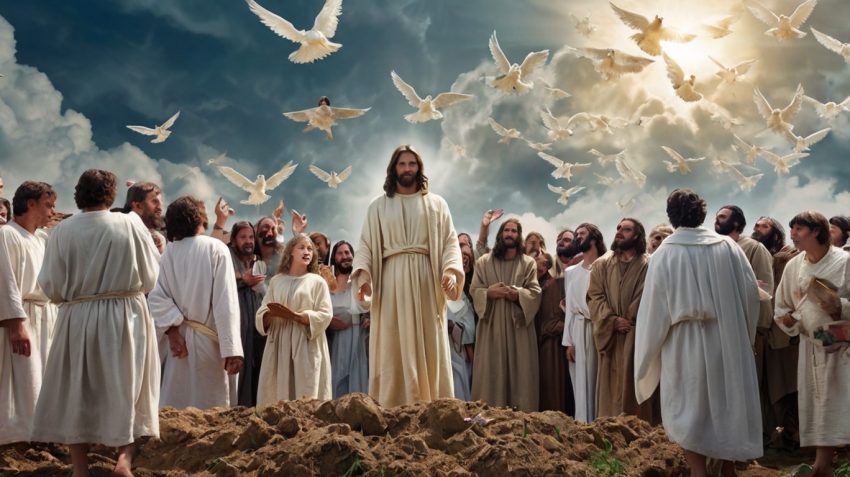

The concept of the Rapture is a cornerstone of eschatological (end times) belief for many Christians around the world. Rooted in biblical scripture, the Rapture refers to the event where believers in Christ are said to be taken up from the Earth to meet the Lord in the air, escaping the tribulations that will befall the world. This doctrine, while not explicitly named in the Bible, is inferred from several key passages in the New Testament and has inspired hope, debate, and a multitude of interpretations within the Christian community.
Understanding the Rapture requires a deep dive into these scriptural foundations. The primary source of this belief is found in Paul’s letters to the Thessalonians and Corinthians. These texts describe a dramatic, divine intervention where the faithful are instantaneously transformed and gathered to Christ. The imagery of this event—trumpets sounding, the dead rising, and believers being “caught up” in the clouds—has captured the imagination of millions. The term “Rapture,” although not found in the Bible, is derived from the Latin “rapturo,” which translates the Greek word “harpazo,” meaning to seize or snatch away.
The implications of the Rapture extend far beyond theological discussion; they influence the daily lives and spiritual outlook of many Christians. For those who hold to a pre-tribulation view, the Rapture represents a promise of deliverance from the suffering and chaos prophesied to precede the second coming of Christ. This anticipation shapes their worldview, encouraging a focus on readiness and evangelism. Conversely, differing interpretations—such as post-tribulation and mid-tribulation views—emphasize endurance and faithfulness through trials, reflecting the diverse ways Christians engage with this profound and hopeful doctrine.
Scriptural Foundations and Support for the Rapture
The concept of the Rapture is primarily rooted in several key passages from the New Testament. The foundational scripture often cited is found in Paul’s first letter to the Thessalonians:
“For the Lord himself will descend from heaven with a cry of command, with the voice of an archangel, and with the sound of the trumpet of God. And the dead in Christ will rise first. Then we who are alive, who are left, will be caught up together with them in the clouds to meet the Lord in the air, and so we will always be with the Lord.” (1 Thessalonians 4:16-17, ESV)
This passage outlines a vivid scene: at the sound of the divine trumpet, the deceased believers will rise first, followed by those who are still living, who will then be “caught up” to join them in the clouds. The term “caught up” is translated from the Greek word “harpazo,” which means to seize or snatch away. This is where the term “Rapture,” derived from the Latin “rapturo,” originates.
Another key passage is from Paul’s first letter to the Corinthians:
“Behold! I tell you a mystery. We shall not all sleep, but we shall all be changed, in a moment, in the twinkling of an eye, at the last trumpet. For the trumpet will sound, and the dead will be raised imperishable, and we shall be changed.” (1 Corinthians 15:51-52, ESV)
Here, Paul speaks of a sudden transformation that will occur at the last trumpet, reinforcing the idea of a momentous, divine intervention in human affairs. This moment of change and resurrection is pivotal for understanding the transformative power associated with the Rapture.
Additional verses further support the belief in the Rapture:
“In my Father’s house are many rooms. If it were not so, would I have told you that I go to prepare a place for you? And if I go and prepare a place for you, I will come again and will take you to myself, that where I am you may be also.” (John 14:2-3, ESV)
In this passage, Jesus promises His disciples that He will return to take them to the place He has prepared in His Father’s house. This assurance of being taken to be with Jesus is often interpreted as referring to the Rapture.
“But our citizenship is in heaven, and from it we await a Savior, the Lord Jesus Christ, who will transform our lowly body to be like his glorious body, by the power that enables him even to subject all things to himself.” (Philippians 3:20-21, ESV)
Paul emphasizes the heavenly citizenship of believers and their anticipation of Christ’s return. This transformation of our earthly bodies to be like Christ’s glorious body is seen as part of the Rapture experience.
“Then will appear in heaven the sign of the Son of Man, and then all the tribes of the earth will mourn, and they will see the Son of Man coming on the clouds of heaven with power and great glory. And he will send out his angels with a loud trumpet call, and they will gather his elect from the four winds, from one end of heaven to the other.” (Matthew 24:30-31, ESV)
Jesus describes His return with power and glory, accompanied by angels who will gather His elect. This gathering is interpreted by many as a reference to the Rapture, where believers are brought together from all corners of the earth.
“And to wait for his Son from heaven, whom he raised from the dead, Jesus who delivers us from the wrath to come.” (1 Thessalonians 1:10, ESV)
Paul reassures the Thessalonians that Jesus will deliver believers from the coming wrath. This deliverance is often seen as a reference to the Rapture, where believers are taken up before the tribulation period.
“Because you have kept my word about patient endurance, I will keep you from the hour of trial that is coming on the whole world, to try those who dwell on the earth.” (Revelation 3:10, ESV)
In this promise to the faithful church in Philadelphia, Jesus assures them of protection from a coming time of trial. This protection is interpreted by many as being taken up in the Rapture before the tribulation period begins.
These passages collectively provide some of the scriptural basis for the belief in the Rapture. The interpretation and understanding of these verses vary among different Christian denominations, leading to a rich tapestry of eschatological beliefs within the Christian faith.
Diverse Views on the Rapture
The belief in the Rapture, while widely held among many Christians, is interpreted in various ways. These interpretations can broadly be categorized into pre-tribulation, mid-tribulation, post-tribulation, and symbolic views. Each perspective offers a different understanding of the timing and nature of the Rapture in relation to the tribulation and the second coming of Christ.
Pre-Tribulation Rapture
The pre-tribulation view is most prominently held by dispensationalist Christians. This interpretation suggests that the Rapture will occur before a seven-year period of intense tribulation and suffering on Earth, which precedes the second coming of Christ. Key aspects of this view include:
- Literal Reading: Proponents of this view emphasize a literal interpretation of prophetic biblical texts.
- Chronological Sequence: The Rapture is seen as the first event in a series of end-time occurrences, followed by the tribulation and then the second coming of Christ.
- Escape from Wrath: Believers are thought to be spared from the wrath and judgments that will befall the Earth during the tribulation, as indicated by verses like 1 Thessalonians 1:10 and Revelation 3:10.
Mid-Tribulation Rapture
The mid-tribulation view posits that the Rapture will take place in the middle of the tribulation period, approximately three and a half years into the seven-year timeline. Key elements of this view include:
- Partial Tribulation Experience: Believers are believed to experience the first half of the tribulation, which involves natural disasters and conflicts, but are spared from the more severe judgments in the latter half.
- Focus on the Seventh Trumpet: This view often references 1 Corinthians 15:51-52, interpreting the “last trumpet” as the seventh trumpet in the book of Revelation, which signals the midpoint of the tribulation.
- Balanced Perspective: Mid-tribulationists see this view as a balance between pre-tribulation and post-tribulation perspectives, acknowledging some suffering while still promising deliverance.
Post-Tribulation Rapture
The post-tribulation view holds that the Rapture will occur at the end of the tribulation period, immediately before the second coming of Christ. Key aspects of this view include:
- Endurance Through Tribulation: Believers are expected to endure the entire tribulation period, drawing strength and faith through the trials.
- Simultaneous Events: The Rapture and the second coming of Christ are seen as simultaneous events, where believers are caught up to meet Christ and immediately return with Him to Earth.
- Scriptural Support: Verses like Matthew 24:30-31 and Revelation 20:4-5 are cited, emphasizing that the gathering of believers occurs after the tribulation.
Symbolic or Spiritual Interpretation
Some Christians interpret the Rapture symbolically, viewing it as a spiritual event rather than a physical one. Key elements of this view include:
- Allegorical Reading: This perspective interprets the prophetic passages allegorically, seeing them as metaphors for spiritual truths rather than literal future events.
- Focus on Spiritual Transformation: The Rapture is understood as representing the transformative power of Christ’s return in the lives of believers, emphasizing spiritual readiness and growth.
- Non-Literal Tribulation: The tribulation period is seen as a metaphor for the ongoing struggles and challenges faced by the Church throughout history, rather than a specific future timeframe.
These diverse views on the Rapture reflect the rich tapestry of eschatological beliefs within Christianity. Each perspective offers a unique understanding of the biblical texts and the hope of Christ’s return, encouraging believers to explore their faith deeply and seek wisdom through prayer, study, and community dialogue.
The Rapture in Christian Life
For many believers, the Rapture is a source of profound hope and comfort, reinforcing the promise of eternal life and the assurance that they will be reunited with Christ. This belief often shapes their worldview, influencing how they live their lives, prioritize their values, and anticipate the future.
Hope and Comfort
The belief in the Rapture provides Christians with hope amid life’s trials and tribulations. The Rapture is a source of great hope for Christians. It reassures us that no matter how difficult life becomes, there is a promised future where we will be with Christ forever. This hope encourages believers to live with an eternal perspective, prioritizing their spiritual lives over earthly concerns.
Influence on Daily Living
The anticipation of the Rapture significantly impacts how Christians live their daily lives. The Rapture motivates believers to live godly lives and to be ready for Christ’s return at any moment. This readiness manifests in ethical behavior, fervent prayer, and active involvement in the church and community.
Shaping Worldview and Values
Belief in the Rapture shapes Christian values and worldview, guiding believers to focus on eternal significance rather than temporal gains. When we focus on the Rapture and the promise of Christ’s return, it helps us maintain an eternal perspective, influencing our decisions and values. This eternal perspective fosters a sense of urgency in evangelism and discipleship, motivating Christians to share their faith with others.
Cultural Impact
The concept of the Rapture has permeated popular culture, notably through the “Left Behind” series by Tim LaHaye and Jerry B. Jenkins. This series dramatizes the events surrounding the Rapture and the subsequent tribulation, bringing the concept into the broader cultural consciousness. While the series has been criticized for its theological interpretations, it has undoubtedly sparked interest and discussion about eschatological themes.
Literature and Sermons
Numerous books and sermons have been dedicated to the topic of the Rapture, offering various interpretations and applications. For example, Hal Lindsey’s “The Late Great Planet Earth” was instrumental in popularizing the pre-tribulation Rapture view in the 1970s. Similarly, the works of Pastor Jack Van Impe have focused extensively on end-times prophecy and the Rapture, providing a detailed analysis of biblical prophecies.
Theological Debate
The Rapture is also a subject of theological debate within Christian circles. Different interpretations, such as pre-tribulation, mid-tribulation, and post-tribulation views, reflect the diversity of thought on this topic. The various views on the timing of the Rapture demonstrate the richness of biblical prophecy and the importance of careful scriptural interpretation.
Spiritual Readiness
Ultimately, the belief in the Rapture underscores the importance of spiritual readiness. Pastor Billy Graham often emphasized the need for vigilance and preparedness. The Bible says Christ is coming again, and it tells us to be prepared. The Rapture reminds us to live each day as if it could be our last on earth. This call to readiness encourages believers to live faithfully and expectantly, looking forward to the day when they will be united with Christ.
These perspectives highlight how the belief in the Rapture influences Christian life, shaping hope, daily living, values, and cultural engagement. Through literature, sermons, and personal devotion, the Rapture remains a powerful and motivating aspect of the Christian faith.
Conclusion
The concept of the Rapture stands as a cornerstone of eschatological belief for many Christians worldwide, rooted deeply in biblical scripture and theological interpretation. While not explicitly named in the Bible, the idea of the Rapture is inferred from key passages in the New Testament, which describe a dramatic event where believers are taken up to meet Christ in the air, escaping the tribulations foretold for the world.
Understanding the Rapture requires delving into these scriptural foundations. The primary sources for this belief are found in Paul’s letters to the Thessalonians and Corinthians, depicting a momentous event involving the sounding of trumpets, the resurrection of the dead, and the transformation of living believers. This imagery, while vivid and powerful, has sparked diverse interpretations and theological debates within the Christian community.
For many believers, the Rapture is not just a theological concept but a profound source of hope and comfort. It assures them of eternal life and the promise of reunion with Christ, influencing how they live their lives and prioritize their values. This belief fosters an eternal perspective, encouraging readiness, ethical living, and active engagement in spiritual matters.
The impact of the Rapture extends beyond personal faith to cultural influence. It has inspired literature, sermons, and popular media, such as the “Left Behind” series, which have brought eschatological themes into broader awareness, albeit with varying degrees of theological accuracy. Authors like Hal Lindsey and pastors like John MacArthur and Billy Graham have contributed significantly to the discussion and interpretation of the Rapture, shaping how it is understood and applied in contemporary Christian life.
In conclusion, the belief in the Rapture underscores the Christian faith’s anticipation of Christ’s return and the fulfillment of God’s promises. Whether one embraces a pre-tribulation, mid-tribulation, post-tribulation, or symbolic view, the essence of the Rapture lies in its affirmation of hope, readiness, and the transformative power of Christ’s imminent return. As believers continue to explore and debate these perspectives, the Rapture remains a compelling aspect of Christian theology, inspiring faith, reflection, and spiritual preparation for the future.
Join the conversation on the Rapture’s significance in Christian belief. Share your thoughts, interpretations, and experiences with us as we delve deeper into this profound aspect of biblical prophecy and spiritual faith. Let’s explore together how the Rapture shapes our understanding of eternity and our journey of faith.