
2,861 words, 15 minutes read time.
The Fuse That Lit the Fire: A City, a Table, and a Betrayal
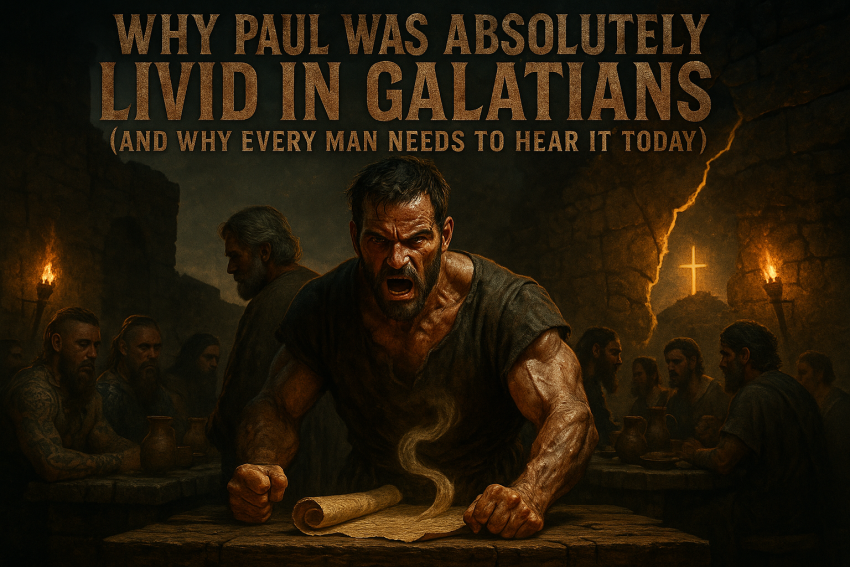
I’ve been chewing on Galatians for weeks, and every time I crack it open, I feel the heat coming off the page. Paul doesn’t start with a polite “Hey fellas, hope you’re well.” No. He dives in like a man who just watched his brother stab him in the back: “O foolish Galatians! Who has bewitched you?” (Galatians 3:1). That’s not irritation—that’s rage with a purpose. And it all started in a city called Antioch, around AD 48, right before the Jerusalem Council.
Picture this: a bustling port town on the Orontes River, Roman roads humming with trade, synagogues packed with devout Jews, and now—because the gospel had exploded beyond Jerusalem’s walls—Gentile converts from rough Celtic tribes flooding the streets. These weren’t soft-handed merchants or cultured Greeks. These were Galatians—full-blooded Gentiles, descendants of the Gauls (called Galatai by the Greeks), a fierce Celtic people who’d migrated from Western Europe in the 3rd century BC, rampaging across the Balkans, sacking the sacred shrine at Delphi in 279 BC, and finally settling in central Anatolia under invitation from King Nicomedes I of Bithynia to serve as mercenaries. By Paul’s day, they were a warrior-based, semi-nomadic society turned highland farmers, living in fortified hill towns, speaking a Celtic dialect alongside Greek, tattooed, superstitious, and deeply rooted in druidic paganism—worshiping Cybele with blood-soaked orgiastic rites, offering human sacrifices in sacred groves, and revering warrior gods of storm and soil.
Rome had tamed them into a client province by 25 BC, but the fire never fully died—these were men who lived by the sword, the harvest, and the oath, quick to anger, quick to loyalty, and quick to flip. In Lystra, they hailed Paul and Barnabas as Hermes and Zeus after a healing miracle (Acts 14:11-13), ready to sacrifice bulls—then, swayed by Jewish opposition, stoned Paul and dragged him out of the city, presuming him dead (Acts 14:19). That’s the kind of raw, volatile faith Paul was dealing with: no Torah background, no covenant history, no circumcision, no Sabbath—just pure, unfiltered hunger for a God who raised the dead and forgave the worst. These were Paul’s spiritual sons, hard-won through sweat, scars, and miracles in their rugged towns—Lystra, Iconium, Derbe—after surviving a stoning that left him for dead. They were outsiders to the covenant, idol-stained, uncircumcised, and now—by sheer, unmerited grace—grafted into the family of Abraham (Galatians 3:7-9).
And Peter—the rock, the leader, the guy who got the vision from God to go to Cornelius—shows up. At first? He’s all in. Eating with Gentiles. Laughing. Praying. Worshipping. No walls. Just family.
Then the Judaizers roll in.
The Knife in the Back: When Fear Trumps Faith
These weren’t outsiders. These were Jewish Christians from Jerusalem, likely tied to James’ circle, carrying the weight of tradition like a badge of honor. They didn’t storm in with swords—they whispered. “Faith in Jesus? Sure. But real salvation? Real belonging? You need the full package. Circumcision. Kosher laws. Sabbath. Or you’re still on the outside looking in.”
Peter—Peter—freezes. The man who walked on water, who preached at Pentecost, who saw the sheet drop from heaven with unclean animals and heard God say “Do not call anything impure that I have made clean” (Acts 10:15)—pulls back. He stops eating with the Gentiles. Stops fellowshipping. Starts segregating the table.
And Barnabas—Paul’s ride-or-die, his mission partner through shipwrecks and riots—follows suit.
Paul sees it and snaps.
“When Cephas came to Antioch, I opposed him to his face, because he stood condemned.” (Galatians 2:11)
Not behind closed doors. Not in a letter. To his face. In public. Because this wasn’t personal—it was gospel betrayal. If Peter, the pillar, rebuilds the wall Christ tore down, then everything Paul bled for—every lash, every stone, every night in chains—means nothing.
The Letter That Burned: Galatians Wasn’t Written—It Was Breathed in Fury
Galatians wasn’t composed in a quiet study with a cup of tea and a leather-bound journal. It was dictated in a war room—probably in a rented room in Antioch, Paul pacing the floor, voice cracking with urgency, while a scribe scratched every word onto papyrus like a battlefield dispatch. This was AD 48, before the Jerusalem Council (that historic summit in Acts 15, around AD 49), while the iron was still glowing red-hot and the church was fracturing at the seams. Paul skips the usual pleasantries you see in his other letters—no warm “I thank my God every time I remember you” (Philippians 1:3), no doxology, no prayer for grace and peace. No thanksgiving. No prayer. Just fire. He dives straight into the fight with “I am astonished that you are so quickly deserting the one who called you…” (Galatians 1:6). This wasn’t a sermon. It was a battle cry, written in the heat of betrayal, before the apostles in Jerusalem even had a chance to vote on the issue.
That vote—the Jerusalem Council—was the official ruling, a gathering of apostles, elders, and leaders in Jerusalem to settle the explosive question: Do Gentile believers need to be circumcised and follow the Mosaic Law to be saved? It was triggered by the very same crisis Paul was raging against. Men from Judea had infiltrated Antioch and Galatia, demanding, “Unless you are circumcised… you cannot be saved” (Acts 15:1). Paul and Barnabas went ballistic, debated them publicly, then marched the whole controversy to Jerusalem. Peter testified. James quoted Scripture. The Holy Spirit moved. And the verdict came down: No yoke. No Law. Just faith in Jesus, plus four basic guardrails (abstain from idol food, blood, strangled meat, and sexual immorality) to keep peace at the table (Acts 15:19-29). But Paul didn’t wait for the vote. He wrote Galatians first—a preemptive strike, a line in the sand, a father’s roar to his spiritual sons: “Stand firm. Don’t let anyone steal your freedom.”
To drive it home, he calls out his credentials—not to brag, but to establish authority: “I was advancing in Judaism beyond many of my own age… extremely zealous for the traditions of my fathers” (Galatians 1:14). Translation: I was the ultimate insider. Pharisee of Pharisees. Hebrew of Hebrews. I persecuted the church. I breathed threats and murder. And then—Damascus Road. Blinded. Broken. Remade. And now? All of it—dung. “I consider everything a loss because of the surpassing worth of knowing Christ Jesus my Lord… I consider them rubbish [skubala], that I may gain Christ” (Philippians 3:8). That word skubala? It’s not “trash.” It’s dog crap. Paul just looked at his résumé—his power, his status, his violence—and said, “Worthless. All of it. Compared to knowing Him.”
The Heart of the Fight: Grace vs. the Upgrade Lie
Here’s where it gets dangerously relevant for us as men.
The Judaizers weren’t saying Jesus was fake. They were saying He wasn’t enough. “Faith? Great starter pack. But to be a real man of God? You need the full covenant. The rules. The markers. The proof.”
Sound familiar?
It’s the same lie the serpent hissed in the garden: “Did God really say…? You won’t surely die. No—your eyes will be opened. You’ll be like God.” (Genesis 3:1-5)
It’s the same lie we hear in the gym, the boardroom, the locker room, the marriage bed:
- “Grace is for beginners. Real men earn it.”
- “You call yourself a leader? Then prove it—with performance, with control, with results.”
- “You want respect? Then add something—money, muscle, mastery, moral perfection.”
Paul says: Bull.
“I have been crucified with Christ. It is no longer I who live, but Christ who lives in me.” (Galatians 2:20)
That’s not poetry. That’s revolution.
The Man’s Application: Die Daily, Lead Boldly
The Man’s Application: Die Daily, Lead Boldly
So what does this mean for you—the husband grinding through another 12-hour day, the father staring down a mortgage and a kid’s rebellion, the leader carrying a team on your back, the fighter who wakes up at 5 a.m. to hit the bag because quitting isn’t an option—today? Galatians isn’t a history lesson. It’s a blueprint for war. Paul didn’t write it to win debates. He wrote it to save souls—starting with yours. Here’s how to live it, raw and real.
1. Stop Rebuilding Walls Christ Tore Down
Every time you demand someone earn your respect—your wife, your kids, your employees—you’re Peter at the table, pulling back out of fear. You walk in the door after a brutal day, and instead of dropping your armor and greeting your family with open arms, you scan for performance. Did she fold the laundry the way I like? Did he finish his homework without me nagging? Did the team hit the quarterly numbers I promised the boss? That’s not leadership—that’s legalism in a polo shirt. You’re rebuilding the very wall Christ demolished with His blood. Ephesians 2:14 says He “has made the two groups one and has destroyed the barrier, the dividing wall of hostility.” The cross didn’t just save you; it leveled the field. No more insiders and outsiders. No more “prove yourself to belong.”
And when you hide your weakness behind performance? When you flex your hours at the gym, your six-figure salary, your “perfect” marriage on Instagram, your stoic silence instead of saying “I’m scared I’m failing as a dad” or “I blew it at work today”—you’re the Judaizer selling an upgrade. You’re whispering the same lie: “Grace is the starter pack, but real manhood? That’s earned. Add the hustle. Add the control. Add the image.” That’s not strength. That’s fear wearing armor. Peter feared the circumcision party. You fear looking weak in front of your crew, your wife, your mirror. Same root. Same poison.
Die to it. Daily. Not as a slogan. As a discipline. Every morning, before you check your phone, before you bark orders, before you measure anyone’s worth—reckon yourself dead (Romans 6:11). Picture the cross. Picture your ego nailed there—your need to be right, to be respected, to be in control—bleeding out. Let the Spirit do the surgery. Let the cross kill your need to prove.
Practical steps:
- At home: Greet your wife with a 20-second hug—no words, no critique. Ask, “How can I serve you today?” before you unload your day.
- With kids: Drop the performance report card. Sit on the floor, play Legos, and say, “I’m proud of you because you’re mine.” No conditions.
- At work: Praise effort publicly, correct privately. Never make someone feel small to make yourself big.
- In church: Welcome the guy in ripped jeans who smells like cigarettes. Sit next to him. Buy him coffee. Be the table.
Because here’s the truth: the moment you stop demanding others earn your love, you start giving what you’ve received—grace that cost everything. Your wife doesn’t need a scorekeeper. Your kids don’t need a drill sergeant. Your team doesn’t need a god. They need a man who’s been crucified—humble enough to serve, strong enough to bleed, alive enough to love without conditions. And when you live this at home, it bleeds into church, into faith, into everyday life. You stop gatekeeping the small group. You stop judging the guy who shows up late in flip-flops. You stop demanding your pastor preach like your favorite podcast. You stop requiring your neighbor to clean up before you invite him to dinner. You become the open table—the Antioch of your block, your office, your locker room. The cross didn’t just tear down the wall between Jew and Gentile; it tore down the wall between you and them. Live like it. Full circle.
2. Lead from the Grave
Real strength isn’t in never falling—it’s in rising after being stoned. Paul didn’t lead from polish. He led from scars. Remember Lystra? The crowd hailed him as Hermes, then stoned him and dragged him out like trash (Acts 14:19). He got up. Dusted off. Walked back in. Preached again. That’s not resilience—that’s resurrection.
Your failures? Your addictions? Your rage? Your divorce? Your bankruptcy? Your porn habit? Bring them to the cross. Don’t bury them. Don’t polish them. Bleed them out. Let Christ live through the cracks. The world doesn’t need another flawless leader. It needs a wounded one who knows the grave is empty.
Practical steps:
- Own your story: Next men’s group, don’t talk about your wins. Talk about the night you almost walked out. The relapse. The apology you choked out. Vulnerability is leadership.
- Mentor from the dirt: Find a younger guy—your son, your employee, your buddy—and say, “I blew it here. Here’s how grace pulled me up.”
- Lead your home from weakness: When you screw up, apologize first. “I was harsh. I was wrong. Forgive me.” That’s not weak—that’s kingly.
- In faith: Share your testimony in church—not the sanitized version. The real one. The one where Jesus met you in the mud.
Because the grave isn’t the end. It’s the launchpad. Lead from there, and watch men follow a risen Savior, not a fake hero.
3. Guard the Table
Your home is Antioch. Your dinner table. Your small group. Your crew at work. Who’s pulling back out of fear? The new guy who doesn’t know the lingo? The wife who’s quiet because she’s scared of your temper? The kid who’s failing math and thinks you’ll explode? Call it out. Not with anger—but with truth in love (Ephesians 4:15).
Paul didn’t whisper to Peter. He opposed him to his face (Galatians 2:11). Public sin, public correction. But why? To restore, not destroy. Because if the strong don’t fight for unity, the weak get crushed.
Practical steps:
- At home: Once a week, no phones at dinner. Ask each person, “What’s one thing I can do to make you feel safer here?” Listen. Act.
- At church: Notice who’s on the edge. Invite them to your row. Text them mid-week. Be the bridge.
- At work: When someone’s excluded—new hire, quiet guy, the “weird” one—pull up a chair. “Sit with us.”
- In conflict: Don’t ghost. Don’t gossip. Confront like Paul—direct, kind, redemptive. “Brother, I love you. This is hurting us. Let’s fix it.”
The table is where family happens. Guard it like your life depends on it—because someone’s soul does.
4. Count It All Dung
Your titles. Your bank account. Your deadlift PR. Your follower count. Your war stories. Your “I built this” ego. Skubala. Dog crap. Worthless next to knowing Christ (Philippians 3:8).
Paul was the ultimate insider—Pharisee, zealot, persecutor. He flushed it all. Why? Because resurrection life doesn’t fit in a trophy case.
Practical steps:
- Daily audit: Every night, write down one thing you’re tempted to boast in. Cross it out. Write: “Christ in me.”
- Give it away: Tithe your time, your platform, your strength. Mentor for free. Serve without credit.
- In prayer: Stop asking God to bless your empire. Ask Him to empty you so He can fill you.
- In legacy: Teach your kids, “The only thing that lasts is what’s done for Jesus.” Nothing else.
Because when you count it all dung, you gain everything. The warrior wakes up. The father stands firm. The husband loves fiercely. The leader bleeds grace.
Die daily. Lead boldly.
That’s the gospel.
That’s manhood.
The Final Word: A Battle Cry for Men
Galatians isn’t a devotional. It’s a battle cry.
Paul was ticked off because the gospel was at stake—and so is yours.
Every morning, before you check your phone, before you flex in the mirror, before you bark at your kids—reckon yourself dead.
“I die every day!” (1 Corinthians 15:31)
Not as a metaphor. As a man.
Because the world doesn’t need more polished leaders. It needs crucified ones.
And when Christ lives in you? The warrior wakes up. The father stands firm. The husband loves fiercely. The leader bleeds grace.
That’s the gospel Paul fought for. That’s the gospel you were made to live.
Now go. Die well.
Call to Action
If this study encouraged you, don’t just scroll on. Subscribe for more devotionals, share a comment about what God is teaching you, or reach out and tell me what you’re reflecting on today. Let’s grow in faith together.

Sources
- Galatians 2 (ESV) – Bible Gateway
- Acts 15 (ESV) – Bible Gateway
- Philippians 3 (ESV) – Bible Gateway
- Galatia – Ancient District, Anatolia | Britannica
- The Jerusalem Council – Blue Letter Bible
- Galatians 2:11 Commentaries – Bible Hub
- When Was Galatians Written? – The Gospel Coalition
- Antioch on the Orontes – Biblical Archaeology Society
- The Heart of Paul’s Theology: Galatians – Desiring God
- Confronting Peter – Ligonier Ministries
- 10 Things About Galatians – Crossway
- Galatians Video Overview – BibleProject
- Map of Paul’s First Journey – ESV Study Bible
Disclaimer:
The views and opinions expressed in this post are solely those of the author. The information provided is based on personal research, experience, and understanding of the subject matter at the time of writing. Readers should consult relevant experts or authorities for specific guidance related to their unique situations.