
1,894 words, 10 minutes read time.
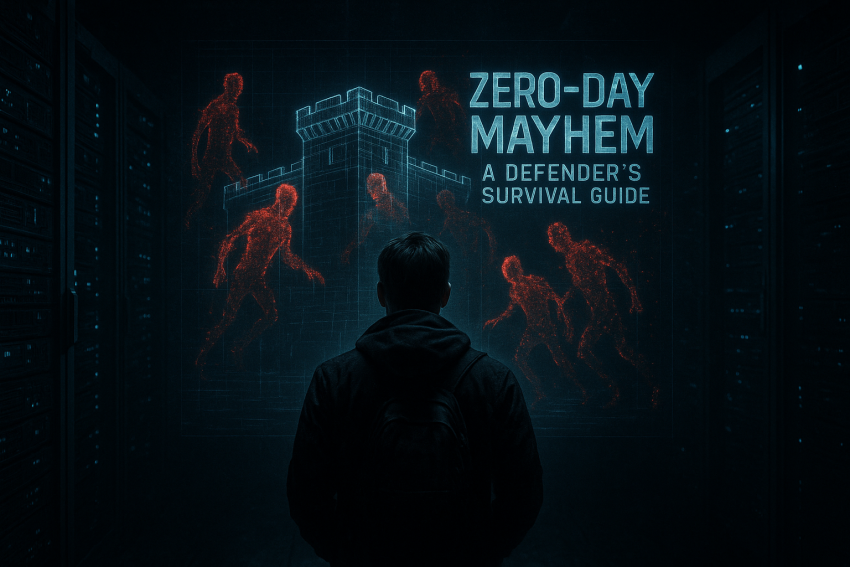
I still remember the feeling. It was years ago, deep in the guts of an incident response. We were chasing ghosts. The logs showed an impossible lateral movement—a clean jump from a hardened perimeter device to a domain controller with no alerts, no failed logins, nothing. It was like a key had been slipped under the door when we weren’t looking. The team was burning out, running on caffeine and stale pizza, and the attacker was dancing around us. That gut-sinking feeling, the slow-dawning realization that you’re fighting an enemy who knows a secret about your tools that you don’t… that’s the reality of a zero-day.
Let’s cut through the marketing fluff. A “zero-day” isn’t some magical hacker superpower; it’s a grimly simple concept. It’s a vulnerability in a piece of software or hardware that the vendor—the people who made it—doesn’t know about yet. “Day Zero” is the day they find out and the clock starts ticking on a patch.
Every day before that? That’s the kill zone. That’s the time an attacker has to exploit that flaw with impunity, because there are no signatures for your AV, no patches for your sysadmins, and no specific alerts for your SOC. It’s a secret tunnel into your fortress, and you don’t even know it exists. We saw it with Stuxnet, which used four separate zero-days to cripple Iranian nuclear centrifuges. We saw it with the Log4Shell vulnerability, which set the entire internet on fire overnight. This isn’t theoretical; it’s the apex predator of our digital world.
The Shadow Market: How a Zero-Day is Born
A zero-day exploit doesn’t just appear out of thin air. It begins as a simple bug, a line of code someone wrote on a Tuesday afternoon that had an unforeseen consequence. But how that bug transforms from a harmless flaw into a weapon is a story with a few different endings.<h4>The “Good Guys”: Researchers and Bug Bounties</h4>
Some of these vulnerabilities are found by the good guys. Security researchers who spend their days and nights trying to break things, not for malice, but for the challenge and to make the world a little safer. When they find a flaw, they follow a process called Coordinated Vulnerability Disclosure (CVD). They report it privately to the vendor, giving them time to build and test a patch before the vulnerability is announced to the public. Companies with mature security programs encourage this, offering bug bounties—cash rewards—for these discoveries. It’s a pragmatic way to crowdsource your security testing.<h4>The “Bad Guys”: Exploit Brokers and Nation-States</h4>
Then there’s the other path. The dark one. A highly valuable zero-day, especially one in a ubiquitous platform like iOS, Windows, or a popular firewall, can be worth millions on the black or “gray” market. Exploit brokers like the now-defunct Zerodium famously offered up to $2.5 million for a single exploit chain. Their customers aren’t script kiddies; they are government intelligence agencies and well-funded Advanced Persistent Threat (APT) groups. For them, a zero-day isn’t for smashing and grabbing—it’s a scalpel for espionage, surveillance, and strategic operations. This is the stuff of digital warfare.<h4>The Methodical Hunt: How They’re Actually Found</h4>
Finding these flaws is grueling, meticulous work. It’s not a “Matrix”-style flash of green text. It’s a process.
- Fuzzing: This is like giving a million monkeys a million keyboards, but for a single application. Automated tools throw massive amounts of malformed, unexpected data at a program, hoping to trigger a crash. That crash is the thread you pull on to see if there’s a vulnerability at the other end.
- Reverse Engineering: This is taking compiled code—the ones and zeros—and working backward to understand its logic. It’s like trying to figure out the recipe for a cake by analyzing a single slice under a microscope. It’s painstaking, but it reveals the deepest secrets of a program.
- Source Code Analysis: When you have the source code, you’re looking for logical errors, unsafe functions, and other subtle mistakes the original developer might have missed.
No matter who finds it, the moment a vulnerability is discovered but remains unpatched, a zero-day is born.
Anatomy of a Zero-Day Attack: From Ghost to Gaping Wound
The exploit itself is just the beginning. It’s the key, not the heist. A real attack is a multi-stage process.<h4>Phase 1: The Weaponization</h4>
An attacker takes the raw vulnerability—say, a buffer overflow in a VPN concentrator’s web portal—and crafts a payload. They have to make it reliable, ensuring it works against different versions and configurations. This turns a theoretical flaw into a functional weapon, ready for deployment.<h4>Phase 2: The Delivery</h4>
How do they get the weapon to the target? They might embed it in a link sent via a spear-phishing email to a privileged user. They could compromise a website the target frequently visits (a “watering hole” attack). Or, in a sophisticated supply chain attack like SolarWinds, they could inject it directly into a software update, turning a trusted tool into a Trojan horse. This is the Initial Access phase (MITRE ATT&CK TA0001).<h4>Phase 3: The Post-Exploitation Nightmare</h4>
Once the zero-day exploit works and they’re inside, the real damage begins. The initial foothold is often fragile and low-privileged. Now they need to escalate privileges, disable security controls, and move laterally across the network to find what they’re truly after. They use well-known tools and techniques—Mimikatz to dump credentials, PowerShell for living-off-the-land attacks, and Cobalt Strike for command and control. The zero-day got them in the door, but everything that follows is the bread and butter of hacking. This is where your internal defenses are put to the test.
You Can’t Patch the Unknown: A Defender’s Playbook
So, how do you fight an enemy you can’t see? You don’t. You fight the environment. You build a fortress so resilient that even if they find a secret tunnel, they find themselves trapped in a reinforced corridor with alarms blaring.<h4>Principle 1: Assume Breach. Build a Moat (and a Dungeon).</h4>
This is the core of the Zero Trust philosophy. Stop trusting packets just because they originated from “inside” the network. Every request, every user, every device should be verified. In practical terms, this means network segmentation. Your critical servers shouldn’t be on the same flat network as your marketing team’s workstations. A zero-day on a user’s laptop should not be a game-over event. Micro-segmentation takes this further, putting firewalls around individual applications. If the attacker gets into one room, make damn sure all the other doors are locked and bolted.<h4>Principle 2: Hunt for Behavior, Not Just Signatures.</h4>
Signatures are for known threats. Zero-days are, by definition, unknown. Your only hope is to spot the strange behavior that happens after the exploit. This is the job of a modern Endpoint Detection and Response (EDR) tool and a sharp SOC analyst. You’re not looking for evil.exe; you’re looking for signs of life.
- Is your web server suddenly spawning a command shell?
- Is
winword.exemaking a network connection to a weird IP in a foreign country? - Is a service account that only manages backups suddenly trying to access the HR database?
These are Tactics, Techniques, and Procedures (TTPs). They are the attacker’s habits. Hunt those, and you can catch them even when their weapon is invisible.
<h4>Principle 3: Shrink the Blast Radius.</h4>
Every step an attacker takes after exploitation should be a struggle. The Principle of Least Privilege is your shield here. Users should only have the permissions they absolutely need to do their jobs. Service accounts should be locked down. Combine this with aggressive application allow-listing. If it’s not on the approved list, it doesn’t run. Period. This prevents the attacker from easily dropping their secondary tools and malware onto the system. A zero-day exploit is powerful, but if it lands in an environment where it can’t execute anything else, its value plummets.<h4>Principle 4: Master the Fundamentals (Yes, Really).</h4>
This feels counter-intuitive, but it’s the most important point. You can’t patch the zero-day in your perimeter firewall today. But you can patch the three-month-old vulnerability on the web server they’ll try to pivot to. You can ensure your domain controllers are hardened. A robust patch management program and a comprehensive asset inventory (you can’t protect what you don’t know you have) are your most effective weapons against the entire attack chain, not just the initial entry. A house with locked internal doors and no valuables lying around is much harder to rob, even if the thief picks the front lock.
The CISO’s Gambit: Communicating Unquantifiable Risk
For the leaders and CISOs in the room, the challenge is different. How do you explain this to your board? You can’t put a dollar value on an unknown risk. Trying to do so will make you look foolish.
Instead, you change the conversation from prevention to resilience. You say, “We cannot guarantee they will never get in. The threat is too sophisticated. What I can guarantee is that we have a plan. We have visibility, we practice our response, and we can contain an incident before it becomes a catastrophe.”
Frame your investments around metrics like Mean Time to Detect (MTTD) and Mean Time to Respond (MTTR). Run tabletop exercises where the scenario is a zero-day compromise. Show the board you’re not just building walls; you’re training an elite firefighting team that knows how to handle a fire, no matter how it starts.
The Fight in the Dark
Defending against zero-days isn’t about finding the perfect product or building an impenetrable wall. It’s about building a security culture and architecture that is resilient by design. It’s about knowing your network better than the enemy does. It’s about having a team of hunters who know what “normal” looks like, so they can spot the “abnormal” in a heartbeat.
It’s a high-stakes chess game where your opponent occasionally gets to introduce a piece you’ve never seen before. You won’t win by predicting their every move. You’ll win by being able to adapt, respond, and endure when they finally make it. The fight continues. Stay vigilant.
I’d love to hear your own war stories. How have you prepared for the unknown? Drop a comment below and let’s discuss.
For more in-the-trenches security insights, subscribe to the newsletter: https://wordpress.com/reader/site/subscription/61236952
If you’re looking to bolster your organization’s resilience, let’s connect: https://bdking71.wordpress.com/contact/

Sources
- NIST Special Publication 800-40 Rev. 3, Guide to Enterprise Patch Management Technologies
- MITRE ATT&CK Framework
- CISA Known Exploited Vulnerabilities Catalog
- Mandiant: A Record Year for Zero-Day Exploitation in 2021
- WIRED: An Unprecedented Look at Stuxnet, the World’s First Digital Weapon
- KrebsOnSecurity: A First Look at the Log4j Vulnerability
- Schneier on Security: The Vulnerability Market and the CVE Process
- Verizon 2023 Data Breach Investigations Report (DBIR)
- Google Project Zero Blog: In-the-Wild Exploitation Analysis
- Dark Reading: The MOVEit Breach: What Went Wrong
- RAND Corporation: Zero Days, Thousands of Nights – The Life and Times of Zero-Day Vulnerabilities
- HackerOne: What is a Bug Bounty Program?
- CrowdStrike: What is Zero Trust Security?
- CSO Online: What is a zero-day exploit? How they work and how to detect them
Disclaimer:
The views and opinions expressed in this post are solely those of the author. The information provided is based on personal research, experience, and understanding of the subject matter at the time of writing. Readers should consult relevant experts or authorities for specific guidance related to their unique situations.