
1,665 words, 9 minutes read time.
The Weight of Hidden Wounds
I’ve got scars you can’t see. You do too. Maybe it’s the sting of a father who never showed up, or the ache of a marriage that crumbled despite your best efforts. Maybe it’s the quiet shame of a secret you’ve buried for years, or the exhaustion of trying to hold it all together when you’re falling apart. As men, we’re taught to suck it up, to keep moving, to hide the hurt. But those wounds don’t just vanish—they fester. And if we’re honest, they shape how we live, how we love, and how we see ourselves.
The Bible doesn’t shy away from pain. We see this in the story of a woman who’d been bleeding for twelve years. She’s not a man, sure, but her story hits hard for any guy who’s ever felt broken and overlooked. She’d spent everything she had on doctors, chasing cures that never came. She was desperate, isolated, and probably ashamed. Sound familiar? Maybe not the exact details, but the feeling—the weight of carrying a wound that won’t heal.
Key Scripture: Mark 5:25–34 (NIV)
And a woman was there who had been subject to bleeding for twelve years. She had suffered a great deal under the care of many doctors and had spent all she had, yet instead of getting better she grew worse. When she heard about Jesus, she came up behind him in the crowd and touched his cloak, because she thought, “If I just touch his cloak, I will be healed.” Immediately her bleeding stopped and she felt in her body that she was freed from her suffering. At once Jesus realized that power had gone out from him. He turned around in the crowd and asked, “Who touched my clothes?” “You see the people crowding against you,” his disciples answered, “and yet you can ask, ‘Who touched me?’” But Jesus kept looking around to see who had done it. Then the woman, knowing what had happened to her, came and fell at his feet and, trembling with fear, told him the whole truth. He said to her, “Daughter, your faith has healed you. Go in peace and be freed from your suffering.” (Mark 5:25–34, NIV)
This woman’s story isn’t just about physical healing. It’s about faith meeting our deepest wounds—physical, emotional, spiritual—and doing something about them. As men, we’re often skeptical of “healing.” We’ve been burned by quick fixes and empty promises. But this story, and the Jesus at its center, invites us to reconsider what faith can do when we’re honest about our pain.
Unpacking the Text: Faith in the Mess
Let’s dig into Mark 5. This passage sits in a busy chapter where Jesus is moving fast—calming storms, casting out demons, and now this. The woman’s story is sandwiched between Jairus’s plea to heal his dying daughter, showing Jesus doesn’t play favorites. He’s got time for a synagogue leader and an outcast woman. That’s good news for us, whether you’re a guy who’s been in church your whole life or someone who’s just curious about this Jesus guy.
The woman’s condition wasn’t just medical. In her culture, her bleeding made her “unclean” (Leviticus 15:25–27). She wasn’t supposed to be in that crowd, let alone touch anyone. Her act of reaching for Jesus was risky—she could’ve been shunned or worse. But she did it anyway. Why? Because her pain was louder than her fear. That’s the kind of faith Jesus notices. Not perfect faith, but desperate, honest faith.
When Jesus says, “Your faith has healed you,” the Greek word for “healed” (sozo) means more than a fixed body. It means wholeness—body, soul, and spirit. Her faith didn’t just stop the bleeding; it restored her dignity, her place in community, her peace. Jesus calls her “daughter,” a term of deep affection, showing her she’s seen, valued, and loved. For men, this hits home. We carry wounds that make us feel less than—less than a man, less than worthy. Jesus sees those wounds and calls us to bring them to him.
When Faith Meets Our Wounds
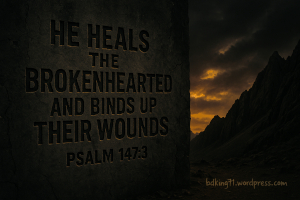
I remember a season when I was carrying a wound I didn’t want to admit. A business deal went south, and I lost more than money—I lost confidence. I felt like a failure, like I’d let down my family. I’d lie awake at night, replaying every mistake, wondering if I’d ever climb out of that hole. I didn’t want to pray about it; I was too angry, too proud. But one night, I cracked open my Bible, almost daring God to show up. I landed on Psalm 147:3 (NIV): “He heals the brokenhearted and binds up their wounds.” I didn’t feel healed, but I started talking to God—raw, unfiltered, like I was talking to a friend. Slowly, I began to see that faith isn’t about having it all together; it’s about bringing your mess to Jesus.
For you, maybe the wound is different. Maybe it’s the sting of rejection—a partner who walked away, a friend who betrayed you. Maybe it’s the weight of addiction, or the fear that you’re not enough for your kids, your spouse, or even yourself. Maybe you’re wrestling with who you are—your identity, your desires, your place in the world—and you’re scared to bring it into the light. I’m here to tell you: Jesus can handle it. He’s not shocked by your pain or your questions. He’s not waiting for you to clean yourself up. He’s waiting for you to reach out, like that woman did, and trust he’s got power to heal.
Faith that heals isn’t a one-time fix. It’s a journey. Sometimes it’s instant, like the woman’s healing; sometimes it’s slow, like a wound that needs daily care. Either way, it starts with being honest about where it hurts. For men, that’s tough. We’re wired to fix things ourselves, to tough it out. But faith means admitting we can’t fix it all. It means trusting Jesus enough to let him into the mess—whether it’s shame, anger, or fear—and believing he can make us whole.
Living It Out: Practical Steps for Men
So how do we live this out? First, name your wound. You don’t have to tell the world, but tell yourself—and tell God. Write it down if it helps. Maybe it’s “I feel like a failure as a dad” or “I’m scared I’ll never be enough.” Naming it takes away some of its power.
Second, reach out like the woman did. That might mean praying, even if it’s just, “Jesus, I’m hurting. Help me.” It might mean opening your Bible, even if you don’t know where to start (try Psalms or John). It might mean talking to a trusted friend, pastor, or counselor. If you’re carrying something heavy like addiction, abuse, or suicidal thoughts, please don’t go it alone. Reach out to a professional or a local church for support. You’re not weak for needing help—you’re human.
Third, keep showing up. Faith isn’t a feeling; it’s a choice. Keep praying, keep reading, keep seeking Jesus, even when you don’t feel healed. The woman in Mark 5 didn’t give up after twelve years of pain; she pressed through the crowd. You can too.
Finally, let Jesus redefine you. The world tells us our worth is in our strength, our success, our status. Jesus says you’re enough because you’re his. Whether you’re straight, gay, questioning, or anything else, you’re seen and loved by a God who calls you his own. Let that truth sink in. It’s not about erasing your wounds; it’s about letting Jesus bind them up and make you whole.
A Prayer for Healing
Jesus, you see every wound I carry—the ones I show and the ones I hide. I’m tired of pretending I’m fine. Meet me in my pain, like you met that woman in the crowd. Give me the courage to reach out, the faith to trust you, and the strength to keep going. Heal my heart, bind up my wounds, and make me whole. Amen.
Reflection Questions
- What’s one wound you’re carrying that you’ve been afraid to name? How might bringing it to Jesus change how you see it?
- The woman in Mark 5 took a risk to reach out. What’s one step you can take this week to bring your pain to Jesus or someone you trust?
- How has the world’s definition of “being a man” shaped how you handle your wounds? How does Jesus’s view of you differ?
- When has faith felt hard for you? What would it look like to keep showing up, even in the struggle?
- How can you support another man in your life who might be carrying hidden wounds?
Call to Action
This journey of healing isn’t meant to be walked alone. If this devotional hit home, join thousands of men finding hope through faith by subscribing to my newsletter. Share your story or thoughts in the comments below, or reach out directly. Let’s keep pushing forward together

Sources
- Mark 5:25–34 (NIV)
- Psalm 147:3 (NIV)
- Blue Letter Bible: Sozo (Greek Lexicon)
- Matthew Henry’s Commentary on Mark 5
- ESV Global Study Bible Notes on Mark 5
- The Wounded Healer by Henri J. M. Nouwen
- Emotionally Healthy Spirituality by Peter Scazzero
- NIV Application Commentary: Mark by David E. Garland
- Psalms: The Prayer Book of the Bible by Dietrich Bonhoeffer
- The Men We Need by Brant Hansen
- Crossway: 10 Key Bible Verses on Healing
- Desiring God: Healing for the Wounded
- Christianity Today: Emotional Health and Spirituality
- BibleProject: Overview of Mark
- Got Questions: Who Was the Woman with the Issue of Blood?
Disclaimer:
The views and opinions expressed in this post are solely those of the author. The information provided is based on personal research, experience, and understanding of the subject matter at the time of writing. Readers should consult relevant experts or authorities for specific guidance related to their unique situations.