
1,859 words, 10 minutes read time.
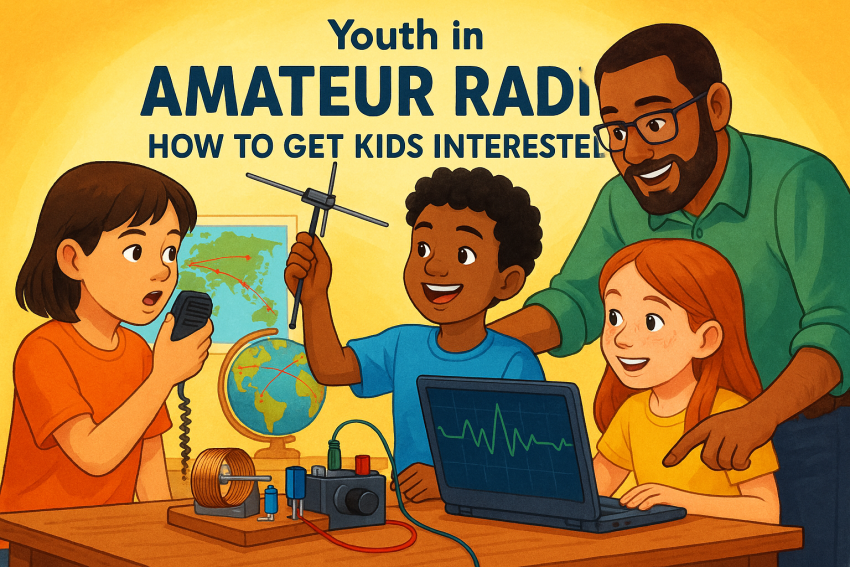
In a world dominated by smartphones, tablets, and streaming services, it’s easy to assume that kids today have little interest in “old-school” hobbies like amateur radio. Yet nothing could be further from the truth. Amateur radio, often referred to as ham radio, continues to captivate curious minds by combining the excitement of communication, technology, and problem-solving into a hands-on, interactive experience. For children, it’s not just a hobby; it’s a gateway into STEM, global awareness, and even public service. When guided correctly, young people can experience the thrill of talking across continents, receiving signals from satellites, or even communicating with astronauts aboard the International Space Station.
The beauty of amateur radio is that it is as accessible today as it has ever been. While the technology has evolved, the core principles remain the same: signal, antenna, and operator. Organizations like the American Radio Relay League (ARRL) and Youth on the Air (YOTA) have recognized the importance of engaging young enthusiasts, and they offer a wide range of programs designed to make ham radio inviting for the next generation. However, the most effective engagement still comes from personal mentorship—fathers, uncles, teachers, Scout leaders, and neighbors who demonstrate passion and patience while helping children explore the airwaves. This article explores why amateur radio is essential for youth, how to ignite curiosity, practical entry points, essential tools and resources, and the pivotal role mentors play in shaping lifelong enthusiasts.
Why Amateur Radio Matters for the Next Generation
Amateur radio serves as a vital counterbalance to the digital world that dominates today’s youth. Unlike passive screen-based entertainment, ham radio requires active listening, problem-solving, and hands-on experimentation. A child setting up a simple antenna or adjusting a transceiver is engaging in physics, electronics, and practical reasoning in a way that no app can replicate. These skills translate naturally into broader life skills, including patience, focus, and creativity.
Historically, youth involvement has been central to the survival and evolution of amateur radio. Throughout the 20th century, countless young operators discovered engineering, science, and global awareness through their early experiences on the air. Many of today’s engineers, satellite operators, and emergency communication experts started as children captivated by the idea of making a contact with someone hundreds or even thousands of miles away. Organizations like YOTA explicitly encourage young operators to develop confidence, social skills, and technical knowledge through hands-on experiences that build lifelong capabilities.
Amateur radio also fosters a sense of community. It introduces children to teamwork and social responsibility, particularly through public service events like parades, charity walks, and disaster response exercises. Young operators quickly learn that their skills can have real-world impact. This is especially compelling for children who enjoy practical, problem-solving tasks and who thrive when they see tangible outcomes from their efforts.
How to Spark Curiosity in Kids
The key to engaging young people in amateur radio is to make it visible, exciting, and tangible. Kids respond best to experiences that allow them to see results quickly and meaningfully. A well-timed story, a short demonstration, or even a hands-on experiment can spark a level of curiosity that lectures or manuals never will.
Storytelling is incredibly powerful. Sharing tales of a contact with a remote island, a high-altitude balloon transmission, or a conversation with astronauts aboard the ISS instantly conveys the magic of amateur radio. Videos and images showing children making contacts at school clubs or youth camps also create an aspirational hook. According to ARRL, these small stories provide proof that ham radio is fun, achievable, and socially rewarding.
Hands-on experiments are another effective approach. Building a simple crystal radio or a small handheld antenna provides an immediate sense of accomplishment. Even learning Morse code through a playful game or software simulator can turn an abstract skill into a concrete, enjoyable challenge. For tech-minded children, amateur radio can intersect with coding, electronics, and even Raspberry Pi projects that automate logging or decode digital modes. Maker culture is highly complementary to radio, and linking these two worlds often results in sustained interest.
Visual demonstrations amplify engagement. Watching a satellite pass overhead while simultaneously receiving its signal on a radio receiver creates a sense of awe. Even simple activities like handheld VHF contacts from a neighborhood hill can provide excitement and immediacy. When children see the results of their actions in real-time, they internalize the technical principles and develop curiosity that extends beyond the immediate experience.
Safety and etiquette should always be part of the conversation. Introducing RF safety in an approachable way — like keeping transmit power reasonable and understanding equipment limits — teaches respect for the technology and for others on the air. Similarly, instilling the habits of polite calling, logging contacts, and maintaining proper timing ensures that children understand the social and technical responsibility that comes with amateur radio.
Practical Entry Points for Youth
Engagement is most effective when it is structured yet flexible. There are numerous entry points for children to explore amateur radio without overwhelming them with licensing theory or complex electronics.
School clubs and camps provide accessible, group-based learning environments. Many schools now sponsor radio clubs where children can participate in activities like “Fox Hunts” or engage in digital mode communications. These settings offer peer support, mentorship, and the excitement of shared discovery.
ARRL-sponsored events such as Kids Day and Field Day are particularly impactful. Kids Day, held annually, provides a friendly, low-pressure environment where children can make their first contacts under the guidance of licensed operators. Field Day combines camping, emergency preparedness, and a contest-like atmosphere, offering young participants a sense of adventure while teaching essential skills.
Scouting programs also serve as effective introduction points. The annual Jamboree on the Air (JOTA) connects Scouts worldwide via amateur radio. Local troops can participate in activities that teach both practical skills and the importance of teamwork, while giving children the thrill of global communication without leaving their home region.
Local amateur radio clubs play a critical role in youth engagement. Clubs that welcome young participants often provide mentorship, equipment, and structured activities, ranging from Morse code challenges to digital mode contests. Observing and participating in a club environment helps children internalize best practices, etiquette, and the collaborative spirit of ham radio.
Tools and Resources That Keep Kids Engaged
The accessibility of modern amateur radio equipment and digital resources makes it easier than ever to sustain youth interest. Affordable handheld radios, simple transceivers, and software-defined radio (SDR) kits provide hands-on opportunities without requiring large investments. These tools allow children to experiment safely, explore a variety of frequencies, and experience the fun of real-time communication.
Online learning platforms and communities offer additional support. Websites like HamStudy.org, ARRL Youth pages, and QRZ.com provide tutorials, flashcards, and interactive learning experiences. Video tutorials and live demonstrations allow children to visualize complex concepts and develop both technical skills and confidence.
Field-specific projects add excitement and variety. Listening to satellite telemetry, decoding digital modes, or even participating in amateur radio contests teaches children how to apply theory in practice. By observing real-world applications, they develop a deeper understanding of frequency propagation, antenna design, and the dynamics of global communication.
Mentors can also encourage children to keep logs, track contacts, and participate in small competitions. These structured activities transform casual interest into ongoing engagement, building habits that last into adulthood. By emphasizing discovery and achievement, mentors ensure that children see amateur radio as an evolving, interactive hobby rather than a static pastime.
The Mentor’s Role
Adults play a pivotal role in shaping a child’s experience with amateur radio. Passion, patience, and enthusiasm matter far more than technical mastery. Children are highly attuned to the emotional cues of mentors, so an adult’s excitement and confidence directly influence engagement. By demonstrating curiosity, showing practical examples, and celebrating small successes, mentors instill confidence and motivation in young operators.
Mentors also teach social and technical responsibility. Explaining RF safety, etiquette, and the importance of adhering to regulations helps children develop a respectful and disciplined approach. Likewise, mentors model the behaviors of effective operators: clear communication, patience with others on the air, and thoughtful troubleshooting.
Effective mentorship balances guidance with independence. Allowing children to experiment, make mistakes, and solve problems under supervision encourages resilience, critical thinking, and creativity. Over time, these experiences foster not only technical skill but also a deeper appreciation for the culture and ethics of amateur radio.
From Curiosity to Lifelong Hobby
The ultimate goal is to transform initial curiosity into sustained engagement. Early exposure to amateur radio can lead to lifelong enthusiasm, with children eventually participating in clubs, contests, public service communications, and advanced technical projects. Experiences like making satellite contacts, decoding digital signals, or building antennas cultivate confidence and mastery.
As youth gain competence, they naturally begin to mentor their peers, expanding the cycle of engagement. The culture of amateur radio thrives on this multi-generational exchange, where knowledge is shared, curiosity is celebrated, and achievement is recognized.
Importantly, early engagement lays the foundation for a broader understanding of electronics, physics, and communication. Many professionals in STEM fields trace their early interests to experiences in ham radio, highlighting its value beyond immediate recreational enjoyment. By nurturing children’s interest, mentors contribute to the development of the next generation of innovators and problem-solvers.
Conclusion
Amateur radio is more than a hobby; it is a living legacy, a hands-on classroom, and a bridge to the wider world. Introducing children to ham radio creates opportunities for discovery, problem-solving, and meaningful social connections. Whether it’s through school clubs, scouting programs, youth camps, or local clubs, each experience shapes young minds and sparks curiosity that can last a lifetime.
Mentors — parents, relatives, teachers, and neighbors — are the linchpins of this process. Their passion, guidance, and encouragement transform initial curiosity into a hobby that empowers and inspires. By sharing their knowledge and celebrating small victories, mentors ensure that amateur radio remains vibrant, relevant, and exciting for future generations.
If this article inspires you, take action today. Bring a child to a local club meeting, set up a simple demonstration, or explore online resources together. Keep the tradition moving forward, and if you’d like to continue the conversation, subscribe to our newsletter at https://wordpress.com/reader/site/subscription/61236952, leave a comment below, or contact me directly via https://bdking71.wordpress.com/contact/. Every contact you make — on the air and with a young mind — is a seed for the future of amateur radio.

Sources
- ARRL Youth Programs – American Radio Relay League
- What is Ham Radio? – ARRL
- Youth on the Air (YOTA) Americas
- International Amateur Radio Union (IARU) Youth Engagement
- ARRL School Club Roundup
- Ham Radio and Kids – DXZone
- What is Ham Radio? – Ham Radio Prep
- Ham Radio Crash Course – Learning Resources
- QRZ.com – Callsigns, Forums, and Learning
- AMSAT Education & Youth Outreach (Satellite Communications)
- eHam.net – Amateur Radio Community & Resources
- HamStudy.org – Tools & Flashcards
- KB6NU Ham Radio Blog – Education & Youth Content
- Youth in Amateur Radio – Project Resources
- Youth and Amateur Radio – Getting Young People Involved
Disclaimer:
The views and opinions expressed in this post are solely those of the author. The information provided is based on personal research, experience, and understanding of the subject matter at the time of writing. Readers should consult relevant experts or authorities for specific guidance related to their unique situations.