
1,809 words, 10 minutes read time.
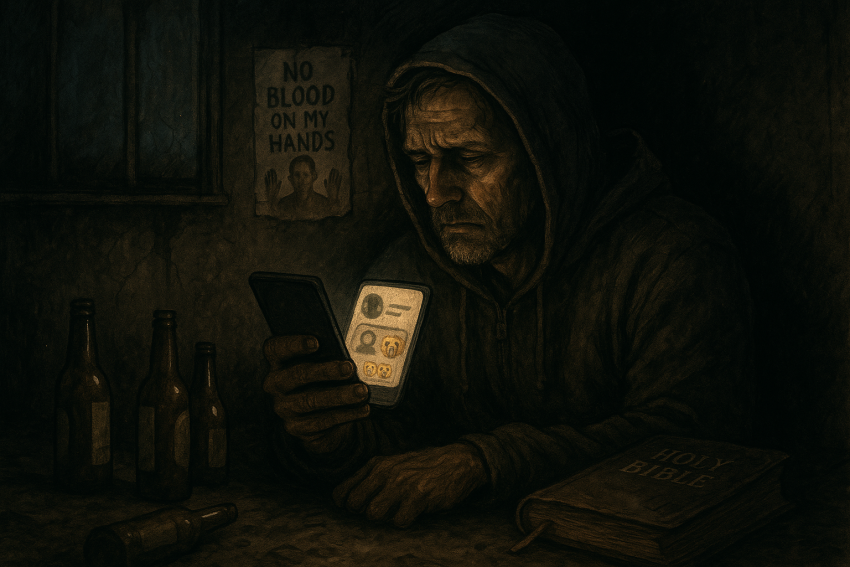
I’m not here to play the victim. But if you think you know my story, let me stop you right there. You don’t. People think they see a few photos, a couple of memes, some honest truth-telling posts, and suddenly they know me. No. What they see is what I let them see. Because the truth is, if I showed them all of me—the real me—they’d be too weak to handle it. So I spare them.
They call me “bitter.” “Hypocrite.” “Lost.” They throw those labels like stones. My own brothers and sisters. And yeah, I blocked them. I shut the door. I cut them off. But can you blame me? People don’t like the truth when it shines too bright in their darkness. I just post the Word. If that makes them uncomfortable, maybe it’s not me they have a problem with. Maybe it’s God.
I post Scripture because someone has to. The world’s gone soft. Everyone wants to talk about grace and love, but nobody wants to talk about sin. Judgment. Hell. The blood that’ll be on our hands if we don’t warn people. That’s in the Bible, by the way. Ezekiel 33:6. I looked it up. It says, “But if the watchman sees the sword coming and does not blow the trumpet to warn the people… I will hold that watchman accountable for their blood.”
So, yeah—I post. I warn. I don’t apologize for it.
Does that make me self-righteous? Maybe. Or maybe it just means I take this more seriously than the rest of them.
They say I judge people. That I’m harsh. They say I’m always on about sin but never talk about Jesus. But what do they want me to do? Post a picture of Jesus hugging a rainbow flag? Act like He’s fine with people living in sin? I know what the Bible says. I’ve read it cover to cover more times than most of them combined. Even in jail, I had it next to my bunk.
Yeah, jail. Let’s not pretend. I’ve done time. Theft. Drugs. Fighting. More than once. But God met me there. I got saved behind bars. The chaplain said something that stuck: “God doesn’t call the qualified—He qualifies the called.” I took that to heart. I came out new. Born again. I stopped the drugs. Mostly. Stopped stealing. Started reading the Bible seriously. And I’ve tried to live right ever since.
But being saved doesn’t mean you stop struggling. I’ve still got my demons. I just don’t let anybody in long enough to see them.
There are things I’ve never said out loud. Not to pastors. Not to sponsors. Not even to God. At least not in words. And definitely not to family. You think I’d trust them with that? I know what they’d do. Judge. Lecture. Talk behind my back, then act holy to my face.
So I keep it locked down. Tight.
Some nights, after I post something bold—like that verse about God giving them over to depravity—I sit and read the comments. I act like I don’t care, but I read every single one. When someone likes it, when someone says, “Speak truth!” or “That’s the Word, brother,” I feel seen. Validated. Strong. But when the messages come in calling me hateful or hypocritical, I tell myself they’re just soft. Lost. Deceived by the culture. I know I’m standing for truth, even if I stand alone.
Still, there’s this thing—this ache I can’t shake. I scroll back sometimes through old photos. Me and my brothers. Me and my sister on her wedding day. Mom’s birthday cookout before she passed. Back when we still talked. Back when they hadn’t “given up on me.” Or maybe I gave up on them.
I posted something last week. A picture of a lone wolf. Caption said: “Sometimes the black sheep is just the only one telling the truth.” It got over 100 likes. But not one from my family. Not one message. Not even a comment. I pretended not to notice.
But I noticed.
People assume I don’t feel that. But I do. Every time I hit “post,” there’s a tiny part of me that hopes someone will say, “I miss you. I’m sorry. Let’s talk.” But that never comes. What I get instead are screenshots sent through mutual friends, texts from my cousin saying, “Dude, your sister’s hurting, and you’re making it worse.” Or messages from my brother saying, “Stop weaponizing Scripture to make yourself feel holy. You’re still living in sin, and you know it.”
He has no idea what he’s talking about.
Nobody knows. I don’t drink like I used to. But yeah, sometimes I still do. Sometimes I wake up and forget what I said the night before. Sometimes I think about guys I knew inside. Think about things we did, things I didn’t want but didn’t say no to either. Things I’ve never told anyone.
And no, I’m not gay. I’m not. I’ve fought those thoughts for years. I’ve fasted. I’ve rebuked them. I’ve cried out. I’ve posted against it to remind myself what’s true. The Word doesn’t change. I’ve read Romans 1. I know what it says.
But when I’m honest—and I mean gut-level, middle-of-the-night honest—sometimes I wonder if I’ve been hiding behind my boldness because I’m too ashamed to be broken in front of anyone.
There’s a verse I always used to love. Luke 15. The story of the prodigal son. You know it, right? The one who leaves, wastes everything, then comes crawling back and the father runs to him and throws a party. That used to be my favorite. Because I thought I was the prodigal. I thought I was the one who’d come home.
But lately, I don’t think that’s me anymore.
No, I’m the other one. The older brother. The one who stayed outside, angry that grace was free. Angry that someone else got restored while I was still out here working, proving, posting. I’ve read that story a hundred times, but I never noticed this one line until last week: “But he was angry and refused to go in.” (Luke 15:28). He refused. Nobody kept him out. He chose not to go in. He let his own pride keep him outside the celebration.
I read that and just stared at it. Because maybe that’s me. Maybe I’ve been standing out here, arms crossed, convinced that I’m right, but missing everything that matters.
But here’s the thing—I’m not ready to go in.
I don’t trust them. I don’t trust church leaders. I don’t trust my family. I don’t trust anyone to handle my mess without using it against me. So I stay where I’m comfortable. On the outside. Loud. Judging. Posting. Raging against the machine. Holding a Bible in one hand and a chip on my shoulder in the other.
And if you’re still listening, still reading, still thinking maybe this ends with me repenting, let me stop you again.
I haven’t.
Not really.
I know what I should say. I know I should end with “And that’s when God broke me” or “That’s when I surrendered.” But that hasn’t happened. Not yet.
I’m still angry. Still stuck. Still convincing myself that being the black sheep is holy because at least I’m not pretending like they are.
But some nights, when it’s quiet, I wonder if the only one pretending… is me.
I guess that’s the worst part of deception. You believe your own lies.
Maybe I’ll change. Maybe one day I’ll walk in. But for now, I’m still outside. Still holding my Bible like a sword, not a mirror. Still scrolling. Still posting. Still waiting for someone to say what I’ve never had the courage to admit:
“I see you. And you’re not okay.”
But until that day—until I can be real with someone—I’ll just keep being right.
Even if it costs me everything.
Author’s Note
This story is fictional, but it’s rooted in very real attitudes and struggles that too many men carry just beneath the surface. Maybe you didn’t post the memes or ghost your family, but maybe you’ve built a quieter version of Troy’s world—one where pride protects you, where vulnerability feels like weakness, and where being right matters more than being made new. Scripture has a way of cutting straight through the mask. In Ezekiel 36:26, God makes a promise to hard-hearted people just like Troy—and just like some of us. He says, “I will give you a new heart and put a new spirit in you; I will remove from you your heart of stone and give you a heart of flesh.” That’s not about religion. That’s not about winning arguments or playing the victim. That’s about transformation.
So here’s the deal. If you saw even a flicker of yourself in Troy—if you’ve been hiding behind a wall of religious language, using “truth” to mask bitterness, shame, or unhealed wounds—it’s not too late. Don’t stay outside. Don’t let your heart harden one more day with justifications and self-pity. Jesus didn’t come to make you more correct—He came to make you alive. He didn’t come for clean images or filtered posts—He came for the real you, the broken you, the angry, addicted, self-sabotaging, hiding-you. And yes, He came for Troy, too. But Troy hasn’t come home yet. Maybe you still can.
So here’s your move. Don’t scroll past this. Don’t walk away unchanged. Get honest—with yourself, with God, with someone you trust. If you’re wrestling, we’d love to walk with you. Subscribe to the newsletter, drop a comment, or if you need a private space to be real, reach out directly. This isn’t about performing. It’s about coming home. Grace is still on the table.
Stop Pretending. Be real.

Sources
- Luke 15:11–32 – The Parable of the Prodigal Son
- BibleHub Commentary: Luke 15:28 – The Older Brother’s Anger
- GotQuestions: What does ‘Judge not lest ye be judged’ mean?
- Desiring God: The Difference Between Calling Out Sin and Being Judgmental
- Crossway: Why Jesus Warned Against Hypocrisy
- Focus on the Family: Hypocrisy and the Church
- Ligonier: The Older Brother
- GotQuestions: Balancing Grace and Judgment
- The Gospel Coalition: Hypocrisy in the Church
- Navigators: Repentance and Honest Faith
- Romans 2:1–4 – You who pass judgment do the same things
- Matthew 23 – Jesus Warns Against Religious Hypocrisy
- OpenBible: What Does the Bible Say About Hypocrisy?
- Covenant Eyes: Hiding Sin Doesn’t Heal It
- Christianity Today: Hypocrisy and Holy Desperation
Disclaimer:
The views and opinions expressed in this post are solely those of the author. The information provided is based on personal research, experience, and understanding of the subject matter at the time of writing. Readers should consult relevant experts or authorities for specific guidance related to their unique situations.