
1,170 words, 6 minutes read time.

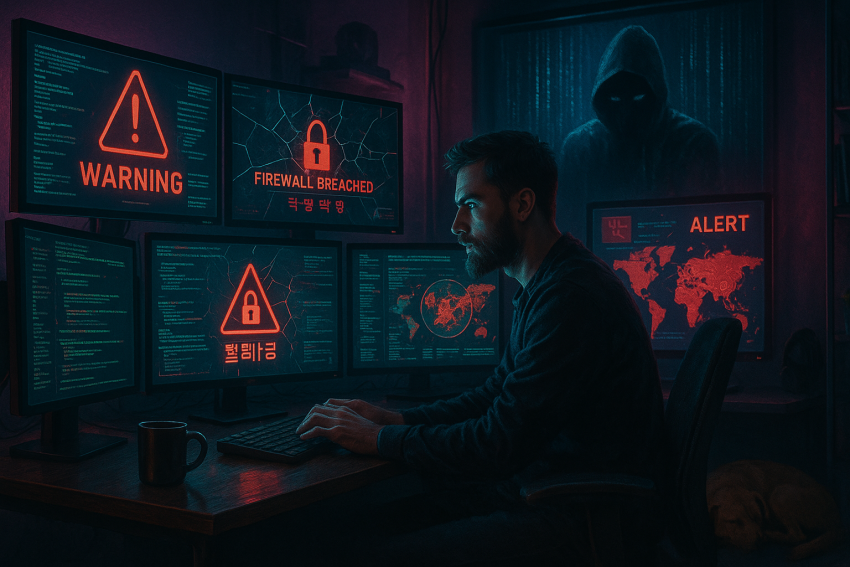
When remote work became the norm almost overnight, a lot of guys thought, “Sweet—I can work in my boxers, crank my playlist, and skip traffic.” But with that freedom came a hidden battlefield. Our laptops became the frontlines, our Wi-Fi routers the drawbridges, and our digital routines the exposed flanks. Today, remote work isn’t just a lifestyle shift—it’s a cybercrime playground.
Whether you’re a freelance coder, a sysadmin dialing in from your garage, or an IT manager overseeing a distributed team, the cybersecurity risks tied to remote work aren’t just real—they’re multiplying like gremlins in a server room. And if you’re not ready, the next breach could come through your webcam, your inbox, or your home printer.
The Cybercrime Buffet: Remote Work’s All-You-Can-Hack Attack Surface
Picture your office setup like a castle. Now imagine you’ve packed up your gear and taken it all to a campground. That’s remote work in a nutshell. The perimeter? Gone. Security cameras? Spotty. Guards? You.
With remote work, you’re basically inviting potential attackers into a space that was never designed for enterprise-grade security. Suddenly, home networks are in play—most of them unpatched, unmonitored, and wide open. Mix in unsecured personal devices, lack of routine updates, and hasty use of cloud platforms, and it’s like stacking dynamite on a BBQ.
VPNs help, sure—but they’re not the magic shield some think they are. If your VPN credentials get compromised or malware is sitting on your device before you connect, it’s like unlocking the vault for a thief already hiding in your duffel bag.
Digital Double Agents: Insider Threats and Remote Infiltration
Not every cyber threat comes from some hoodie-wearing hacker in a dark basement. Sometimes, it’s Dave from accounting. Or someone pretending to be Dave. Insider threats—both intentional and accidental—have exploded with the remote shift. And let’s not even start on fake hires or off-shore freelancers planted by rogue states. North Korean IT worker infiltration? It’s not just a headline—it’s the new normal.
The challenge here is trust. When your team’s scattered across cities, countries, and time zones, knowing who’s who—and that they’re actually doing what they say—is no longer guaranteed. Without good onboarding, background checks, and activity monitoring, you’re flying blind.
The Malware Mutation: How Ransomware and HEAT Are Weaponizing Remote Work
Malware’s gone full-on Terminator mode. It’s smarter, sneakier, and way more aggressive. One of the nastiest evolutions? Ransomware-as-a-Service (RaaS), where even amateurs can launch brutal attacks with off-the-shelf kits. Combine that with HEAT—Highly Evasive Adaptive Threats—and you’ve got digital predators that dodge antivirus like a squirrel on caffeine.
Remote setups make this worse. Home networks rarely have intrusion detection. Employees might install sketchy software. And browser-based attacks are now bypassing traditional filters, dropping payloads that don’t even trigger alarms. It’s like your favorite wrench suddenly refusing to fit a bolt—everything looks normal until it snaps.
Privacy or Paranoia? Compliance in a Borderless Workplace
Working from home sounds chill—until you realize your company’s data is now floating between a Google Drive in Ohio, a Dropbox in Berlin, and a random laptop in Tijuana. With global data regulations tightening (think GDPR, HIPAA, and others), you can’t afford to wing it. One misstep and you’re facing fines, lawsuits, or worse—reputation damage.
Then there’s the tension between monitoring and privacy. Nobody wants to feel spied on at home, but how do you secure endpoints, spot threats, and meet compliance without feeling like Big Brother is watching? The key is transparency: clear policies, visible tools, and trust layered with verification.
Leveling Up: Best Practices That Actually Work (Without Killing Morale)
Let’s get real. For most guys, “cyber hygiene” sounds like a fancy term for running Windows updates—maybe. But now, it’s mission critical. Multi-factor authentication (MFA) is your digital seatbelt. Password managers? Your backup holster. Regular software updates? The difference between dodging a bullet and taking one.
Training matters too—but skip the boring slide decks. Think short, scenario-based refreshers that actually show how real attacks work. Combine that with strong endpoint protection, encrypted drives, and devices that can be remotely wiped, and you’re getting somewhere.
Most importantly, embrace Zero Trust. It’s not about being cynical—it’s about verifying every device, user, and app, every time. In a remote-first world, trust is earned, not assumed.
Going Tactical: High-Level Defenses for the Cybersecurity-Obsessed
If you’re the guy who runs his own pfSense box or has alerts piped into a custom Grafana dashboard, this one’s for you. Leveling up means integrating threat intelligence feeds, deploying browser isolation tech, and maybe even investing in hardware-based authentication keys.
Think about using a SIEM platform to monitor logs across remote endpoints. Consider segmenting your home network with VLANs, so your gaming rig isn’t talking to your work machine. And if you’re storing anything critical, go beyond basic encryption—look into encrypted containers or secure enclaves.
Lessons from the Trenches: Real Cases, Real Chaos
Take the recent takedown of North Korean fake IT workers posing as freelancers. These weren’t amateurs. They had LinkedIn profiles, GitHub commits, and even participated in dev Slack channels. Once hired, they siphoned code and credentials—quietly. Or the rise in ransomware gangs targeting small remote teams, knowing they’re soft targets with limited support.
These aren’t edge cases—they’re becoming playbook moves for modern attackers.
Final Thoughts: From Casual to Combat-Ready
Remote work isn’t going away—but neither are the threats. Whether you’re managing a team or flying solo from your home office, it’s time to think like a digital warrior. That doesn’t mean living in fear—it means staying informed, being intentional, and always expecting the unexpected.
Cybersecurity isn’t just a checkbox on a compliance form—it’s a mindset. And in this game, complacency is the enemy.
If you found this guide helpful, make sure to subscribe to our newsletter for regular updates, tips, and real-world insights. Got a question, war story, or a trick that’s saved your digital bacon? Drop it in the comments or reach out directly—we’d love to hear from you.

Sources
- TechTarget – “10 Remote Work Cybersecurity Risks and How to Prevent Them”
- Fortinet – “Work From Home: Evolving Cybersecurity Risks”
- NCUA – “Cybersecurity Considerations for Remote Work”
- ScienceDirect – “Remote vigilance: The roles of cyber awareness and cybersecurity…”
- PMC/NCBI – “The future of security in a remote‑work environment”
- arXiv – “Remote Working Pre‑ and Post‑COVID‑19: New Threats and Risks to Security and Privacy” (2021)
- arXiv – “The Shifting Landscape of Cybersecurity: Impact of Remote Work and COVID‑19” (2024)
- arXiv – “Cybersecurity Challenge Analysis of Work-from-Anywhere (WFA)” (2024)
- ResearchGate – “Cybersecurity in Working from Home: An Exploratory Study”
- ResearchGate – “Cybersecurity Risks in Remote Work and Learning Environments”
- Wikipedia – “Insider Threat”
- Wikipedia – “Highly Evasive Adaptive Threat (HEAT)”
Disclaimer:
The views and opinions expressed in this post are solely those of the author. The information provided is based on personal research, experience, and understanding of the subject matter at the time of writing. Readers should consult relevant experts or authorities for specific guidance related to their unique situations.