
1,449 words, 8 minutes read time.
When Syntax Errors Feel Personal
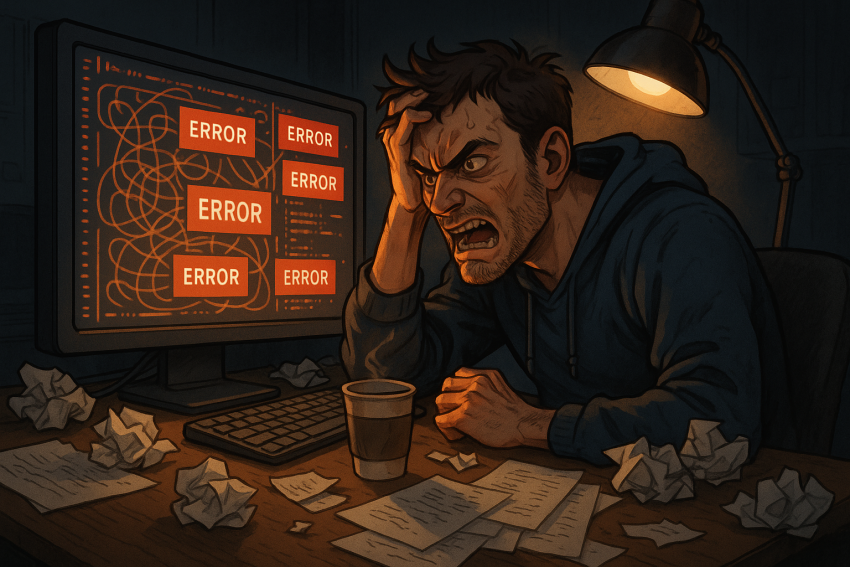
If you’re a programmer, you’ve been there: staring at the screen, utterly convinced the bug is mocking you. It’s not just frustration; it’s a deep, simmering rage that can feel like your favorite wrench suddenly refuses to fit the bolt. This phenomenon, known as Programmer’s Rage, isn’t just about faulty code or missed deadlines—it’s about the way our identity as creators gets tangled with the relentless pressure of coding in a world that’s always demanding more, faster, and better.
Speaking from personal experience, I can tell you this rage isn’t something trivial. In fact, it cost me a position once. I was working on a project where the client’s demands kept shifting in subtle, maddening ways. The app I was building pulled data from a billing system, analyzing why clients hadn’t paid within 30, 60, and 90 days. But a sales subject matter expert wanted comments on every single data point, without clearly stating it upfront. Instead, he would slowly insert new comments here and there, dragging the project out for nearly another year. The project started simple, but as those vague and shifting demands piled on, the code quickly turned into an unsalvageable mess of spaghetti—tangled, fragile, and almost impossible to maintain. It was like trying to untangle a box of Christmas lights that someone had thrown in a blender.
This mess only stoked the flames of Programmer’s Rage. The very foundation I’d built felt like it was crumbling under vague requests and unclear objectives. At the time, I wasn’t aware of Programmer’s Rage as a real, recognized phenomenon, and my frustration boiled over. That tension affected my performance and relationships, and ultimately, I lost the job. It was a harsh lesson on how unchecked rage, born from unclear project goals and spaghetti code, can quietly sabotage even the best of us.
Understanding Programmer’s Rage: A Developer’s Rite of Passage
Programmer’s Rage is a strange beast. Unlike the everyday frustration you might feel when your coffee spills or your favorite show gets canceled, this rage cuts deeper because it attacks something personal: your craftsmanship. When your own code—which is a product of your intellect, creativity, and hours of painstaking work—turns against you, it feels like a personal failure. Psychologists call this clash between belief (“I’m a competent developer”) and reality (“My code won’t compile”) cognitive dissonance. This dissonance is brutal, especially when you’re under the constant pressure of deadlines, unclear project specs, and shifting client demands. It’s no surprise that Programmer’s Rage is not a sign of weakness but a natural, human response to high-stress, high-stakes environments.
Every programmer faces moments when their mental model of how the code should work clashes violently with the reality of errors, bugs, or ambiguous requirements. That disconnect, often exacerbated by lack of communication or unclear goals, creates fertile ground for frustration. Over time, this builds like steam inside a pressure cooker, ready to explode with rage at the slightest trigger.
Where Programmer’s Rage Really Comes From
While bugs and syntax errors are the sparks that ignite Programmer’s Rage, the fuel is much deeper. Developers juggle an insane mental workload every day—handling complex language syntax, dealing with fragile frameworks, wrestling with messy legacy code, and navigating convoluted version control conflicts. Imagine trying to juggle flaming chainsaws while someone throws more knives your way—that’s the cognitive load many programmers live with. Add the unspoken expectation that developers should always have the answer, and the imposter syndrome lurking beneath, and you get a perfect storm of frustration. The silence around mental fatigue in programming cultures, especially among men who often feel they must “tough it out,” only makes things worse. Rage festers because it’s rarely acknowledged or talked about openly.
In many cases, unclear or shifting project requirements are the invisible hand pushing developers toward rage. When clients or stakeholders don’t clearly define what success looks like, developers end up patching and re-patching code—turning what was a straightforward project into a spaghetti mess that no one understands. It’s like building a house where the blueprint keeps changing halfway through construction. You don’t just feel frustrated; you start doubting your own skills and sanity. This confusion is a core driver of Programmer’s Rage and burnout.
The Psychological Toll of Programmer’s Rage
Rage in programming isn’t just an emotional inconvenience; it takes a psychological toll that can affect productivity, creativity, and even career longevity. Continuous frustration triggers stress responses in the brain, flooding it with cortisol. This stress hormone, when chronic, hampers memory, focus, and decision-making — exactly what a programmer needs in abundance. Prolonged Programmer’s Rage can lead to burnout, anxiety, and depression, turning a passion into a daily struggle.
Men in tech often feel a double bind: the need to appear calm and collected while managing these intense emotions. This silence around mental health can create isolation, making it harder to seek help or talk about frustrations before they boil over into full rage episodes. Recognizing Programmer’s Rage as a legitimate and common experience is the first step toward breaking this harmful cycle.
Practical Strategies to Manage Programmer’s Rage
Taming Programmer’s Rage isn’t about suppressing your emotions but learning how to channel them productively. One effective strategy is adopting clear communication and project management practices that minimize ambiguity. When requirements shift, take time to document changes and get stakeholder buy-in to prevent scope creep. It’s like building a firewall around your sanity.
Another key tactic is practicing mindfulness and stress management techniques. Simple breaks, deep breathing, or quick walks can reset your mental state and help defuse rising frustration before it explodes. Pair this with healthy work habits like setting realistic goals and boundaries, and you’ll protect yourself against the grind.
Refactoring code regularly helps, too. Rather than letting spaghetti code grow unchecked, schedule time to clean up and simplify. This makes your codebase less intimidating and reduces the chances of rage-induced errors.
Finally, talk about it. Find communities—whether Slack groups, forums, or in-person meetups—where you can share your struggles. Sometimes just knowing you’re not alone in feeling rage can be the best release valve.
Why We Should Care About Programmer’s Rage
Ignoring Programmer’s Rage does everyone a disservice. For companies, it means turnover, missed deadlines, and lower code quality. For developers, it means diminished job satisfaction, mental health risks, and stunted career growth. Understanding and addressing this rage openly can improve team dynamics, boost productivity, and foster healthier work environments.
As the tech landscape evolves, so do the pressures on developers. By acknowledging Programmer’s Rage as an important aspect of the profession, we can build cultures that prioritize clarity, empathy, and sustainable workflows.
Closing Thoughts: Rage Is Real, But It Doesn’t Have to Win
Programmer’s Rage is a natural reaction to an often chaotic and demanding profession. It’s okay to feel it—but it’s not okay to let it destroy your passion, relationships, or career. By learning to recognize the signs, understanding the underlying causes, and adopting practical strategies to manage it, you can reclaim your calm and creativity.
If you’ve experienced Programmer’s Rage or are currently battling it, know you’re not alone. I invite you to join the conversation by leaving a comment below, sharing your story, or reaching out directly. Let’s work together to build healthier coding lives, one calm commit at a time.
And if you want to stay updated on tips, stories, and insights about programming life and mental health, subscribe to our newsletter. Because every coder deserves to love their craft without losing their mind.

Sources
- Wikipedia: Computer Rage
- “Emotional Strain and Frustration in LLM Interactions in Software Engineering” (arXiv, 2025)
- “How to Deal with Anger as a Programmer” – Simple Programmer
- “Dealing with Programming Frustration the Right Way” – CodinGame Blog
- “Developer Burnout: The Waiting Game and Mental Load” – Marco Kotrotsos, Medium
- “Developer Burnout: Why it Happens and What We Can Do About It” – CodeSubmit
- “Does Coding Burnout Affect Programmers’ Creativity?” – The Alpha Spot
- “7 Reasons Why Programmers Burn Out” – Ari Joury, PhD (Towards Data Science)
- “On the Unhappiness of Software Developers” (arXiv, 2017)
- “Mining Valence, Arousal, and Dominance – Detecting Burnout” (arXiv, 2016)
- “A Model for Understanding and Reducing Developer Burnout” (arXiv, 2023)
- Reddit: “How to cope with anger and frustration as a dev?”
- Reddit: “Anyone else get really angry when troubleshooting things that aren’t your code?”
- Reddit: “The 5 Stages of Debugging”
Disclaimer:
The views and opinions expressed in this post are solely those of the author. The information provided is based on personal research, experience, and understanding of the subject matter at the time of writing. Readers should consult relevant experts or authorities for specific guidance related to their unique situations.