
2,208 words, 12 minutes read time.
This blog is written raw and unmasked—straight from the valley of real struggle and pain. But I write not from a place of hurt anymore, but from a place of healing and hope. Sometimes the truth demands we be vulnerable, even uncomfortable, to shine light on dark experiences. If you’re walking through a similar valley, know you’re not alone, and there is a way forward grounded in God’s truth.
When Character Assassination Hits Home
There are moments that change the entire trajectory of your life — and not always because of something you did. Sometimes it’s because of something someone else said. A carefully crafted rumor. A whispered suspicion. A flat-out lie that spreads faster than any apology ever could.
If you’re a man who’s ever had his name dragged through the mud by false accusations, malicious gossip, or manipulative tactics, you know the unique kind of rage and heartbreak it brings. It doesn’t matter if you’re a person of faith or someone who’s skeptical about God — there’s something universal about the deep wound caused by betrayal, gaslighting, and defamation.
This isn’t just about your reputation. It’s about your sense of identity. Who am I really, if people believe I’m someone I’m not?
When You’ve Given Everything, and It Still Isn’t Enough
Let me share part of a story that might sound painfully familiar. For years, I poured my free time into a local youth program — not just showing up occasionally, but investing thousands of hours over close to a decade. Most weekends, I stood rink-side taking tens of thousands of photos of young athletes learning, growing, and laughing, capturing memories their parents would cherish forever. I wore out multiple cameras and an expensive lens, all from my own pocket. I never charged a dime.
It wasn’t just about photography. I helped build and manage their website, set up social media accounts, even established online connections like a Better Business Bureau profile to give the club more credibility. When new safety certification programs came around, I paid for them myself, just to ensure I could keep volunteering above reproach.
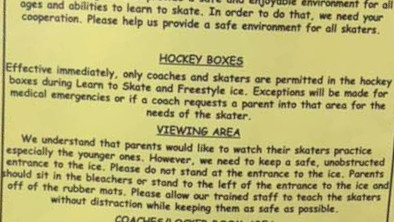
And for a long time, it was life-giving. I loved being part of something that helped kids grow in skill and confidence. Character assassination always starts slowly, quietly, and behind the scenes. At first, it’s barely noticeable. The first sign — quite literally — was a new notice restricting access to certain areas “for the safety of our participants.” I understood safety matters, but it also seemed like a quiet way of saying, We don’t trust you anymore.
Then COVID happened, and the rink, the club, and all activities shut down for a long season. After about a year, the club reopened in a limited capacity—masked, socially distanced, and cautious. The vibrant community I once knew was now quieter, more tense, and divided in subtle but unmistakably noticeable ways. The tension in the air was thick, almost palpable, making every interaction feel heavier than before and old rivalries quietly resurfaced.
Later that year, I helped manage the club’s online election process, which had been set up about three years earlier to ensure transparency and fairness. This was especially important as the rink was being used as a vaccination site, and post-COVID regulations required extra care. Unexpectedly, one of the same people who had supported the safety restrictions accused me of rigging the election. Instead of coming to me directly, they went straight to the governing body. I spent a gut-wrenching weekend meticulously reviewing emails, receipts, and communication logs to clear my name and prove my integrity — and I still have all those receipts, site backups, and records to this day.
When it was all over, the representative apologized. They told me it was clear I’d done nothing wrong, that I’d actually gone above and beyond to handle everything by the book. But by then, the damage was done. My wife and I walked away, hearts heavy. We realized sometimes the relationships you pour the most into are the very ones that end up fracturing under false assumptions.
This story is part of my own journey, and it unfolded alongside similar lies told about me in other organizations. In every case, the falsehoods were aimed at gaining power and control within the respected organization. The enemy likes a multiple-front attack, spreading discord in various places to wear you down. He convinces people that glory, respect, or advancement is theirs for the taking — but only if they get someone else out of the way first. You may have a similar story — whether it happened in a church, a family, a job, or a volunteer setting. You loved it, gave it your best, and someone’s lie set it all on fire.
The Deep Psychological Toll of Defamation and Gaslighting
When people spread lies about you, or twist reality in subtle ways that make others doubt your character, it doesn’t just sting your ego. It undercuts your very foundation.
Psychologists define gaslighting as manipulating someone to the point where they question their own reality. The term came from an old play where a husband dimmed the gaslights in their home and told his wife she was imagining things — slowly eroding her confidence in her own perception. In relationships, organizations, or faith communities, gaslighting doesn’t always look so obvious. It often shows up in phrases like:
- “You’re being overly sensitive.”
- “Nobody else sees it that way.”
- “You’re the only one with a problem here.”
It isolates you. It makes you second-guess your memories, your motives, even your sanity. When paired with outright defamation — lies designed to assassinate your character — it’s a brutal one-two punch.
For many men, the result is withdrawal. You stop showing up. You stop trusting. Maybe you stop believing anything good about yourself at all.
What Does the Bible Say About Being Falsely Accused?
If you’re someone who’s curious about God, or trying to hold on to your faith through all this, you might wonder: Does God even care about lies told behind closed doors? Does He notice when someone smears my name to protect their own power?
Scripture doesn’t shy away from this pain. In fact, the Bible is full of men who were slandered, betrayed, and falsely accused.
King David writes raw words in Psalm 55:12-14:
“For it is not an enemy who taunts me — then I could bear it;
it is not an adversary who deals insolently with me — then I could hide from him.
But it is you, a man, my equal, my companion, my familiar friend.”
When betrayal comes from those you once trusted most, it cuts deeper than any outside attack.
In Psalm 109, David is so tormented by false accusations that he cries out for God to defend him in shocking, unfiltered language. It’s a reminder that God doesn’t require you to sanitize your prayers. You can be honest about your anger, your fear, your grief.
Proverbs 6:16-19 tells us God hates “a false witness who pours out lies” and one who “stirs up conflict in the community.” In other words, God sees exactly what’s going on — and it turns His stomach.
The New Testament also shows us that following Jesus doesn’t exempt you from slander; it practically guarantees it. Jesus Himself was accused of everything from being demon-possessed to plotting sedition against Rome. In 1 Peter 2:23, we see how He handled it:
“When he was reviled, he did not revile in return; when he suffered, he did not threaten, but continued entrusting himself to him who judges justly.”
When the Truth Doesn’t Fix Everything
One of the hardest lessons you learn is that even when you clear your name — like I did with pages of receipts, emails, and a formal apology — the relationships don’t always snap back. People may still whisper. Some may quietly distance themselves. The place that once felt like home now feels foreign, tainted by suspicion.
It’s why so many men simply walk away. They pack up their camera bags, or their toolboxes, or their church pew Bibles, and disappear. Not because they’re guilty. Not because they lack perseverance. But because staying means subjecting themselves and their families to ongoing disrespect or subtle exclusion.
If you’ve been there, you know: The truth may free you legally or organizationally — but it doesn’t always heal the relational rupture.
Letting God Be Your Defender
So what do you do when people believe the lies? When you can’t seem to shake the shadow over your reputation?
There’s only one real option: you let God be your defender.
Psalm 37:5-6 says:
“Commit your way to the Lord; trust in him, and he will act.
He will bring forth your righteousness as the light,
and your justice as the noonday.”
It’s one of the hardest disciplines. Everything in you wants to run around explaining, correcting, dragging out evidence, making sure every single person knows the facts. There’s a place for providing truth when asked. But living in constant PR mode only exhausts you.
At some point, you trust that God will reveal the truth in His time. Your long-term consistency will often speak louder than your short-term explanations. Your quiet integrity, your refusal to retaliate, your steady kindness even when others are cold — that’s what eventually shifts the narrative. Maybe not with everyone, but with those who matter most.
Forgiveness Isn’t Approval
Then there’s the hard part: forgiveness.
Forgiveness doesn’t mean pretending it didn’t happen. It doesn’t mean letting people stomp on you again. It doesn’t even mean you have to reconcile if trust is too broken. It simply means you release the demand for personal vengeance. You let go of replaying scenarios in your head where they finally “get theirs.” You trust God with justice.
Romans 12:19 says:
“Beloved, never avenge yourselves, but leave it to the wrath of God, for it is written, ‘Vengeance is mine, I will repay, says the Lord.’”
It’s not weak to forgive. It’s strong. It’s choosing to live unchained to their sin. You’re refusing to let their lies be the story you obsess over. You’re refusing to let bitterness own your mind.
Finding Your Identity Beyond What They Say
Here’s what you have to remember: you are not what they say about you.
The organization’s rumors, the whispering parents in the stands, the co-workers who turned cold, the family member who rewrote history — none of them have the authority to define you.
God does. And what He says is that you’re His son. You’re chosen, deeply loved, and fully seen. Your worth isn’t up for debate based on community votes, leadership elections, or carefully curated smear campaigns. It was settled at the cross.
If you’re a man who follows Jesus, you can know that no accusation — no matter how loudly it’s repeated — changes your standing before God. If you’re still on the fence about faith, consider that maybe the reason these false stories wound so deeply is because you were created to be known and loved by someone who sees absolutely everything, and still calls you worthy.
For the Man Still in the Middle of It
Maybe you’re reading this and you’re right in the thick of it. The lies are still fresh. People still believe them. You’re still holding receipts, hoping they’ll come around.
Hear me clearly: you are not crazy. You are not alone. You are not beyond hope.
What’s happening to you is unjust. It’s painful. And it matters to God. He sees every late-night conversation where someone twisted your words. He sees the anxious knots in your stomach when you walk into rooms that used to feel safe. He sees your silent prayers asking Him to vindicate you.
And He will. Maybe not on your timeline, maybe not in the exact way you picture. But one day, the truth will stand fully revealed. Until then, you walk with Him. You keep your head up. You keep doing the next right thing. You let your life be your defense.
When You’re Ready to Begin Again
Healing is slow. It’s also sacred. If you’ve recently walked away from something you loved because of false accusations or manipulative power plays, it’s okay to grieve. Don’t rush it. Grief honors what was real and good.
But also know this isn’t the end of your story. Over time, with God’s help, you’ll rebuild. You’ll find new places to serve, new people to trust, and new joy on the other side of this heartbreak.
If you need someone to tell you today that you’re still a man worth trusting, still someone God can use powerfully, consider this that word.
✅ Subscribe and Walk This Road with Us
If any of this hits home — if you’re a man trying to process betrayal, rebuild after defamation, or figure out how to let God handle what you can’t — we’d love to walk this road with you.
Subscribe to our newsletter, reach out through our online contact form if you want to share your story or ask for prayer, or simply comment below. You’ll get more articles like this—honest, practical, rooted in biblical truth but real about life’s mess. Healing takes time. It also takes community. Let’s start building that together.

Sources
- Psalm 55:12–14 – Bible Gateway
- Psychology Today: How to Identify Gaslighting
- GotQuestions.org – What Does the Bible Say About Gaslighting?
- Crosswalk: What the Bible Says About Defamation of Character
- Psalm 109 – Bible Hub
- OpenBible: Scriptures on God Fighting for You
- Desiring God: When You Are Falsely Accused
- VeryWellMind: Signs of Emotional Abuse (Gaslighting)
- Christianity Today: Jesus and False Accusations
- Romans 12:19 – Biblia.com
- 1 Peter 2:23 Explained – BibleRef
- Focus on the Family: Healing from Betrayal
- FaithGateway: God Is Our Defender
- Pew Research: Views on Gaslighting and Trust in Institutions
Disclaimer:
The views and opinions expressed in this post are solely those of the author. The information provided is based on personal research, experience, and understanding of the subject matter at the time of writing. Readers should consult relevant experts or authorities for specific guidance related to their unique situations.