

1,934 words, 10 minutes read time.

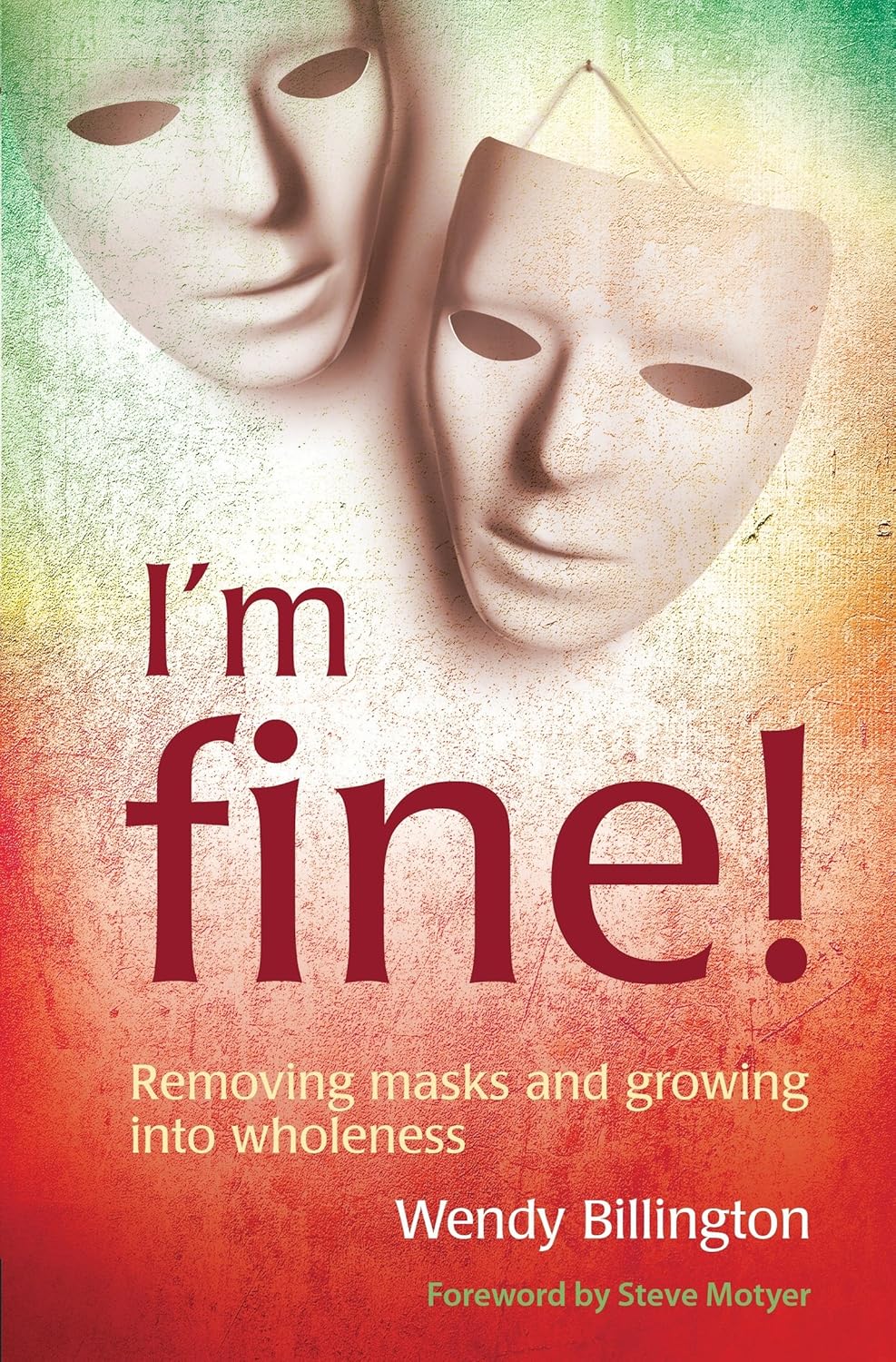
I’m fine!: Removing masks and growing into wholeness
Amazon Affiliate Link
I suppose there’s little point in concealing my story any longer. Time has a way of unraveling every carefully stitched mask. So let me lay it bare before you—my confession, my tragedy, my final plea for your understanding. I was once a man of reputation, respected in my village of Capernaum, admired for my learning in the Law, and even more envied for my silver tongue. If you had come to one of our gatherings by the lake, you would have seen me seated comfortably among the elders, nodding wisely, wearing the calm, untroubled smile of a man who had life firmly in his grasp.
Yet beneath that practiced grin festered a ruinous ambition. I craved influence, the hush of a crowd leaning in to catch my next parable or clever interpretation of Moses. Pride, my companions often whispered, was my birthright. My father had risen from fisherman’s son to tax collector for Herod himself—no small feat—and I meant to climb even higher. Knowledge was my ladder; recognition, my garland. If I’m honest—and at this late hour what harm is there in honesty?—I needed people to see me as flawless, put together, indispensable. That was my poison.
So I learned early to wear the “I’m fine” mask. In public I was always composed, quick with a comforting verse, ready to offer advice to wayward souls. Inside, though, I struggled with crushing envy of those who found joy without striving, men like Simon Peter, who seemed to stumble through life yet was loved by so many, or even Levi, the tax collector who threw everything away to follow the rabbi from Nazareth. Could I have done that? No. I was too entangled with the need for others to revere me. Each time I felt threatened—by a younger man’s insight, by an elder’s correction—I would retreat deeper behind that mask, telling myself that composure was righteousness, that appearances were half the battle of godliness.
In those days, Jesus of Nazareth was causing a stir throughout Galilee. I’d heard the murmurs before He ever stepped foot in Capernaum: stories of demons shrieking under His gaze, of blind men seeing and lepers dancing home clean. Miracles, they said. But I paid them no mind. A miracle only proved what people were desperate to believe. What good was a miracle to me? I had my scrolls, my standing, my place by the synagogue door. Besides, the idea of some carpenter’s son from Nazareth—a place even we Galileans mocked—outshining our careful scholarship? Unthinkable. The mask of “I’m fine” fit tighter than ever then, because I feared what might happen if people looked past it.
My downfall began on a humid afternoon when Jesus came into our town. I had every intention of ignoring Him, dismissing Him as another self-appointed teacher who would soon wander off, forgotten. But curiosity is its own temptation. I found myself drifting toward the house where He was speaking. It was so crowded that people spilled out into the street, straining to hear. The heat was oppressive, yet no one budged. They hung on His every word, like parched ground reaching for rain.
I stayed outside, arms crossed, telling myself that only the desperate needed such theatrics. Still, I listened. His words weren’t what I expected. Not lofty recitations or tangled legal arguments. Instead He spoke of things so close to the heart that I felt strangely exposed. He talked of hidden sins, of men who washed the outside of the cup but left the inside filthy. He talked of hypocrites—yes, that word—who “were like whitewashed tombs, beautiful on the outside but full of dead men’s bones” (Matthew 23:27). I bristled. Surely that was an exaggeration. Surely God was pleased with our orderly way of living, our appearances of devotion. Surely He was pleased with me.
But the mask began to itch.
I tried to rationalize my discomfort. After all, maintaining dignity was important. A man needed to project stability to be trusted. Proverbs even said that “a prudent man conceals knowledge” (Proverbs 12:23), didn’t it? So I continued to hide behind the polite nod, the scholarly tone, the confident recitations of Torah. I doubled my efforts, quoting Leviticus at every opportunity, adding a flourish about ritual handwashing for the benefit of my listeners. But my heart was rotting. I felt it in moments of stillness—felt the sharp pang that I was a fraud.
What made it worse was how eagerly others swallowed my performance. They praised my understanding, sought my judgments in disputes. Each compliment was another stone laid atop my grave, sealing me in. I see that now, though at the time I savored their admiration as proof that my deception was working.
One evening, I met a merchant named Eli who confided that he was struggling to pay off a debt after a poor harvest. Instead of compassion, I saw an opportunity to lecture on Proverbs 22:7, that the borrower is servant to the lender. I spoke sternly of diligence, hinted that perhaps God was disciplining him. When Eli’s eyes dropped, ashamed, I felt an ugly surge of triumph. Another mask secured. Another chance to elevate myself over someone vulnerable. Was that righteousness? Even now, I shudder to admit how I twisted scripture to justify my own pride.
Then Jesus, having somehow emerged right behind me, laid His hand on Eli’s shoulder and said, “Come, friend, let us reason together. Your Father knows your needs before you ask Him.” His voice carried such compassion that Eli wept openly, right there in the street. I stood dumbfounded. Jesus’ gaze met mine—steady, searching, as if He could read every hidden thought. I tried to smile, tried to project my usual calm, but inside I was trembling. He saw through me. In that moment, everything changed.
I wish I could tell you that this encounter humbled me instantly, that I fell to my knees and confessed my hypocrisy. But the truth is uglier. I recoiled. I found reasons to despise Him—called Him a disturber of the peace, accused Him of flouting our traditions. I clung even harder to my mask because without it, what was I? Just another trembling, guilt-soaked man desperate for mercy.
Days passed, but His words haunted me. I heard that He had told a crowd, “Beware of the yeast of the Pharisees, which is hypocrisy” (Luke 12:1). That cut deep. I tried to dismiss it—what did a carpenter know of theology?—but His teaching was drawing the very people who used to gather at my feet. My influence waned. That was the final blow to my pride. My need for status, for the illusion of control, was my fatal flaw. I began whispering with others who feared losing their positions, plotting subtle ways to undermine Him. “He eats with sinners,” we scoffed. “Surely a prophet would know better than to associate with tax collectors and harlots.”
Looking back, I see my hand in the conspiracy that ultimately delivered Him to Pilate. I never swung a hammer into His flesh, but my words, my proud refusal to lay down my mask, my ambition to remain important at all costs—these were nails enough. Even as He hung on that Roman cross, I justified myself. I told anyone who would listen that it was better for one man to die than for our whole nation to fall into chaos. I quoted scripture coldly, twisting passages meant for mercy into weapons of self-defense.
Yet in the lonely watches of the night, doubt gnawed at me. Had I truly safeguarded Israel, or simply preserved my fragile ego? Was my carefully maintained image worth this horror?
Years have drifted by like desert sand, burying the city of my youth, scattering the friends who once applauded my wisdom. Now I wander from town to town, a relic no one consults, haunted by my own treachery. Sometimes I hear distant preachers repeating Jesus’ words, “Come to me, all you who are weary and burdened, and I will give you rest” (Matthew 11:28). I wonder what might have become of me if I had laid down my mask and answered that call. Perhaps I would not be adrift now, shadowed by regret.
It is a bitter thing to realize that my fate was not sealed by destiny, but by my own obstinate choices. I clung to the illusion of strength because I feared being exposed as weak. I feared what men would say more than what God would see. I was so desperate to be “fine” in the eyes of others that I ignored the rot in my soul. That was my great deception—and my punishment is to carry its memory until my final breath.
If you are still reading this—if by some chance my confession has reached you across centuries—let me urge you to learn from my ruin. Masks are comfortable at first. They protect you from awkward questions, from pity, from shame. But they also cut you off from grace. As long as you wear them, you cannot truly be known, and what cannot be known cannot be healed. I would give all my eloquence, all my citations of holy writ, to stand once more on that dusty street in Capernaum, to tear off the mask before Jesus’ searching eyes and say simply, “Rabbi, I am not fine. Help me.”
But that moment is gone. So I entrust these words to you. Strip away your clever defenses. Lay bare your wounds. Do not wait until regret is your only companion.
If you wish to explore these hard truths yourself, study what Jesus said about hypocrisy and hidden hearts, and see how again and again, He called men to live authentically, without pretense. One pastor wrote, “Masks may fool the world, but they never fool God”. How painfully true that is. Another author reflected that, “Christ’s invitation was never to perfect men, but to broken ones”. I am living proof that rejecting that invitation leads only to emptiness.
So hear me now, not as a pious sage, but as a broken man. Do not let pride or fear rob you of the only love that can truly restore. Take off your mask before it becomes your tomb. Seek Him while you still may. As it was written long ago, “The LORD is close to the brokenhearted and saves those who are crushed in spirit” (Psalm 34:18). Trust that promise. It is more solid than any mask you could ever forge.
Author’s Note: On Masks
This is, of course, a work of fiction. When I set out to write it, I imagined our main character as a Pharisee or perhaps a Sadducee—one of those respected religious men in first-century Judea who prided themselves on knowledge, ritual, and outward piety. While his particular story is invented, it draws deeply on the historical realities of these groups and the very human struggles they faced as Jesus challenged their assumptions.
But beyond that ancient setting, I hoped to explore something painfully timeless. Even today, many of us—especially we men—find ourselves channeling the Pharisees and Sadducees of Jesus’ day. We hide behind intellectual arguments or polished reputations, masking our fears and flaws because vulnerability feels too costly. We crave respect, influence, or the quiet assurance that we’re “good enough,” all the while missing the invitation to come as we truly are.
I wrote this piece not to condemn, but to hold up a mirror. If, like me, you recognize parts of your own story in this man’s ambition, pride, or hunger for admiration, take heart. The same invitation Jesus extended on those dusty Galilean roads—to lay down the mask, to be fully known and fully loved—still stands.
So here’s my encouragement to you: don’t let this simply be a story you close and forget. Take a moment—today—to ask God to show you the masks you wear. Invite Him into the places you’ve hidden for too long. Trust that His grace is deeper than your shame. And if you’re willing, share your journey with someone you trust, so you no longer have to carry it alone.
If this story spoke to you, I’d love to keep the conversation going. Consider subscribing to my newsletter for more reflections like this, leave a comment below to share your thoughts or your own experience with masks, or reach out to me directly—I’d be honored to hear your story.
Thank you for reading. May you find the courage to trade fragile pretense for the solid love that meets us exactly where we are.

Sources
- 30 Powerful Bible Verses About Hypocrisy (KJV)
- Topical Bible: “Mask” – Identity & Authenticity
- Jesus on Hypocrisy Bible Study (Matthew 7, 23; Luke 12)
- A Theology of the Face – Biblical significance
- Topical Bible: The Call to Authenticity
- “Is That You? Or the Mask You’re Wearing?” – Faith Reformed Church
- Unmasking the Truth: Breaking Free from False Identities
- 30 Powerful Bible Verses About Authenticity (with Commentary)
- 40+ Bible Verses About Hypocrites (with key quotes)
- “The Mask We Wear: Authenticity in a World of Pretense” (Luke 12)
- 30 Most Effective Bible Verses About Authenticity
- 15+ Bible Verses About Hypocrisy: Meaning & Reflection
- 30 Bible Verses About Hypocrisy (Mirror for Authenticity)
- Woes of the Pharisees – Matthew & Luke (Wikipedia overview)
- Authenticity: 30 Bible Verses & Reflections
Disclaimer:
The views and opinions expressed in this post are solely those of the author. The information provided is based on personal research, experience, and understanding of the subject matter at the time of writing. Readers should consult relevant experts or authorities for specific guidance related to their unique situations.