
2,005 words, 11 minutes read time.

Amazon Affiliate Link
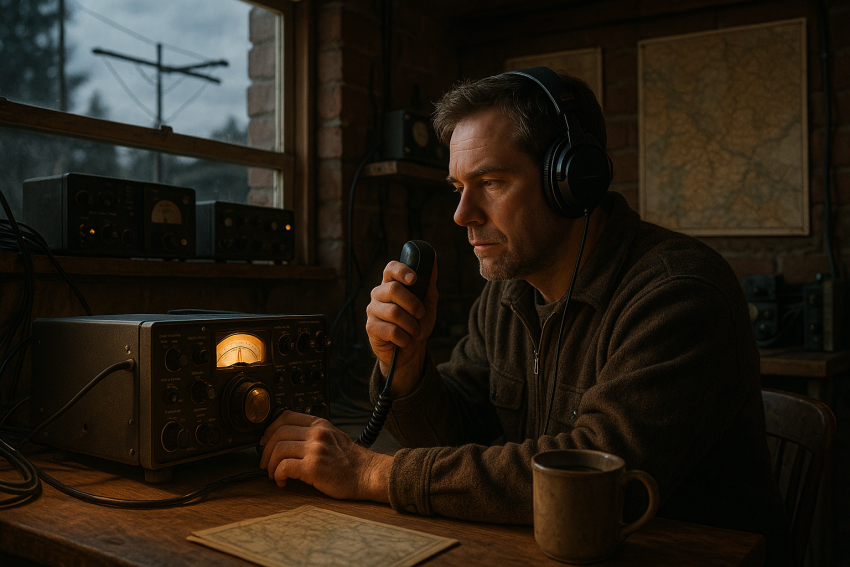
If you’ve ever caught yourself wondering what it would be like to spin a dial, listen to a burst of static suddenly clear into a voice from hundreds or even thousands of miles away, and know you’re hearing it over pure radio waves—no internet, no cell tower, just your gear and the atmosphere—then you’re already half in love with amateur radio.
More commonly known as ham radio, this fascinating pastime is a lot more than dusty equipment or aging operators in dim basements. It’s a living, evolving world of hobbyists, preppers, explorers, DIY tinkerers, and curious minds who all share one common passion: they want to connect. And in an age where everything is piped through someone else’s server farm or corporate network, there’s something deeply satisfying about mastering the art of direct, independent communication.
Sure, getting your amateur radio license is an important milestone, but here’s the secret: most guys don’t fall in love with the hobby because of a certificate. They fall for the adventure, the discovery, the thrill of making that first long-distance contact or building a homemade antenna that actually works. The license is just a key that opens the door.
So if you’re a man intrigued by this blend of old-school cool, cutting-edge tech, and practical self-reliance, you’re in exactly the right place. Let’s dive deep into what this world offers, how you can start building your knowledge and hands-on skills now, and why you might just find yourself obsessed with a hobby that’s been quietly shaping the world for over a century.
Where It All Starts: A Bigger Purpose Than Just Passing a Test
The first thing most people learn about ham radio is that you need a license from the FCC to transmit. In the United States, there are three levels—Technician, General, and Extra—each unlocking new frequencies and privileges. It sounds bureaucratic, but it’s really there to keep the airwaves safe and fair for everyone.
The truth is, the license is just one piece of a much bigger puzzle. As the ARRL, America’s largest amateur radio organization, says on their page about studying for the Technician License, “Amateur Radio operators use their training, skills, and equipment to provide communications during emergencies, to help in community events, and to advance the art and science of radio.” That’s the real heart of ham radio: it’s a skill set, a service, and a worldwide fraternity all rolled into one.
When you look at it from that angle, the study guides, question pools, and sample tests start to feel less like hoops to jump through and more like a path to becoming truly capable. After all, once you’re on the air, it’s your understanding of things like frequencies, propagation, and operating etiquette that ensures your signal reaches who you want, without stepping on someone else.
The Foundational Knowledge Every Aspiring Operator Should Build
Most guys start off thinking amateur radio is all about radios—big boxes, glowing dials, maybe a microphone or two. That’s certainly part of it, but the real foundation is an understanding of how and why all of it works.
At the start, it’s worth digging into what frequency really means. Why does your handheld VHF radio work great across town but can’t reach across the country? Why do people obsess over sunspots, solar flux, or “the gray line” at dawn and dusk? It all comes back to the physics of radio waves traveling through our atmosphere—and sometimes bouncing off the ionosphere to reach thousands of miles away.
A good place to explore these basics is the KB6NU “No-Nonsense” Study Guides, which cut through the fluff and explain the concepts in plain, relatable terms. They’ll help you grasp ideas like band plans, modulation modes (AM, FM, SSB, digital), and power levels, not just for passing the exam but so you can start thinking like an operator.
And don’t overlook the regulations. The FCC rules might sound dry, but they’re what makes the hobby possible. Knowing how to properly identify with your call sign, when to use which frequencies, and how to handle emergency traffic are essential building blocks. When you’re on the air, this is second nature—like putting on a seatbelt before you drive.
Beyond the Books: Why Hands-On Practice Matters More Than Anything
Here’s a secret every seasoned ham will tell you: the real education doesn’t come from reading; it comes from doing. You don’t need a license to listen, so one of the smartest first steps is to start monitoring the bands right now.
You could buy a basic police/fire scanner or, even better, pick up a USB software-defined radio (SDR) dongle for about the price of a pizza. Plug it into your computer, install some free software, and suddenly your living room is a command center picking up everything from local repeaters to far-off aircraft and marine signals.
This isn’t just for fun—it’s how you’ll start to recognize call signs, learn band conditions by ear, and see firsthand how atmospheric changes shape what you hear. Watching the waterfall display on your SDR as new signals pop up is more engaging than any chapter in a manual.
As you start decoding digital modes—like FT8 or PSK31—using free tools that interface with your receiver, you’ll see maps lighting up at places like PSK Reporter, showing exactly where signals are coming from or where yours would be heard. It turns abstract concepts into something personal and immediate.
Why Amateur Radio Still Matters (Maybe More Than Ever)
Some people think ham radio is outdated in the age of smartphones and social media. Nothing could be further from the truth. In fact, it’s precisely because everything now depends on fragile infrastructure—cell towers, fiber optic lines, corporate servers—that amateur radio remains uniquely important.
When major disasters strike, it’s often amateur radio operators who keep communities connected. A feature in Wired highlights how, after hurricanes or earthquakes knock out power and internet, ham operators become a critical lifeline for first responders and residents. It’s a sobering reminder that the ability to communicate independently is more than just a cool hobby—it’s a vital skill that can make all the difference.
Even if you’re not a hardcore prepper, there’s a powerful satisfaction in knowing that your station doesn’t rely on any telecom provider. With a modest setup—radio, battery, and antenna—you could be talking across the country while your neighbors’ cell phones show “no service.” It’s not paranoia; it’s just smart, practical self-reliance.
The Joy of Experimenting: Why This Hobby Hooks Men So Deeply
Let’s be honest—most men love hobbies that let them experiment, problem solve, and see their handiwork come alive. Ham radio is practically engineered for that.
Building your own antennas is one of the biggest draws. You can string up a simple dipole in your backyard, tweak the length by a few feet, and suddenly start hearing stations from thousands of miles away. Unlike tech hobbies locked inside screens, ham radio gives you immediate, physical feedback: your adjustments change the real-world results. It’s immensely satisfying.
Then there’s chasing “DX” contacts—trying to log conversations with stations in rare or distant locations. It’s like fishing, except your rod is a transceiver and your lake is the entire globe. Some hams get deeply into contesting, trying to rack up as many contacts as possible in a limited time, pushing both their technical setup and their own operating skills to the limit.
Others fall in love with satellite work, using handheld radios and small antennas to bounce signals off orbiting repeaters. You can literally track a satellite with your smartphone and time your transmission to catch it as it arcs overhead. The AAA State of Play’s guide for beginners gives a great overview of these different “flavors” of the hobby, all of which keep you learning and experimenting.
Growing Beyond the Basics: The Natural Progression of a Ham’s Journey
Most guys start with the Technician license because it’s the easiest to get and covers local communication on VHF and UHF frequencies—perfect for using repeaters around town. But almost everyone who sticks with it gets curious about the lower HF bands, where global communication becomes possible. That’s when upgrading to General or Extra becomes not just a goal, but an exciting adventure.
By then, the knowledge is second nature. All those rules and technical details you once worried about are things you’ve lived and breathed by experimenting on the air. As you branch out, publications like CQ Amateur Radio magazine or the ARRL’s QST will keep feeding your curiosity with new projects, reviews, and stories from operators around the world.
And don’t be surprised if you get hooked on related pursuits—field days where groups set up portable stations in parks or mountaintops, “summits on the air” hikes with lightweight gear, even chasing atmospheric phenomena like sporadic-E that let VHF signals bounce unusually far. There’s always another frontier to explore.
Why So Many Men Keep Coming Back (Year After Year)
There’s something almost timeless about amateur radio that explains why it keeps such a strong hold on so many men. It taps into deep instincts: the drive to build and understand, to be self-sufficient, to explore and communicate without middlemen.
It’s not just about technology; it’s about community, too. Over on Reddit’s r/HamRadio, you’ll find countless stories of operators who’ve made lifelong friends simply by chatting on the air. The ARRL’s new ham resources are full of similar stories—people who joined local nets for routine practice and ended up with a circle of buddies they’d trust with anything.
Maybe most importantly, ham radio gives you the kind of tangible, real-world achievement that’s increasingly rare. When your first homemade antenna reaches halfway around the globe, it’s hard not to feel a rush of pride. You did that—not some app or anonymous cloud service, but your own brain and hands.
Ready to Dive In? Here’s What You Should Do Next
If your pulse is a little quicker reading all this, don’t fight it. The best way to explore amateur radio is to start right now, even if you’re months away from getting licensed.
Grab an inexpensive SDR dongle and start listening. Take some free practice tests on HamStudy.org just to see where you stand. Read through the Ham Radio Prep guide or the ARRL pages to get a bigger picture of what’s possible. If there’s a local club, drop by one of their open meetings—you’ll rarely find a more welcoming bunch of people eager to show off their gear.
Most of all, keep feeding your curiosity. The more you explore, the more questions you’ll have—and that’s the surest sign you’re on the path. Because before you know it, you won’t just be studying for a license. You’ll be living this amazing hobby.
Join Us and Be Part of the Conversation
We’re always sharing new insights, how-to guides, and stories from operators around the world. If you’d like to keep learning, subscribe to our newsletter so you never miss a post. And we’d love to hear your thoughts: drop a comment below and tell us what draws you to ham radio, what you’re curious about, or what projects you’re already tackling.
Let’s build this community together—one signal at a time.

Sources
- ARRL “Studying for a Technician License” guide
- ARRL “New Ham Resources” page
- HamStudy.org – flashcards, practice tests, question pools
- Ham Radio Prep – Ultimate Study Guide
- KB6NU “No-Nonsense” Study Guides
- Ham Radio FAQ – Best Resources
- FCC Amateur Radio Examinations info
- Reddit r/HamRadio: best learning sources
- Wired: Why Amateur Radio Matters
- All About Ham Radio for Beginners
- Wikipedia: CQ Amateur Radio magazine
- Wikipedia: PSK Reporter (digital mode network)
Disclaimer:
The views and opinions expressed in this post are solely those of the author. The information provided is based on personal research, experience, and understanding of the subject matter at the time of writing. Readers should consult relevant experts or authorities for specific guidance related to their unique situations.