
1,164 words, 6 minutes read time.
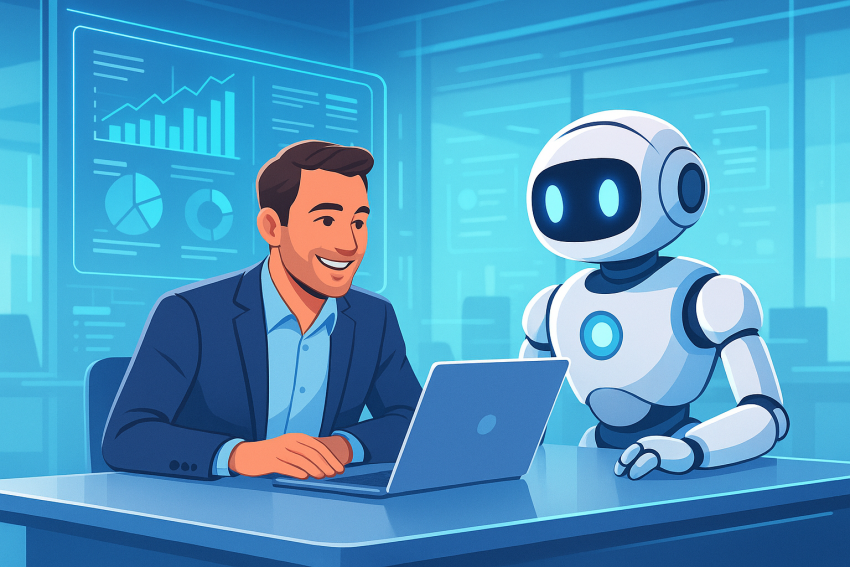
If you’ve been paying close attention to recent developments in artificial intelligence, you’ve likely encountered the pervasive narrative that AI is poised to displace human workers en masse. While this scenario captures widespread anxieties, I want to share my personal, considered perspective that the reality is far more nuanced. AI is undeniably reshaping the nature of work, but rather than an existential threat to employment, I view it primarily as an extraordinarily capable assistant—one that can alleviate the burdens of routine tasks and empower us to focus on complex, creative, and inherently human endeavors.
Allow me to articulate why I believe the future of work will be defined not by humans versus machines, but by a collaborative synergy between the two. Moreover, the idea that AI could entirely supplant human labor strikes me as economically and practically untenable—a notion I will unpack further as we proceed.
The Current Landscape: AI as Augmenter, Not Usurper
It is indisputable that AI technologies have begun to automate certain job functions, especially those that are repetitive, structured, and data-intensive. Roles in customer service, data entry, and basic transactional processing have witnessed early waves of automation. Some organizations have already adjusted staffing levels in light of these technological efficiencies.
Yet, it is equally true that many enterprises employ AI as a productivity multiplier rather than a wholesale replacement. Think of AI less as a driverless vehicle and more as a sophisticated turbocharger enhancing human performance. Companies like BT Group exemplify this dual reality—they acknowledge AI-driven job transformations but simultaneously invest in retraining and upskilling their workforce to collaborate with AI tools effectively.
The evolving paradigm thus underscores a shift from displacement to augmentation, where human expertise and judgment remain indispensable.
The Economic Impossibility of Total Job Automation
Here is a critical insight that forms the cornerstone of my perspective: if AI were to replace every human job, the fundamental dynamics of our economy would unravel. Wages are the lifeblood of consumer demand; without employment, individuals lack purchasing power. Without consumers, the very market for goods and services collapses.
This presents a paradox—automation of all jobs would self-defeat by eroding the consumer base essential for sustaining economic activity. No matter how advanced AI becomes, the symbiosis between earning income and spending it is a core principle that cannot be circumvented. Consequently, I contend that a fully automated labor market is neither plausible nor desirable.
This economic rationale underpins my conviction that human participation in the workforce will persist, albeit in evolving forms. Our collective challenge lies in navigating this transformation thoughtfully.
The Nature of Tasks AI Will Absorb—and the Liberating Potential Therein
AI excels in domains characterized by predictable, rule-based processes: data entry, routine inquiries, and transactional operations. The automation of such tasks is not inherently a threat—it is, in my view, a liberating opportunity. By delegating monotonous and laborious activities to machines, individuals gain the freedom to engage in more meaningful, intellectually stimulating, and socially nuanced work.
Consider marketing professionals, who can now leverage AI-generated insights and draft content, yet retain the crucial role of crafting resonant narratives that connect with audiences on an emotional level. Similarly, in healthcare, AI algorithms can rapidly analyze medical images, but it remains the physician who synthesizes diagnostic data with patient history and ethical considerations to arrive at informed decisions.
This complementary dynamic highlights AI’s role as an enabler, not an eliminator, of human potential.
Emerging Roles and Skills in an AI-Enhanced Economy
One of the most promising aspects of AI integration is the genesis of new professional categories. Fields such as AI ethics consultancy, data annotation, human-AI interaction design, and prompt engineering have emerged, often attracting individuals with diverse backgrounds and interests.
For those curious about AI, I advocate proactive engagement—developing fluency in AI concepts and practical applications is becoming an invaluable asset. Importantly, this does not necessitate deep expertise in machine learning or coding. A foundational understanding, combined with the ability to collaborate with AI tools, can position individuals advantageously in a rapidly evolving labor market.
Embracing this learning curve is, in my view, a strategic imperative for career resilience and growth.
The Enduring Human Advantage
Despite AI’s remarkable capabilities, it lacks qualities that are intrinsically human: emotional intelligence, ethical reasoning, intuition, and creativity. These attributes are central to leadership, counseling, negotiation, and artistic endeavors—domains where human contribution remains irreplaceable.
Therefore, cultivating soft skills—communication, empathy, adaptability—will be paramount. These competencies will not only differentiate us but also facilitate effective collaboration with AI systems, ensuring that technology amplifies rather than diminishes human value.
Preparing for an AI-Augmented Future: Practical Recommendations
I recognize that the rapid pace of AI development can feel overwhelming. To demystify this transition, I suggest incremental steps: familiarize yourself with AI tools by experimenting with their everyday applications, such as drafting communications or data analysis. This experiential learning fosters comfort and insight.
Simultaneously, invest in skills that AI cannot replicate easily—critical thinking, creativity, and interpersonal communication. Finally, adopt a mindset of continuous learning and adaptability, as these will be vital in navigating ongoing change.
Conclusion: Embracing AI as a Collaborative Partner
From my vantage point, the narrative of AI as an unrelenting job thief is overstated and overlooks the profound potential for partnership. AI’s trajectory points toward a future where it complements human intelligence, taking on repetitive tasks and augmenting our capacity for innovation and empathy.
Far from rendering human labor obsolete, AI invites us to redefine work, emphasizing our uniquely human contributions. I encourage you to view AI as a catalyst for growth and an ally in your professional journey.
If this perspective resonates with you, I invite you to subscribe to my newsletter for ongoing insights and discussions. I welcome your thoughts and experiences—please leave a comment or send me a message. Together, let’s explore this fascinating intersection of technology and work.

Sources
- Business Insider: Paul Tudor Jones warns AI could trigger mass unemployment
- Business Insider: BT CEO says AI may deepen job cuts
- IT Pro: Anthropic CEO – AI could wipe out half of entry-level white‑collar jobs
- The Week: College grads facing AI-disrupted job market
- World Economic Forum: AI closing door on entry‑level jobs
- McKinsey: AI in the workplace report 2025
- Exploding Topics: 60+ stats on AI replacing jobs (2025)
- Forbes: Jobs that AI will replace first
- Federal Reserve Bank of Dallas: Will AI replace your job?
- Stanford HAI: 2025 AI Index Report
- Reddit discussion: AI automation unemployment concerns
- Harvard Business Review: Agentic AI changing the workforce
- Business Insider: New data shows AI is taking human jobs
- Vanity Fair: AI has already come for interns
- The Guardian: Microsoft on bossing AI employees
Disclaimer:
The views and opinions expressed in this post are solely those of the author. The information provided is based on personal research, experience, and understanding of the subject matter at the time of writing. Readers should consult relevant experts or authorities for specific guidance related to their unique situations.