
4,731 words, 25 minutes read time.
Image Source: The AI Pixel Prophet

Amazon Affiliate link
The Fifth Seal – The Cry of the Martyrs
Our ongoing journey through the apocalyptic visions of Revelation has been a sobering yet vital exploration, each broken seal revealing a new layer of God’s intricate plan for judgment and redemption. We began with the enigmatic First Seal and the rider on the White Horse, a figure shrouded in ambiguity, potentially representing the initial advance of the Gospel or the deceptive rise of antichrist forces. This initial unveiling set the stage for the unfolding drama, highlighting the critical need for discernment in the face of powerful influences.
The breaking of the Second Seal plunged us into the brutal realities of earthly conflict with the appearance of the fiery Red Horse. Here, the symbolism was stark and undeniable, depicting widespread war, societal breakdown, and the tragic loss of peace. We examined the historical echoes of this seal, recognizing the recurring cycles of violence that have plagued humanity and the devastating consequences of a world estranged from God’s peace.
Following the chaos of war, the Third Seal brought the somber arrival of the Black Horse, symbolizing devastating famine and economic collapse. We explored the stark imagery of scarcity amidst potential plenty, drawing parallels to the persistent issues of global food insecurity and wealth inequality that continue to challenge our modern world. This seal served as a stark reminder of the fragility of human systems and the fundamental importance of trusting in God’s provision even in times of hardship.
The breaking of the Fourth Seal unleashed the terrifying specter of the Pale Horse, ridden by Death itself, with Hades close behind. This vision unveiled widespread mortality brought about by the combined forces of war, famine, pestilence, and the chaotic disruption of the natural order. We grappled with the profound theological implications of God’s sovereignty over life and death and the stark reminder of human mortality as a consequence of sin, recognizing this seal as a significant escalation in the unfolding judgments.
Now, as the Lamb breaks the Fifth Seal, the narrative takes a profound and deeply moving turn. We shift our focus from the grand scale of earthly calamities to the intimate and enduring reality of those who have suffered and died for their unwavering faith in God. We step into a spiritual realm, witnessing the cry of the martyrs from beneath the heavenly altar. This seal transcends the physical devastation of the previous ones, highlighting the themes of divine justice, the unwavering perseverance of believers in the face of persecution, and the ultimate promise of divine retribution against those who oppose God and His people. Join us as we listen to the powerful and poignant cry of the slain and explore the profound truths revealed in the Fifth Seal.
Section 1: Biblical Description of the Fifth Seal
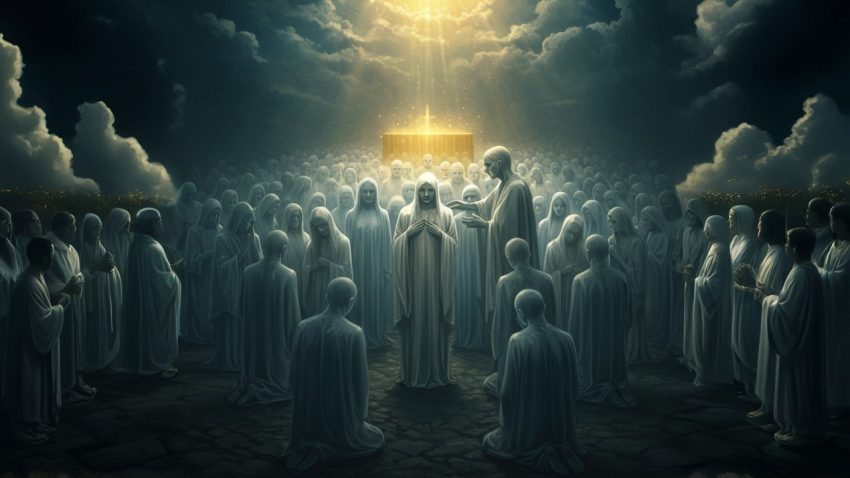
Our focus now shifts to the poignant and deeply significant passage of Revelation 6:9–11: “When He opened the fifth seal, I saw under the altar the souls of those who had been slain for the word of God and for the testimony which they held. And they cried with a loud voice, saying, ‘How long, O Lord, holy and true, until You judge and avenge our blood on those who dwell on the earth?’ Then a white robe was given to each of them; and it was said to them that they should rest a little while longer, until both the number of their fellow servants and their brethren, who would be killed as they were, was completed.” This passage pierces through the grand scale of earthly judgments we’ve witnessed and offers a powerful, intimate glimpse into the spiritual reality and the enduring cry of God’s faithful who have paid the ultimate price for their convictions. For a modern man, who might grapple with the seeming silence of God in the face of injustice, this vision offers profound insights into His awareness, His justice, and His ultimate plan.
First, John witnesses a striking scene: “under the altar the souls of those who had been slain for the word of God and for the testimony which they held.” This is not a literal depiction of disembodied spirits physically located beneath a piece of furniture. Instead, it’s a powerful symbolic representation, likely referring to the altar of sacrifice in the heavenly temple, the very dwelling place of God. Think of the Old Testament sacrificial system, where the blood of animals was poured out at the base of the altar as an act of atonement and consecration. As Dr. R.C. Sproul eloquently stated, “The altar is the place where sacrifice is made, and the blood poured out speaks of a life given.” In Genesis 4:10, after Cain murders Abel, God says, “What have you done? The voice of your brother’s blood cries out to me from the ground.” Here, the blood itself carries a symbolic voice, crying out for justice. Similarly, the souls of these martyrs, positioned under the heavenly altar, signify that their lives were a sacrifice offered to God for their unwavering allegiance to His Word and their bold testimony about Jesus Christ. They are in God’s immediate presence, their ultimate sacrifice remembered, honored, and eternally acknowledged by Him. The phrase “slain for the word of God and for the testimony which they held” is crucial; it underscores that their suffering and death were not random acts of violence but a direct consequence of their unwavering commitment to the truth of the Gospel and their courageous proclamation of it.
Next, these martyred souls erupt in a powerful and deeply human cry: “How long, O Lord, holy and true, until You judge and avenge our blood on those who dwell on the earth?” This is not a dispassionate theological inquiry but a raw, emotional outpouring of those who have suffered unjustly. It reflects the inherent longing for justice that resides within the human spirit, a longing that is amplified when that suffering is endured for righteousness’ sake. As the Psalmist cries out in Psalm 94:3, “How long, O Lord, how long will the wicked triumph?” This same sentiment echoes from beneath the altar. These martyrs, having endured the ultimate earthly injustice, yearn for God, whom they recognize as “holy and true,” to finally right the wrongs committed against them and to hold their persecutors accountable for their evil deeds. For a modern man who witnesses injustice and oppression in the world, this cry resonates with a deep-seated desire for things to be made right, for the perpetrators of evil to face the consequences of their actions. It’s a reminder that the longing for justice is not a flaw but an inherent part of our moral framework, one that finds its ultimate fulfillment in the righteous character of God.
In response to their fervent cry, a profound act of divine comfort and affirmation occurs: “a white robe was given to each of them.” In the rich symbolism of Revelation, white robes consistently represent righteousness, purity, and ultimate victory (as seen in Revelation 3:5, where overcomers are promised white garments, and Revelation 7:9, where the multitude in heaven are clothed in white robes). The giving of these robes to the martyrs is a powerful symbolic act of their vindication before God. It signifies their acceptance into His glorious presence, their cleansing from any earthly stain, and the divine recognition of their unwavering faithfulness, even unto death. This is their reward, their badge of honor in the heavenly realm. As the contemporary pastor and author John MacArthur notes, “These white robes are not earned righteousness, but imputed righteousness, the righteousness of Christ credited to those who have believed and remained faithful.” It’s a powerful assurance that their suffering was not in vain and that they are now clothed in the very righteousness of God.
Finally, a word of divine instruction is given: “it was said to them that they should rest a little while longer, until both the number of their fellow servants and their brethren, who would be killed as they were, was completed.” This reveals a crucial aspect of God’s sovereign plan and timeline for His people throughout history. It suggests that there is a predetermined number of believers who will face similar persecution and martyrdom before God’s ultimate judgment is fully executed and His kingdom is completely established. This isn’t a dismissal or devaluation of their plea for justice, but rather a placement of their longing within the context of God’s larger, unfolding purposes. The call to “rest a little while longer” offers a sense of divine peace and assurance that their suffering is not forgotten or meaningless. It highlights that God is working according to His own perfect timing, and that the full measure of tribulation for His people must run its course before His final intervention. As the theologian D.A. Carson wisely points out, “God’s timing is not our timing, but it is always perfect.” This instruction calls for patience and trust in God’s ultimate plan, even when the cries for justice seem to linger in the heavenly realms.
Section 2: Symbolic Interpretations
The Fifth Seal unfolds a tapestry of potent symbolism that resonates deeply with the enduring and often painful journey of God’s people throughout the annals of history:
Martyrdom: The Ultimate Witness: The phrase “the souls…slain for the word of God” serves as a stark and direct representation of the countless believers who, across centuries and continents, have faced relentless persecution and even embraced martyrdom rather than deny their unwavering faith and their powerful testimony of Jesus Christ. This seal transcends the boundaries of any single historical epoch; it acts as a solemn reminder that from the early church facing the brutal might of the Roman Empire to modern-day believers enduring oppression in various corners of the globe, the ultimate sacrifice for the sake of the Gospel remains a tragic yet powerful reality. As the early church father Tertullian famously declared, “The blood of the martyrs is the seed of the church.” Their willingness to lay down their lives underscores the profound value they placed on their relationship with Christ and the truth they proclaimed, highlighting the ultimate sacrifice some are called to make in their unwavering allegiance to the Gospel.
The Cry for Vengeance: A Longing for Divine Justice: The passionate cry for vengeance emanating from the martyred souls – “How long, O Lord, holy and true, until You judge and avenge our blood on those who dwell on the earth?” – is a deeply human and profoundly understandable expression of the inherent longing for justice in the face of unspeakable evil and suffering. While this cry might initially seem at odds with the Christian ethos of loving one’s enemies (Matthew 5:44), it powerfully underscores God’s own commitment to justice and His divine promise to ultimately respond to the wickedness of those who persecute His chosen people. However, the divinely ordained delay in immediate vengeance, as they are told to rest, emphasizes God’s perfect and often inscrutable timing and His overarching, cosmic plan, which may not always align with our immediate and perhaps emotionally charged desires for retribution. As the contemporary theologian Dr. John Piper eloquently states, “God is slow to anger, abounding in steadfast love, but He will by no means clear the guilty.” This delay is not divine indifference but a demonstration of His patience and the unfolding of His sovereign will.
Rest Until Completion: God’s Sovereign Plan and the Company of the Faithful: The instruction given to the martyrs to “rest a little while longer, until both the number of their fellow servants and their brethren, who would be killed as they were, was completed” unveils a crucial and often debated aspect of God’s overarching plan. It reveals that God has a predetermined number of those who will experience similar suffering and martyrdom throughout history. This divine foreknowledge and plan do not diminish the profound significance of each individual martyr’s sacrifice but rather places their suffering within a larger narrative of God’s people enduring tribulation as witnesses to the truth. The compassionate call to “rest” offers a sense of profound peace and divine assurance that their suffering is neither random nor forgotten in the grand scheme of God’s purposes. It highlights that God is working according to His own perfect timeline, and that the full company of those appointed to martyrdom will be complete before His ultimate and final act of justice and the full consummation of His kingdom. This encourages believers facing trials to find solace in the fact that they are part of a larger story of faithfulness and that God’s ultimate victory is assured.
Section 3: Historical Context
Understanding the historical backdrop against which the Fifth Seal was revealed and its subsequent echoes throughout church history is crucial for grasping its enduring significance and its powerful message to believers across the ages:
Early Church Persecution: A Crucible of Faith: The early church faced not sporadic incidents, but intense and often systematic persecution at the hands of the Roman Empire. Emperors like Nero, who infamously blamed Christians for the Great Fire of Rome in 64 AD, initiated localized but brutal crackdowns. Later, under emperors such as Domitian, Trajan, and Diocletian, persecution became more widespread and legally sanctioned. Christians were seen as a subversive element, refusing to participate in emperor worship and adhering to what was perceived as a strange and foreign “superstition.” As historian Michael Green notes in Evangelism in the Early Church, “To be a Christian in the first three centuries was a dangerous business.” Believers were routinely scapegoated for societal ills, falsely accused of disloyalty to the empire, and subjected to horrific forms of punishment, including imprisonment, torture, being thrown to wild animals in arenas, and execution. The “souls under the altar” would have resonated deeply and immediately with the lived experiences and the collective memory of believers in the first few centuries of the church, a constant reminder of the ultimate price many paid for their unwavering allegiance to Christ.
Reformation Era: A New Chapter of Martyrdom: Centuries later, the Reformation Era (16th and 17th centuries) marked another deeply significant and bloody chapter in the history of martyrdom. The fracturing of Western Christianity led to intense and often brutal conflicts between Catholics and Protestants. Individuals on both sides of the theological divide faced severe persecution, imprisonment, exile, and death for their deeply held religious convictions. Iconic figures like John Huss, who was burned at the stake for his reformist views, William Tyndale, who was martyred for translating the Bible into English, and countless unsung heroes stand as powerful testaments to the enduring reality of martyrdom for the sake of faith. As historian Owen Chadwick writes in The Reformation, “The age of the Reformation was an age of martyrs, and the courage of those who died for their faith became a powerful weapon in the hands of those who survived.” This era demonstrates that the spirit of persecution, fueled by religious intolerance and political power, continued to claim the lives of faithful believers.
Broader Historical Applications: An Unbroken Chain of Witness: The Fifth Seal’s significance is not confined to the early church or the Reformation; it possesses broader historical applications, tragically extending to all eras where believers have faced and continue to face persecution, discrimination, and even death for their unwavering faith in Jesus Christ. From the courageous missionaries who ventured into hostile environments, often at the cost of their lives, to the countless Christians living under oppressive regimes in the modern era, where simply professing faith can lead to imprisonment, torture, or death, the cry of the martyrs continues to echo throughout history. Organizations like Open Doors International document the ongoing persecution of Christians in numerous countries today, highlighting that the reality depicted in the Fifth Seal remains a present-day tragedy. As Brother Andrew, the founder of Open Doors, famously said, “Our calling is to go into the darkest places… to be with our brothers and sisters who are persecuted for Jesus’ sake.” The Fifth Seal, therefore, serves as a sobering reminder that the cost of discipleship can be incredibly high, and the spiritual battle for the hearts and souls of humanity continues with fierce intensity.
Section 4: Theological Implications
The opening of the Fifth Seal carries profound theological weight, offering us crucial insights into the very character of God and the intricate nature of His relationship with His people, especially those who suffer for His name:
God’s Justice and Timing: A Divine Perspective on Suffering: The fervent cry for justice from the martyred souls unequivocally reveals that God is not distant or indifferent to the suffering endured by His people. He sees, He hears, and He acknowledges the profound injustice they have experienced. Their question, “How long, O Lord, holy and true…?” is a testament to their unwavering belief in His righteous character and their expectation of His eventual intervention. However, the divine instruction to “rest a little while longer” unveils a critical aspect of God’s sovereignty: He operates according to His perfect plan and His divinely appointed timing, which often transcends our limited human understanding and our immediate desires for vindication. As the Apostle Peter reminds us in 2 Peter 3:8-9, “But do not forget this one thing, dear friends: With the Lord a day is like a thousand years, and a thousand years are like a day. The Lord is not slow in keeping his promise, as some understand slowness. Instead he is patient with you, not wanting anyone to perish, but everyone to come to repentance.” This “delay” is not divine apathy but rather a demonstration of His patience, His mercy, and His comprehensive plan for redemption, which will ultimately culminate in perfect justice for all. Trusting in God’s ultimate justice, even when earthly circumstances seem to contradict it, is a cornerstone of Christian faith.
Vindication of Believers: Clothed in Christ’s Righteousness: The act of giving white robes to each of the martyred souls is a powerful and deeply symbolic representation of their eternal reward and their complete vindication in God’s sight. These robes, often associated with purity, righteousness, and victory throughout Revelation (Revelation 7:9, 19:8), signify that despite the earthly suffering and injustice they endured, they are now fully accepted and honored by God. This is not a righteousness they earned through their suffering, but the imputed righteousness of Christ, freely given to those who are faithful to Him even unto death. As Martin Luther emphasized, salvation and righteousness are gifts received by grace through faith. The white robes symbolize their complete cleansing and their perfect standing before a holy God. This offers immense and enduring encouragement to believers who face persecution, assuring them that their suffering is not in vain but leads to an eternal inheritance of honor and glory in the presence of their Savior.
Encouragement Amid Suffering: A Purpose Beyond Earthly Pain: The Fifth Seal provides profound and lasting encouragement amid suffering for believers throughout all of history, including our own time. It assures us that the sacrifices made for Christ and the hardships endured for the sake of the Gospel are never forgotten by God. Their placement under the altar signifies their cherished status in His presence. Furthermore, the promise of future justice and the present reality of divine recognition – symbolized by the white robes – offer strength and perseverance to those facing opposition, discrimination, and trials for their faith. As the Apostle Paul declared in Romans 8:18, “For I consider that the sufferings of this present time are not worth comparing with the glory that is to be revealed to us.” The Fifth Seal reminds us that our earthly suffering, however intense, is temporary and serves a greater, eternal purpose within God’s overarching redemptive plan. We are part of a long line of faithful witnesses, and our endurance in faith, even in the face of adversity, contributes to the completion of God’s purposes and the ultimate triumph of His kingdom.
Lessons for Today
Though the Fifth Seal is deeply rooted in historical realities and profound theological truths, its message and implications resonate powerfully and urgently with believers in our modern, often complex and challenging world:
Reflection on Contemporary Persecution: A Global Crisis Demanding Our Attention: Tragically, the martyrdom of Christians is not a faded chapter in ancient history but a stark and horrifying reality in many parts of the world today. Countless believers in nations governed by oppressive regimes, facing religious intolerance, or living in conflict zones continue to endure intense persecution, ranging from systemic discrimination and social ostracization to brutal imprisonment, torture, and even death simply for professing their faith in Jesus Christ. Organizations like Open Doors USA and Voice of the Martyrs provide sobering and often heart-wrenching accounts of this ongoing crisis. The Fifth Seal serves as a powerful and persistent call for us, who may live in relative safety, to actively remember these contemporary martyrs. We are called to lift them up in fervent prayer, interceding for their strength, their protection, and the comfort of the Holy Spirit. Furthermore, we have a responsibility to advocate for their freedom and safety, raising our voices against injustice and supporting organizations working on their behalf. As the Apostle Paul urged in Hebrews 13:3, “Remember those in prison as if you were together with them, and those who are mistreated as if you yourselves were suffering.” The cry beneath the altar should stir our hearts to compassionate action for our brothers and sisters facing the ultimate test of their faith.
Encouragement to Remain Steadfast: Holding Firm in the Face of Modern Opposition: Even for believers living in more open and tolerant societies, the Fifth Seal offers profound encouragement to remain steadfast in our faith amidst the various forms of opposition, ridicule, and hardship we may encounter. While we may not face the immediate threat of physical martyrdom, following Christ in a world often hostile to biblical truth can come with a significant cost – social alienation, professional setbacks, familial discord, and constant cultural pressure to compromise our convictions. The example of the martyrs under the altar reminds us that following Christ has always demanded courage and commitment. Their unwavering faithfulness, even unto death, serves as a powerful inspiration for us to stand firm in our beliefs, to boldly proclaim the Gospel, and to resist the temptation to shrink back in the face of adversity. The Fifth Seal assures us that our faithfulness, no matter the cost, is seen, valued, and ultimately rewarded by God. As Dietrich Bonhoeffer, a German pastor martyred by the Nazis, eloquently stated, “When Christ calls a man, he bids him come and die.” While not all are called to physical martyrdom, all are called to a radical and unwavering commitment to Christ, even when it demands sacrifice.
Call for Perseverance: Enduring Trials with Eternal Perspective: The instruction given to the martyred souls to “rest a little while longer” carries a vital call for perseverance in our own lives as we navigate various trials and tribulations. We are called to cultivate a deep and abiding trust in God’s ultimate justice and His perfect timing, even when we long for immediate relief, vindication, or understanding in the midst of our struggles. The martyrs’ patient waiting reminds us that God’s perspective is eternal, and His plan unfolds according to His sovereign will, not our earthly timetable. Our endurance in faith, even amidst hardship, is not a passive resignation but an active demonstration of the reality of our hope in Christ and the unwavering conviction that God will ultimately make all things right. As the Apostle James encourages us in James 1:2-4, “Consider it pure joy, my brothers and sisters, whenever you face trials of many kinds, because you know that the testing of your faith produces perseverance. Let perseverance finish its work so that you may be mature and complete, not lacking anything.” The Fifth Seal challenges us to live with an eternal perspective, knowing that our present sufferings are temporary and that a glorious and just future awaits those who remain faithful to the end.
Conclusion
Our journey through the first five seals of Revelation has been a progressive unveiling of God’s intricate and often sobering plan for a world marked by rebellion and the consequences of sin. We began with the enigmatic First Seal and the White Horse, contemplating its symbolism of either gospel advance or subtle deception. This was followed by the fiery Red Horse of the Second Seal, unleashing the brutal realities of war and widespread bloodshed upon the earth. The Third Seal brought the somber Black Horse, depicting the devastating impact of famine and economic collapse. Then came the terrifying Fourth Seal and the Pale Horse, ridden by Death and accompanied by Hades, signifying widespread mortality through war, famine, disease, and the chaos of the natural world.
Now, with the breaking of the Fifth Seal, our focus shifted from external, earthly calamities to a deeply spiritual and profoundly moving scene: the cry of the martyrs from beneath the heavenly altar. We witnessed the souls of those slain for their unwavering faith in the Word of God and their powerful testimony, crying out for divine justice and the avenging of their blood. In response, they were given white robes, symbolizing their vindication and righteousness before God, and were told to rest until the full number of their fellow servants who would also be martyred was complete.
Through this seal, we have explored the enduring reality of martyrdom throughout church history, from the early church facing Roman persecution to the countless believers who have suffered for their faith in various eras and continue to do so today. We delved into the profound theological implications, recognizing God’s ultimate justice and timing, the vindication and eternal reward of believers who suffer for Christ, and the powerful encouragement this vision offers to those facing opposition and trials in our modern world. The cry of the martyrs serves as a potent reminder of the cost of discipleship, the ultimate value of unwavering faith, and the ultimate hope we have in a God who sees, hears, and will ultimately bring perfect justice.
As we continue to unravel the mysteries of Revelation, our journey now leads us to a point of cosmic upheaval and divine wrath. Join us next time as we confront the cataclysmic events unleashed by The Sixth Seal – Cosmic Disturbances and the Wrath of the Lamb. Prepare to witness the very foundations of the earth and the heavens tremble in response to the unfolding judgment of God.
What are your reflections on the powerful and poignant message of the Fifth Seal, and how does it impact your understanding of suffering, justice, and the ultimate hope we have in Christ? Share your thoughts in the comments below. And if this exploration has been meaningful and has strengthened your understanding of God’s Word, please like, subscribe, and share this series with others who are seeking truth and understanding in these significant times. Your engagement helps us build a community striving to learn and grow together.

Sources
- Bible Gateway – For scripture references and different translations.
- Blue Letter Bible – Offers in-depth study tools, including Greek lexicons for understanding key terms like *chlōros*.
- Enduring Word Commentary by David Guzik – Revelation 6 – Provides commentary on the Fourth Seal and its symbolism.
- Got Questions Ministries – The Fourth Seal of Revelation – Offers a concise overview and different interpretations.
- Ligonier Ministries – Revelation 6:7-8: The Fourth Seal – Provides a theological perspective on the judgment of the Fourth Seal.
- The Gospel Coalition – The Fourth Seal – Offers insightful commentary from a Gospel-centered viewpoint.
- Britannica – Crisis of the Third Century – For historical context regarding the Roman Empire.
- Bible Study Tools – Revelation Commentaries – Offers various commentaries for different perspectives on the Fourth Seal.
- World History Encyclopedia – Roman Plague – Provides information on plagues within the Roman Empire.
- Moody Publishers – Search for relevant books on Revelation and eschatology.
- Wm. B. Eerdmans Publishing Co. – Explore scholarly resources on biblical prophecy.
- Bible Hub – Greek Lexicon (chlōros) – For a deeper understanding of the original Greek word for “pale.”
- Bible Hub – Ezekiel 14:21 – For the Old Testament parallel of God’s judgments.
Disclaimer:
The views and opinions expressed in this post are solely those of the author. The information provided is based on personal research, experience, and understanding of the subject matter at the time of writing. Readers should consult relevant experts or authorities for specific guidance related to their unique situations.