
2,067 words, 11 minutes read time.
Image Source: The AI Pixel Prophet

Affiliate Link
Journey Through Prophecy and Grasp God’s Sovereign Plan for a World in Transition
Gentlemen, let’s be honest. We live in a world that often feels like it’s spinning out of control. From geopolitical tensions to personal uncertainties, the questions of what the future holds and where it’s all heading are never far from our minds. For those of us who engage with the Judeo-Christian narrative, the Book of Revelation stands as a powerful, albeit complex, text that attempts to answer these very questions. At its core lies the enigmatic sequence of the Seven Seals – a series of divine pronouncements that set in motion the climactic events of the end times. What do these ancient symbols, penned by the exiled apostle John on Patmos, truly mean for us, here and now? How do they illuminate a divine strategy for a world grappling with its own mortality and the yearning for ultimate justice?
This isn’t your Sunday school rendition of Revelation. This blog series, “Unveiling the Seven Seals of Revelation: A Journey Through Prophecy,” is a deep dive into a pivotal section of Scripture. We’re not just skimming the surface; we’re going to unpack the layers of meaning, explore the historical context, and wrestle with the theological implications of each seal. Think of it as equipping yourself with a critical understanding of a prophetic roadmap – not to fixate on sensationalism, but to gain a mature perspective on God’s sovereignty and our place within His unfolding plan. Let’s get started by establishing a solid foundation: what exactly are these Seven Seals?
Confronting the Sealed Scroll: Unveiling God’s Strategic Intent
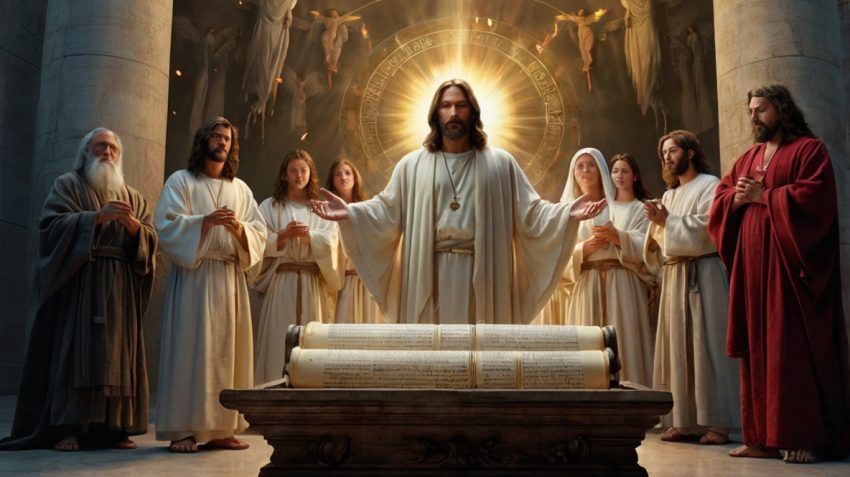
Imagine a high-stakes drama unfolding on a cosmic stage. The scene opens in Revelation chapter 5, where John witnesses an awe-inspiring vision of God the Father, enthroned in glory, holding a scroll secured by seven seals. This isn’t just any document; it represents God’s comprehensive and authoritative blueprint for judgment and redemption – His strategic intent for the culmination of human history and the restoration of all things. The weight of this moment is palpable: a powerful proclamation echoes, asking who is worthy to open the scroll and break its seals (Revelation 5:2). The gravity of the situation intensifies as no one in heaven or on earth or under the earth is found worthy to open the scroll or even to look inside. It is at this point that John experiences a deep and uncontrollable weeping, overwhelmed not only by the apparent impossibility of God’s plan being revealed and enacted (Revelation 5:4), but also by the potential implication that all the sacrifices, the preaching, the establishment of the early church – the very work he and the other disciples had poured their lives into – might ultimately be in vain if God’s ultimate purpose could not move forward. This underscores a fundamental truth: humanity, in its fallen state, cannot fully grasp or execute God’s ultimate purposes on its own terms.
It is then that hope emerges. One of the elders comforts John, proclaiming the worthiness of Jesus Christ, the Lion of the tribe of Judah, the Root of David, and crucially, the Lamb who was slain (Revelation 5:5-9). He alone is deemed worthy to take the scroll and initiate its unsealing. This dual imagery speaks volumes. The Lion embodies His kingly authority and conquering power, while the Lamb signifies His redemptive sacrifice – the very foundation upon which God’s plan is built. His worthiness isn’t arbitrary; it’s earned through His victory over sin and death, positioning Him as the singular mediator between a holy God and a fallen humanity. As Christ begins to break these seals, a cascade of apocalyptic events is triggered, each seal revealing a distinct phase in the unfolding narrative that will ultimately lead to His triumphant return and the establishment of His eternal reign.
Situating the Prophecy: Understanding the Broader Landscape of Revelation
To truly grasp the weight and significance of the Seven Seals, we need to situate them within the broader literary and theological context of the Book of Revelation. The book commences with John’s encounter with the resurrected and glorified Christ, followed by specific messages directed to seven churches in Asia Minor (Revelation 1-3). These messages address their immediate challenges, offering both stern warnings and vital encouragement. Following this, John is “in the Spirit” transported to the heavenly realm (Revelation 4), where he witnesses the transcendent majesty and absolute holiness of God on His throne, surrounded by a celestial court. This powerful scene provides the necessary backdrop for the introduction of the sealed scroll in Revelation 5.
The scroll held by God symbolizes His ultimate dominion and ownership over all of creation – a dominion fractured by sin, leading to chaos and alienation. However, through the atoning sacrifice of Jesus Christ, the Lamb of God, this lost inheritance is reclaimed. His exclusive worthiness to open the scroll signifies His divine authority to execute God’s plan for the restoration of creation and the final judgment of those who oppose His will. It’s crucial to recognize the structural integrity of Revelation, which unfolds through three interconnected cycles of judgment: the Seven Seals, the Seven Trumpets (which emerge from the seventh seal), and the Seven Bowls (unleashed later in the narrative). Understanding this progressive structure allows us to perceive the escalating nature of God’s intervention in human history and the unwavering trajectory towards His ultimate victory.
A Tactical Overview: Charting the Course of the Seven Seals
As the Lamb initiates the opening of the seals, a sequence of events unfolds, each laden with symbolic significance. While subsequent blogs will dissect each seal with precision, a preliminary overview will provide a strategic framework for our understanding:
First Seal – The White Horse: This seal unleashes a rider on a white horse, often interpreted as representing conquest, the assertion of power, and potentially a deceptive guise of peace. Some theological frameworks connect this to the initial rise of ideologies or the spirit of antichrist gaining global influence.
Second Seal – The Red Horse: With the breaking of the second seal, a fiery red horse emerges, and its rider is granted the authority to eradicate peace from the earth, ushering in widespread conflict and bloodshed. This seal speaks to the escalating cycles of violence and warfare that will characterize the end times.
Third Seal – The Black Horse: The opening of the third seal reveals a black horse and its rider wielding a set of scales, symbolizing economic scarcity and profound hardship. This points to a future marked by famine and severe economic disparities, where basic necessities become exorbitant and inaccessible for many.
Fourth Seal – The Pale Horse: The fourth seal unleashes a pale or ashen horse, whose rider is ominously named Death, with Hades trailing closely behind. This seal signifies widespread mortality on a catastrophic scale, resulting from the combined forces of war, famine, disease, and the predation of wild beasts. It paints a grim picture of significant human loss.
Fifth Seal – The Cry of Martyrs: This seal shifts our focus to the heavenly realm, revealing the souls of those who have been martyred for their unwavering faith in Jesus. They are depicted under the altar, their voices rising in a poignant cry for justice. This seal underscores the reality of persecution faced by believers and God’s ultimate promise of vindication.
Sixth Seal – Cosmic Upheaval: The breaking of the sixth seal triggers dramatic cosmic disturbances – a cataclysmic earthquake, the sun turning black, the moon becoming blood-red, and stars plummeting from the heavens. These terrifying events serve as undeniable signs of God’s wrath and a powerful display of His absolute sovereignty, compelling even the ungodly to acknowledge His power.
Seventh Seal – The Silence of Anticipation: The opening of the seventh seal is marked by a profound silence in heaven, lasting for approximately half an hour. This pregnant pause signifies a moment of solemn anticipation, a breath held before the next wave of divine judgments – the unleashing of the seven trumpets. It underscores the immense significance of the events about to unfold.
Why This Matters Now: The Contemporary Relevance of Prophecy
For many, the Book of Revelation and its vivid imagery can feel distant and disconnected from the realities of our daily lives. However, understanding the Seven Seals offers critical insights that hold profound relevance for men navigating the complexities of the 21st century. Firstly, these prophecies underscore God’s unwavering sovereignty over the trajectory of history. Despite the apparent chaos and the pervasive presence of evil in the world, the seals reveal that God remains firmly in control, orchestrating events according to His ultimate purposes. This understanding provides a bedrock of assurance for believers, knowing that history isn’t a random series of events but is moving inexorably towards God’s appointed culmination.
Secondly, the Seven Seals serve as a potent warning. While the precise timing of these prophetic events remains a subject of ongoing theological debate, the underlying principles of divine judgment, the inevitability of tribulation, and the ultimate consequences of rejecting God are timeless and demand our serious consideration. Engaging with these prophecies compels us to examine our own lives, to ensure our values and actions align with God’s will, and to cultivate a state of spiritual preparedness for whatever the future may hold. This isn’t about succumbing to fear, but about fostering a sense of urgency and a deepening commitment to our faith.
Finally, the unfolding narrative of the Seven Seals ultimately points towards the definitive triumph of God and the glorious return of Jesus Christ. Even amidst the depicted turmoil and suffering, there is an undeniable undercurrent of hope – the unwavering promise that evil will not have the final word. For believers, this provides an unshakeable anchor in the midst of life’s inevitable storms, reminding us that God’s justice will ultimately prevail and His kingdom will be established in its fullness.
Charting Our Course: What Lies Ahead in This Series
Over the course of this blog series, we will embark on a rigorous and detailed examination of each of the Seven Seals. In each installment, we will meticulously analyze the specific biblical descriptions, unpack the rich layers of symbolism employed by the apostle John, consider pertinent historical contexts that may illuminate their meaning, and critically engage with the profound theological implications of each seal. Our objective extends beyond mere academic analysis; we aim to extract practical wisdom and actionable insights that resonate with the challenges and opportunities faced by contemporary men in their daily lives. We will strive to connect these ancient prophecies with the tangible realities of our modern world, encouraging thoughtful introspection on our spiritual posture and our role within God’s grand narrative.
As we navigate this complex and often debated prophetic text together, I encourage you to approach it with intellectual rigor, an open mind, and a spirit of prayerful discernment. The Book of Revelation, while containing dramatic and sometimes unsettling imagery, is ultimately a message of hope, perseverance, and the ultimate victory of our Lord. May this series deepen your understanding of God’s Word, fortify your faith, and inspire you to live with intentionality and confident anticipation of His return.
Deciphering the Seven Seals isn’t just about understanding ancient prophecies; it’s about gaining a clearer perspective on the trajectory of our world and the unwavering sovereignty of God. It’s about equipping ourselves with knowledge that speaks to the big questions we face as men. Join us in the upcoming installments as we dissect each seal, starting with the enigmatic First Seal and the imposing figure of the rider on the white horse. Together, we’ll unpack the layers of meaning and discover the enduring relevance of God’s unfolding plan for our lives today.
If you found this initial exploration thought-provoking and valuable, help us get this perspective out to more guys. Hit that like button below, subscribe to our newsletter for future insights and in-depth analyses in this series, and share this with the men in your circle who are also seeking a deeper understanding of these critical biblical truths. Your engagement helps build a community of men who are serious about understanding God’s Word. Let’s journey through these prophecies together.

Sources
- Bible Gateway – A comprehensive online Bible resource with various translations and study tools.
- Blue Letter Bible – Offers in-depth study tools, including lexicons, commentaries, and interlinear translations.
- Enduring Word Commentary by David Guzik – A well-respected and accessible commentary on the entire Bible, including Revelation.
- Got Questions Ministries – Book of Revelation – Provides clear and concise answers to frequently asked questions about Revelation.
- Ligonier Ministries – Offers a wealth of theological resources, including articles and teachings on biblical prophecy.
- The Gospel Coalition – Features articles and resources from various evangelical scholars on biblical topics, including Revelation.
- Desiring God by John Piper – Offers sermons and articles that often touch on eschatological themes with a focus on God’s glory.
- Bible Study Tools – Provides a variety of resources, including commentaries, dictionaries, and encyclopedias.
- Moody Publishers – A reputable publisher of theological books and resources. (Specific book links on Revelation would be beneficial here depending on your research).
- Wm. B. Eerdmans Publishing Co. – Another respected academic publisher of theological works. (Again, specific book links would enhance this).
- Revelation: Four Views: A Parallel Commentary – An example of a book offering different interpretative perspectives on Revelation.
- Britannica – Book of Revelation – Provides historical and literary context for the Book of Revelation.
- Stanford Encyclopedia of Philosophy – Apocalyptic Literature – Offers a broader understanding of the literary genre of apocalyptic writing.
Disclaimer:
The views and opinions expressed in this post are solely those of the author. The information provided is based on personal research, experience, and understanding of the subject matter at the time of writing. Readers should consult relevant experts or authorities for specific guidance related to their unique situations.
The seven seals are one of the most misunderstood prophetic elements of Revelation. Why? Because much of Revelation refers back to earlier books of the Bible, including the seven seals, and many analyses of them don’t take these references into account!!
Revelation 4 has a vision of God’s heavenly throne, including the four living creatures around it. Ezekiel 1 has a vision of God’s portable heavenly throne, including the four living creatures around it.
Revelation 5 has a scroll, written on both sides and sealed with seven seals. Ezekiel 2:8-10 has a scroll, written on both sides and FILLED WITH JUDGMENTS AGAINST ISRAEL.
Thus, the seven seals of Revelation have everything to do with judgments against Israel specifically! NOT the entire world!
Furthermore, the sixth seal (Revelation 6:12-17) has a vision of heaven being rolled up a scroll, and the stars falling from the sky. This is an explicit reference to Isaiah 34:4, which has heaven being rolled up like a scroll, and the stars falling from the sky!
Now, read Isaiah 34:1-3. This is talking about the “hosts” of armies of many nations – including Assyria – being gathered together against Israel, so that God can destroy them. This EARTHLY event is SYMBOLIZED by the heavenly “hosts” of stars falling from the sky in verse 4!
What Revelation 6 is describing is a “repeat” of history in Isaiah’s day. In his day, Assyria conquered many nations and kingdoms, eventually coming up against Jerusalem before God supernaturally destroyed their army (see Isaiah 37:36). Ezekiel 38-39 describes a “repeat” of this historical pattern, with “Gog” from the land of Magog bringing the armies of MANY nations up against Israel, only for God to destroy them.
What Revelation 6 is talking about, is basically Ezekiel 38-39.
Notice that right before Ezekiel 38-39, in chapters 34 and 37, we have the twelve tribes being joined back together? Isn’t it funny that Revelation 7 describes the exact same thing?
This ALSO happened on a much smaller scale in Isaiah’s day. Isaiah named his own son “Shear-Jashub,” meaning “a remnant shall return” – see Isaiah 7:3. We see more about this remnant returning in Isaiah 10:20-22. Historically, a small number of northern Israelites, along with many Gentiles, came to Jerusalem in 705 BC. At that time, the population of Jerusalem increased about 3-4x, which we know from archaeology. Compare Isaiah 7:3 and 26:15.
Basically, the pattern in Revelation is of an end-time Assyria (Revelation 4-7), followed by an end-time Babylon (Revelation 8-18).
Only by understanding the references in Revelation to earlier books of the Bible, will we be able to see and understand this pattern.
… liked this!