
3,534 words, 19 minutes read time.
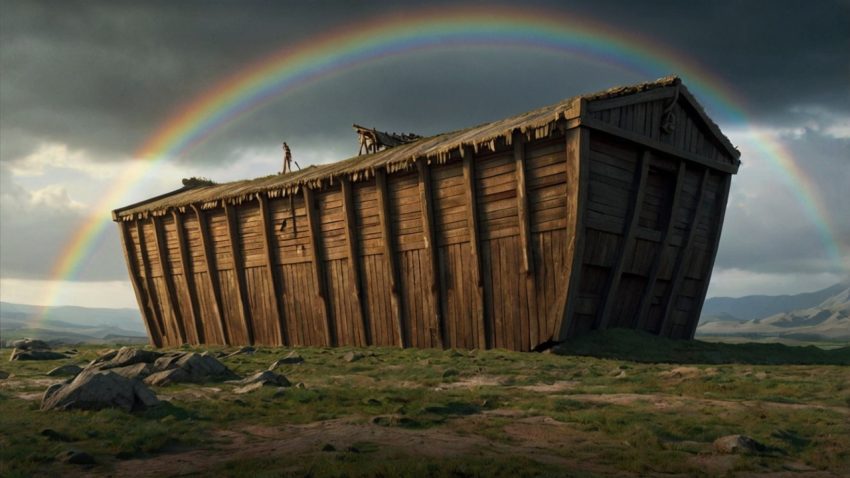
You call me a righteous man. A prophet. A patriarch. You teach your children about my faith, my obedience, my place in the grand story of your God. My name is sung in hymns and spoken with reverence. But if you truly knew me, you would not call me a hero. I was not righteous. I was not wise. I was a man, no greater than you, and like all men, I was flawed. You see the ark as my triumph. I see it as my greatest regret.
I did what was commanded, yes. I built the ark. I followed the measurements—three hundred cubits long, fifty cubits wide, thirty cubits high. I cut the gopher wood, slathered the pitch, shaped the frame until it stood like a beast of burden, waiting for its yoke. I watched the sky as I worked, always waiting for the first sign of judgment. But do you know what you never ask? You never ask if I wanted to.
Do you think I rejoiced when I heard the voice of God? Do you think I celebrated when He told me that all flesh would perish? That my neighbors, my kin, my childhood friends—every face I had known—would be washed away like dust in a storm? I did not rejoice. I questioned. I doubted. And yes, I hesitated.
The world was wicked, that much is true. You cannot imagine the stench of it, the weight of it pressing down on your soul. Men took what they wanted without remorse. Women were treated like property, and the cries of the innocent were drowned out by laughter and feasting. Blood ran in the streets as brother betrayed brother. They worshiped false gods, twisted the laws of nature, and spat in the face of the Almighty. But I had lived among them. I had broken bread with them. I had seen their children play, heard their songs carried on the wind.
I tried to warn them. I spoke of judgment, of wrath, of a cleansing that would come like a thief in the night. They laughed at me. They called me mad.
But when the sky broke open, when the first raindrops fell like tiny stones against the dust, the laughter stopped.
The Flood
The water did not come as a gentle rain. It fell with fury, as if the heavens themselves were weeping in rage. The sky, which had been so dry and unyielding for centuries, cracked open with a sound like the tearing of the earth itself. The clouds, blacker than the depths of the sea, rolled over the land like an invading army. Lightning tore jagged scars across the heavens, and thunder roared so loud it shook the very bones of the world.
And then the earth moved.
Beneath my feet, I felt it—first a tremor, then a violent quake. The ground groaned like a dying beast, splitting open in great wounds that spewed water as if the land itself were being ripped apart from below. Fountains of the deep, hidden for ages, erupted in columns of churning black water, drowning everything in their path. Rivers swelled, lakes overflowed, and the very mountains trembled as the floodgates of the earth were broken.
Still, I hesitated.
I had spoken of this day for years. I had pleaded, warned, begged them to turn from their wickedness. I had built this ark with my own hands while they watched, while they mocked, while they spat at my feet.
They had laughed. Oh, how they had laughed.
“You old fool!” they had jeered. “You speak of a God we cannot see, of a flood that will never come!”
“Where is your God now, Noah?” they taunted. “Why does He not strike us down where we stand?”
They did not just mock me. They mocked Him. They defied Him openly, raising their fists to the heavens, daring Him to act. I had seen men perform unspeakable evils in the streets, laughing as they did so, claiming that if there truly were a God, He would stop them. But He had been silent then. He had been patient.
His patience had run out.
I stood at the threshold of the ark as the screams began.
The first cries came as a distant wailing, rising in pitch like the howling of an injured animal. Then they grew closer, more desperate. People ran through the streets, their faces twisted in terror. I saw them clawing at one another, trampling the weak in their mad scramble to find higher ground. Some fell into the rushing waters and were carried away, their hands grasping at nothing.
Then they came for the ark.
They clawed at the wood, their fingernails breaking and bleeding as they pounded against the sealed door. I could hear them—men, women, children—all crying out for mercy. Their voices overlapped, a terrible chorus of fear and regret.
“NOAH! Let us in!”
A mother’s voice.
I turned, my breath catching in my throat. She was there, just outside, holding a child in her arms. Her hair was plastered to her face with rain, her eyes wide, wild, filled with a terror I had never seen before. The child in her arms was screaming, reaching toward me with tiny fingers, as if I could pull him to safety.
I took a step forward. My hands trembled. My legs felt weak. Every fiber of my being screamed at me to open the door.
I could not.
The door had been shut by the hand of God.
I pressed my forehead against the wood, my hands splayed out against the barrier that separated me from them. My throat tightened, and I whispered, “I’m sorry.”
The water rose.
They pounded harder. Their voices became shrieks of terror, begging, pleading. Then, one by one, they began to gurgle.
A hand slid down the wood, leaving streaks of blood in its wake.
The cries became muffled, swallowed by the churning waters.
I do not know how long I stood there. My hands were shaking. My breath came in ragged gasps. The sounds outside faded into silence, and for the first time since the flood began, I was afraid of the quiet.
Inside the ark, my family watched me. Shem, Japheth, Ham—they looked at me, but they did not speak. My wife was pale, her hands clasped together as if in prayer, but her eyes were distant.
I had saved them. But I had condemned everyone else.
I turned away from the door, walking slowly to the center of the ark. My legs felt heavy, as if I had aged a hundred years in those few moments. I sat down on the cold wooden floor and put my face in my hands.
Outside, the rain continued to fall. The waters continued to rise.
And the world was no more.
The Ark
Forty days. Forty nights.
Do you know what it feels like to be trapped inside a wooden coffin, floating above a world that no longer exists? To hear only the groaning of the timbers, the constant creaking and shuddering of the ark as it is tossed on the waves? To feel the weight of an endless sky above, and the depths below?
We were prisoners. Not just of the ark, but of our own fear.
The days blurred together, indistinguishable from one another. Time became something abstract, something we could no longer grasp. When you are confined in darkness, with only the sound of crashing water outside and the smell of animal waste thick in the air, the passage of time means nothing. I could feel it in my bones—the never-ending weight of waiting. We were all waiting for something, but none of us knew what.
I buried myself in the work. The animals—caring for them, feeding them, cleaning their pens—became my refuge. My sons worked too, each of us immersed in the monotonous routine of survival. Shem took charge of the larger creatures, the lions, the oxen, and the horses, his broad shoulders straining as he carried the heavy feed. Japheth took care of the birds and the smaller mammals, while Ham seemed to gravitate toward the reptiles and amphibians, his sharp eyes always searching for signs of distress among them. My wife—quiet, always calm—tended to the wounded or sick, always bringing them to me when they needed my hands. She prayed, quietly and faithfully, but I could see the tension in her movements. The weight of the silence was breaking us all.
There was no escape from the smell. The air was thick with the stench of sweat and dung, the unceasing sound of animals restless in their confinement. The deeper levels of the ark, where the larger creatures were kept, were foul with waste. Even though we did our best to clean and maintain order, there was no avoiding it. The dampness seeped into everything—the walls, the wood, the very fabric of our clothes. The moisture in the air felt like it was choking us, leaving a bitter taste in my mouth every time I took a breath.
We rationed food. Carefully. It was a daily struggle to make it last, knowing there was no way to know how long we would be inside. The provisions, which had seemed more than enough when we first boarded, now seemed meager and insufficient. We ate only what we needed, though sometimes I was tempted to eat more, to fill the hollow pit of uncertainty that gnawed at me. My thoughts wandered in the night, always to the same places.
I couldn’t stop thinking about the world we had left behind. The flood had taken everything. But what of the bodies? Were they still floating in the water, caught in the endless churn? I could almost hear their gurgled cries beneath the surface. The thought haunted me. Had they sunk to the bottom, swallowed by the depths, or would they rise again when the waters receded? I had no answers. I didn’t know if there was anyone left to answer. And then, the darkest thought of all: Did their spirits linger? Were they just beyond the walls of the ark, waiting, watching, whispering through the cracks in the wood?
These thoughts, they gnawed at me in the darkness. In the silence. The silence was the worst part. It was a heavy silence, filled with ghosts, filled with guilt. I couldn’t help but feel it. We had warned them, hadn’t we? I had preached, I had begged, I had worked day and night to build this vessel, to prepare for the flood. But they had laughed. They had mocked us. They had mocked God. And now, we were the last.
I didn’t sleep much. When I did, it was always fitful, haunted by dreams of drowning—of sinking beneath the waters, unable to breathe, surrounded by faces I once knew. The faces of the ones who had laughed, who had turned away from the truth.
My sons worked without speaking, their hands moving mechanically, their eyes avoiding mine. I saw the fear in their faces, though they did their best to hide it. Shem, ever the dutiful one, kept his jaw set in determination, but even he could not escape the strain of it all. I saw his shoulders slumped at times, as if the weight of the world was bearing down on him. Ham, ever the rebel, spoke little. He would often look out toward the horizon, his gaze distant, his mind clearly elsewhere. Japheth was quieter still, always asking when the waters would recede, his voice carrying an edge of uncertainty that cut through the silence like a blade. But I had no answers to give him.
And my wife… she was always there, praying, offering comfort, but there was a distance between us now. She did not blame me, not directly. But the way she looked at me had changed. The spark of admiration, the trust she had always had in me, was beginning to fade. It wasn’t her fault. She was as much a prisoner as I was, as much a victim of this never-ending storm. But the weight of it all was breaking her too.
We were all breaking.
The days turned into weeks, and still the waters rose. The world outside was a vast, empty void. The horizon had disappeared, swallowed by the rain and the darkness. There was no light anymore. No stars. Only the flickering glow of the oil lamps, casting shadows that seemed to stretch on forever. The only thing that reminded us we were still alive was the sound of the waves crashing against the ark, the deep moaning of the world beneath us.
The smell of the animals, the weight of the silence, the suffocating dampness—it all felt like a dream. But it was real. It was all too real.
And as we waited, as we clung to each other, buried in our work to keep from thinking, I began to wonder: Would we survive this? Would any of us be the same when it was over? Would we emerge from this ark, this floating tomb, only to find a world that was even more broken than before?
I could not answer that. I had no answers for anything anymore. But I had to keep going. We all did.
We buried ourselves in the work, in the routine of survival. There was no other choice. But I knew, deep down, that we were all drowning in different ways.
The Waiting
Days turned into weeks. The rain stopped, but the water remained. Our world was nothing but endless waves, stretching out to the horizon. We had no way of knowing when it would end.
I sent out a raven. It did not return.
I sent out a dove. It came back, finding no place to rest.
The waiting was unbearable. The ark groaned beneath us, its joints stiff from the long exposure to the elements. Mold crept along the walls. Supplies dwindled. My sons argued in hushed voices when they thought I could not hear.
Then, one day, the dove returned. In its beak, an olive leaf.
We wept.
The New World
The ark came to rest on Mount Ararat, and for the first time in what felt like an eternity, we stepped onto solid ground. My feet sank into the damp earth, as though the earth itself was reluctant to accept us after the long, violent separation. The sky above was open—vast, clear, and full of possibility—and the air was fresh and cool against my skin, a stark contrast to the stifling confinement of the ark. It was the breath of life itself, a promise of new beginnings, of something that might, one day, resemble the world we had known.
But as I looked around, a chilling realization settled in my heart. The world was empty.
No bustling cities. No fields stretching to the horizon. No songs of children playing in the distance. There were no voices calling out to one another, no laughter echoing across the land. Only silence. The world we had once known, the world of laughter and cries, of seasons and harvests, was gone. The homes, the towns, the places we had lived and worked—none of it remained. All of it had been swept away by the waters. What remained was a desolate landscape. The remnants of the old world, reduced to nothing more than a memory, an echo in the wind.
We stood there, my sons and I, my wife, staring out at the barren land before us. The silence was deafening. The only sound was the wind, whispering through the trees that had managed to cling to life on the mountaintop. The world felt so small now, so fragile. And yet, it was here, in the vast emptiness, that God had brought us—survivors of the great deluge. We had been spared, not by our own strength, but by God’s mercy and grace. But it felt hollow in a way I could not explain. The weight of our survival was heavy, and the grief of the world that was lost lingered in the air like a scent that could not be washed away.
We knew what we had to do. In the stillness, we built an altar. We laid stones, one by one, each one a symbol of our gratitude, our repentance, our hope. It was a simple altar, nothing grand, but it was all we had. We gathered what few animals we had left, and we made sacrifices to the Lord—burnt offerings that rose to the heavens in a pillar of smoke. The fire crackled, and the scent of burning flesh filled the air. It was a solemn moment. A moment of worship. A moment of surrender. We knew the world had changed, that we had changed, and we could not move forward without acknowledging the God who had saved us.
I offered my prayers, my thanks, but also my doubts. For even as I stood there, offering up what remained of my heart, I could not shake the questions that rattled in the deepest part of my soul. What had all of this been for? Was this the new beginning I had longed for? Or was it just another chapter in the story of mankind’s destruction, one that would play out again, in time? I had done as God had commanded. I had built the ark. I had obeyed. I had survived. But the price of survival seemed so high, so unbearable.
As I looked at my sons—Shem, Ham, Japheth—each one trying to mask their own grief with stoic faces, I realized they too were burdened by the weight of what had happened. They were young men, full of strength and potential, yet the trauma of the flood, the loss of the world they had known, was written in their eyes. We had survived, yes, but at what cost? Would the world ever feel the same again? Could it?
It was then that God spoke to us again. He set His bow in the sky—a rainbow. A sign. A promise. A covenant. He spoke with love and with authority, telling us that He would never again destroy the world with water. Never again would the earth be swallowed by a flood. The rainbow was a symbol of that promise, a reminder that despite the depths of His judgment, He was merciful. He was faithful. And His love for us, though tested, would endure.
And yet, as I stand here today, telling you my story, I am left with one lingering thought: Was it worth it?
I did everything I was commanded to do. I obeyed. I built the ark, gathered the animals, warned the people. I survived. We survived. But there is a part of me that wonders, late at night, when the winds howl and the rains begin to fall, if it was all truly worth it.
The rainbow, that beautiful sign in the sky, promises that God will never again wipe the earth clean with a flood. It is a promise of mercy, of a new beginning. But as I stand here, with the weight of this story on my shoulders, I cannot help but feel that the cost of that mercy is far greater than I ever anticipated. We have lost so much. The laughter, the voices, the land—all of it is gone, washed away by the very waters that were meant to cleanse. Now, we are left to rebuild, to start again. But can we ever rebuild what was lost? Can we ever truly heal from the wounds left by such a great tragedy?
And when the rain begins to fall, when the wind begins to rise, I hear the screams again—the voices of those who did not heed the warning. The faces of the lost, the ones who mocked and ridiculed, who chose to ignore God’s call. I hear their voices, distant but clear, and I cannot escape them.
The silence of the world is deafening, but their cries haunt me. And so I ask myself, again and again—was it worth it? Did we do enough? Were we faithful enough? And even in the face of God’s promise, I cannot help but wonder if there is a part of me that is still waiting for an answer.

Sources
- Genesis 6-9 (Bible Gateway)
- Genesis 6-9 (Blue Letter Bible)
- Answers in Genesis: Noah’s Ark
- Got Questions: Noah’s Ark
- Biblical Archaeology Society
- Institute for Creation Research
- Desiring God: Remember Noah
- Ligonier Ministries: Noah’s Flood
- Christianity.com: Noah’s Ark
- Bible Project: Noah and the Flood
- United Church of God: Noah’s Flood
- The Gospel Coalition: Noah’s Flood
- History Channel: Noah’s Ark
- Christian Post: Noah’s Ark
- Biblica: Who Was on Noah’s Ark?
Disclaimer:
The views and opinions expressed in this post are solely those of the author. The information provided is based on personal research, experience, and understanding of the subject matter at the time of writing. Readers should consult relevant experts or authorities for specific guidance related to their unique situations.