
1,723 words, 9 minutes read time.

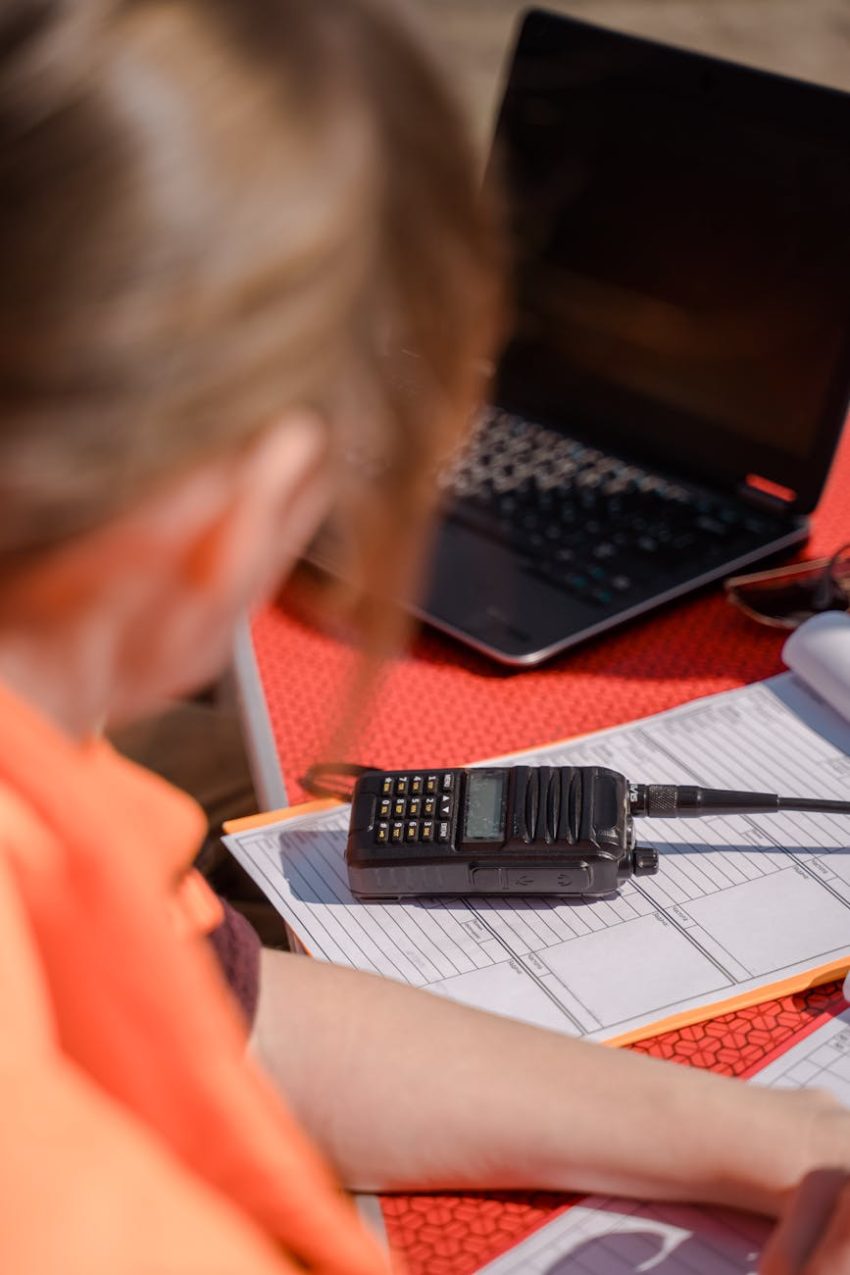
Amateur Radio, also known as “Ham Radio,” is a hobby and service that allows individuals to communicate across the globe using radio frequencies. For many enthusiasts, this is more than just a pastime—it’s an avenue for learning, experimenting, and even providing vital communication services during emergencies. Governed by the Federal Communications Commission (FCC) in the United States, amateur radio operations are conducted under Part 97 of the FCC’s rules, which ensure the orderly use of the radio spectrum.
At the heart of every amateur radio system lies two critical components: the transmitter and the receiver. These devices work together to facilitate communication, whether it’s a simple conversation between two operators or a complex network of linked stations. Understanding the roles of both transmitters and receivers is essential for any aspiring or current amateur radio operator, as it directly impacts the quality and range of communications.
What is a Transmitter?
A transmitter is a device that generates and sends radio signals over the airwaves. At its core, a transmitter’s job is to take audio or data signals and convert them into electromagnetic waves that can travel through the air. Transmitters are essential in initiating communication within the world of amateur radio. Transmitters function by producing oscillations—electromagnetic waves—that carry information. These waves are generated by an oscillator, a critical component of the transmitter. The oscillator generates a frequency, and this is then modulated by the input signal (e.g., voice, Morse code, or data). The modulation process varies the amplitude, frequency, or phase of the carrier wave to encode the information.
Once modulated, the signal is amplified, ensuring that it can travel over long distances. The final amplified signal is sent through an antenna, where it is radiated as electromagnetic waves. Different types of transmitters exist depending on the frequency band used, the type of modulation (FM, AM, SSB), and the power level required. An example of a transmitter in amateur radio is an HF (High Frequency) transmitter, which is used to communicate over long distances (often worldwide). These transmitters typically operate in the 1.8 MHz to 30 MHz range and are used by operators for voice communication, digital modes, and Morse code. Transmitters used for different purposes will vary in terms of power output, modulation methods, and the specific frequency range they cover. For instance, VHF (Very High Frequency) transmitters are typically used for local communication, such as repeater-based systems.
What is a Receiver?
A receiver, as the name suggests, is the counterpart to the transmitter. Its role is to receive and decode the radio signals transmitted by another operator’s transmitter. Without the receiver, the transmitted signal would have no destination and thus no way to complete the communication loop. Receivers capture electromagnetic waves using an antenna and convert them into electrical signals. These signals are then processed through several stages. The first stage usually involves filtering, which eliminates unwanted signals outside the desired frequency range. Next, the signal is amplified, and the demodulator decodes the encoded information—whether it’s voice, Morse code, or digital data.
The key to a good receiver is its ability to select and decode the correct signal while rejecting interference and noise. Modern receivers, particularly Software Defined Radios (SDRs), offer flexibility in terms of frequency tuning, signal processing, and the ability to work with multiple modes of transmission. A common receiver in the amateur radio world is a Software Defined Radio (SDR), which is capable of receiving a wide range of frequencies. SDRs use software to process and decode the radio signals, offering an unprecedented level of flexibility and precision. SDRs are popular among amateur radio operators who wish to experiment with various bands and modes. Another example would be an analog receiver, which, although less flexible than an SDR, offers simple and reliable reception of AM or FM signals, ideal for voice communications on the VHF and UHF bands.
The Relationship Between Transmitters and Receivers
The relationship between the transmitter and receiver is foundational to any communication system. The transmitter sends out a signal that is picked up by the receiver. For successful communication, both devices must be compatible in terms of frequency, modulation type, and signal power. The transmitter and receiver are tuned to the same frequency, and the receiver is capable of decoding the modulation used by the transmitter. For example, if an operator is transmitting on a frequency of 14.250 MHz using Single Sideband (SSB) modulation, the receiver on the other end must also be tuned to that frequency and be capable of decoding the SSB signal.
Consider a scenario where two amateur radio operators are communicating across a distance. One operator uses a transmitter to send a message, which is received by the other operator’s receiver. The receiver decodes the message and plays it through a speaker. This process relies on both devices working together at the same frequency and with the same modulation type. In this way, the transmitter and receiver form the cornerstone of communication in the amateur radio world.
FCC’s Part 97 Rules and Their Impact
The FCC’s Part 97 rules regulate all aspects of amateur radio operations in the U.S., including the use of transmitters and receivers. These rules are designed to ensure that amateur radio remains a non-commercial, self-regulated service. Key aspects of Part 97 relevant to transmitters and receivers include the regulation of frequency use, power limits, modulation requirements, and licensing. Operators must adhere to the specific frequency bands allotted for amateur radio use, as outlined by the FCC. The rules also set maximum power levels for transmitters to prevent interference with other radio services, ensuring that transmissions are not disruptive to other users of the spectrum. Additionally, certain frequencies may require specific modes of operation, such as CW (Morse Code) or SSB (Single Sideband), depending on the band in use. Operators are required to hold the appropriate license to use certain frequencies and transmit at higher power levels, ensuring compliance with these regulations.
By adhering to these regulations, amateur radio operators ensure they’re operating legally and without causing harmful interference to other services. Understanding Part 97 is crucial for both new and experienced operators, as it provides a framework for operating within the amateur radio community and maintaining a harmonious coexistence with other radio services.
Selecting the Right Transmitter and Receiver for Your Station
When setting up an amateur radio station, selecting the right transmitter and receiver is crucial. Several factors should be considered when choosing equipment, such as power output, frequency range, and the mode of operation. Transmitters come in a range of power outputs, from a few watts for local communication to several hundred watts for long-distance communication. The power level chosen should be appropriate for the operator’s operating needs and license class. Amateur radio bands span from HF (high frequency) to UHF (ultra-high frequency), so it’s important to choose equipment that matches the bands you intend to use. Different transmitters and receivers support different modes of operation, including voice (AM, FM, SSB), digital modes (FT8, RTTY), and Morse code. It’s essential to ensure that the equipment selected supports the modes that the operator is interested in using.
When selecting your gear, it’s important to make sure the transmitter and receiver are compatible in terms of frequency range and modulation. For example, if you’re using an HF transmitter for long-range communication, you should pair it with a receiver that can handle those frequencies and modes. This ensures that both the transmitter and receiver work harmoniously together, allowing for clear and reliable communication.
Common Issues with Transmitters and Receivers
Despite their reliability, transmitters and receivers can experience issues from time to time. Some common problems include interference, which can occur due to other electronic devices, atmospheric conditions, or competing signals on nearby frequencies. Signal loss is another common issue, which can happen if the antenna placement is poor or the equipment is faulty. Regular maintenance and proper antenna positioning can help minimize these issues. Ensuring that the transmitter is properly grounded and that the receiver’s filters are functioning correctly can significantly improve the overall performance of the station. Proper care and troubleshooting can help operators maintain optimal communication quality and ensure the longevity of their equipment.
Advanced Topics: Improving Your Station’s Performance
For operators seeking to enhance their setup, there are several ways to improve the performance of their transmitter and receiver. One of the most effective ways to do so is through antenna optimization. The antenna is a crucial element in both transmitting and receiving, and a properly designed and positioned antenna can significantly improve signal quality and range. Upgrading equipment is another way to improve performance. As your skills grow, you may choose to upgrade your transmitter and receiver to more advanced models, such as higher power transmitters or SDR receivers, which offer greater flexibility and precision in terms of frequency tuning and signal processing.
Conclusion
In summary, the roles of the transmitter and receiver are fundamental to the operation of any amateur radio station. These devices work hand in hand to enable communication, from local exchanges to global conversations. By understanding their functions and how to properly select and maintain them, amateur radio operators can ensure they’re operating effectively and legally under the guidelines set by the FCC’s Part 97 rules. Amateur radio is a fascinating hobby that allows operators to explore the world of electronics, communication, and global connectivity. To continue improving your skills and stay up-to-date on the latest in the field, subscribe to our newsletter for more insights and tips.

Sources
- ARRL: Amateur Radio License Classes
- FCC Part 97: Amateur Radio Rules
- Understanding Amateur Radio Transmitters
- SDRPlay: What is SDR (Software Defined Radio)?
- HamRadio.com: Beginner’s Gear for Amateur Radio
- RadioWorld: Understanding Transmitters and Receivers
- eHam.net: Reviews of Transmitters and Receivers
- ARRL: What is HF in Amateur Radio?
- QST: The Official Journal of the ARRL
- QRZ: Search for Amateur Radio Stations
- Ham Universe: Resources for Ham Operators
- Ham Radio Basics: An Introduction
- VHF-UHF: Choosing the Right Antenna for Your Station
- HamStudy: Study Resources for Amateur Radio
Disclaimer:
The views and opinions expressed in this post are solely those of the author. The information provided is based on personal research, experience, and understanding of the subject matter at the time of writing. Readers should consult relevant experts or authorities for specific guidance related to their unique situations.