
2,908 words, 15 minutes read time.


3D printing is no longer just a futuristic idea—it’s actively changing the way we build homes, offices, and even places of worship. From multi-story buildings going up in weeks to luxury hotels constructed with a giant robotic arm, 3D printing is flipping the script on traditional construction. This isn’t just about flashy designs; it’s about faster, more affordable, and more sustainable ways to create homes and infrastructure. And while there’s still a long way to go before 3D-printed structures are the norm, real-world projects across the globe are proving this technology is here to stay.
The idea of 3D printing in construction is simple: instead of stacking bricks or pouring concrete into molds, giant printers layer material—usually a special kind of concrete—based on a digital design. These printers work non-stop, require fewer workers, and waste almost no material. The result? Faster builds, lower costs, and far less environmental impact than traditional methods. But let’s not just talk in theory. Let’s look at actual buildings—real case studies that prove 3D-printed architecture isn’t some sci-fi fantasy but a real revolution in construction.
The Future of Housing? Australia’s First 3D-Printed Multistory Home
One of the biggest hurdles for 3D printing in architecture has been height. Printing a single-story house is impressive, but what about multi-story buildings? Australia is pushing those boundaries. According to The Guardian, the first-ever multi-story 3D-printed house in the country is being built in just five weeks. The home features four bedrooms and showcases how this technology can be used for more than just single-level dwellings. This breakthrough suggests that 3D printing could soon compete with traditional methods even for larger residential projects.
Tecla House: The 3D-Printed Clay Habitat
If you think 3D printing is all about concrete, think again. The Tecla House, located in Italy, is one of the most eco-friendly 3D-printed buildings to date. Made entirely of raw earth, the project is inspired by ancient building techniques but executed with cutting-edge technology. Unlike standard construction, this method creates zero waste and blends seamlessly with its surroundings. You can read more about this fascinating project on Wikipedia.
Wavehouse: Europe’s Largest 3D-Printed Structure
Germany is no stranger to innovation, and the Wavehouse in Heidelberg is proof. This massive building is the largest 3D-printed structure in Europe. The name comes from its unique wavy facade, something nearly impossible to achieve using conventional construction. According to German Wikipedia, this project demonstrates how 3D printing can go beyond functionality and introduce artistic, customizable designs into mainstream architecture.
3D-Printed Mosques? Saudi Arabia is Leading the Way
Religious buildings have traditionally followed strict architectural styles, but Saudi Arabia is proving that modern technology can meet tradition. The Abdulaziz Abdullah Sharbatly Mosque in Jeddah is one of the first religious structures to be 3D-printed. This is a game-changer because mosques often feature intricate designs that take months—sometimes years—to construct. By using 3D printing, builders can achieve the same level of detail in a fraction of the time. Read more about this project on Wikipedia.
Texas is Getting the World’s First 3D-Printed Hotel
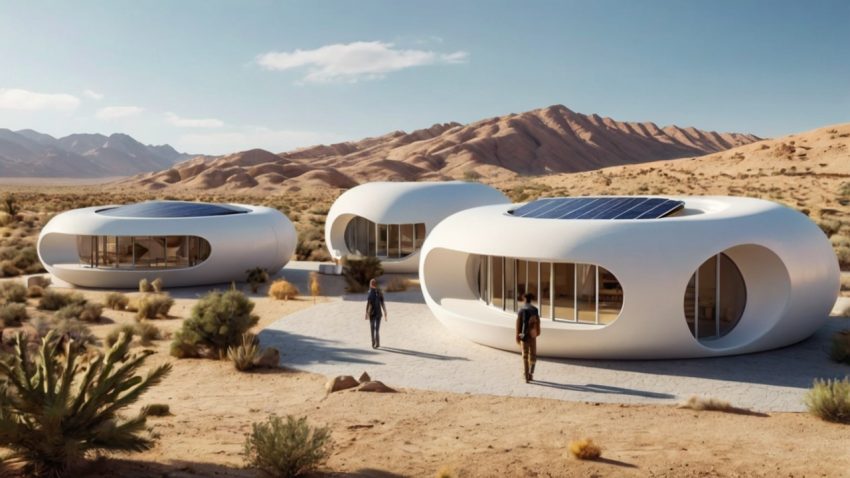
Luxury and 3D printing might seem like an unusual pairing, but Texas is proving that the two can go hand in hand. In Marfa, a small but artistically rich town known for its modern art scene and minimalist desert landscapes, the world’s first 3D-printed hotel is set to open in 2026. Developed by ICON, a leader in large-scale 3D-printed construction, and in collaboration with hotelier Liz Lambert, this project aims to redefine the hospitality industry by blending cutting-edge technology with high-end design. Unlike traditional hotels that rely on conventional construction methods, this one will be built using massive robotic arms that layer specialized concrete to create organic, futuristic structures. The goal isn’t just to make a hotel that looks different but to use 3D printing’s flexibility to craft unique, sculptural spaces that would be difficult or impossible to achieve with standard materials.
What makes this project particularly exciting is that it challenges the common perception of 3D printing as a technology meant only for low-cost housing or utilitarian structures. While many 3D-printed buildings focus on affordability and efficiency, this hotel is taking a different approach—using the technology to create a luxury experience that stands out architecturally. Guests can expect sweeping, curved interiors, rooms that seamlessly blend with the surrounding landscape, and a design that feels as if it were grown from the desert rather than built upon it. ICON’s CEO, Jason Ballard, has stated that 3D printing allows for a level of architectural creativity that traditional methods simply cannot match, making it possible to construct fluid, natural shapes inspired by nature. This means the hotel won’t just be a place to stay—it will be an experience in itself.
Aside from its aesthetic appeal, the hotel is also being designed with sustainability in mind. Traditional construction is notorious for generating massive amounts of waste, but 3D printing can cut that waste down to nearly zero. The material used in ICON’s printing process, Lavacrete, is engineered to be more durable than conventional concrete while requiring fewer resources to produce. Additionally, the speed of 3D printing allows for a significantly shorter construction timeline, meaning the hotel could be completed faster than a traditionally built resort of the same scale. This efficiency doesn’t just save time—it also reduces the carbon footprint of the entire project. As more hotels and resorts look for ways to minimize their environmental impact, this could set a new standard for sustainable hospitality.
The Marfa 3D-printed hotel is more than just a novel experiment; it’s a glimpse into the future of high-end architecture. If successful, it could inspire a new wave of luxury resorts that embrace 3D printing, not just as a cost-cutting measure but as a way to push the boundaries of design and sustainability. The project proves that 3D printing is no longer just a niche technology—it’s a game changer, capable of transforming even the most exclusive corners of the real estate market. Whether you’re a tech enthusiast, an architecture buff, or someone looking for a one-of-a-kind travel experience, this hotel will be a landmark worth keeping an eye on.
Ireland’s Space-Age 3D-Printed Homes
Ireland is taking a bold step toward solving its housing crisis by turning to 3D printing technology, and the results are already making an impact. In County Louth, families have moved into the country’s first-ever 3D-printed homes, marking a significant milestone for both the nation and the broader construction industry. These homes, built in record time, demonstrate how 3D printing could offer a rapid and cost-effective solution to Ireland’s ongoing housing shortage. With traditional construction struggling to keep up with demand due to rising material costs and labor shortages, 3D printing presents an alternative that could drastically speed up the process while maintaining high standards of durability and efficiency. According to The Sun, this development is being closely watched as a potential model for large-scale housing solutions across the country.
What makes these homes unique is not just their construction method but their affordability and sustainability. Traditional homebuilding in Ireland has faced significant delays due to supply chain disruptions and labor constraints, but 3D-printed homes can be built with fewer workers and much less waste. The printing process itself involves a large robotic arm that layers specialized concrete in precise, pre-programmed patterns. This eliminates the need for excess materials, reducing costs and environmental impact. Additionally, these homes have been designed to be highly energy-efficient, which is a crucial consideration given Ireland’s push toward greener, more sustainable housing developments. With government initiatives increasingly prioritizing eco-friendly building solutions, 3D printing could be at the forefront of Ireland’s efforts to create a more sustainable future.
Perhaps the most striking aspect of Ireland’s 3D-printed housing initiative is its speed. Traditional home construction can take months, if not years, to complete, especially when factoring in permitting and labor shortages. In contrast, 3D printing allows for entire homes to be printed in just a matter of days. This efficiency doesn’t just benefit new homeowners—it also provides an avenue for governments and housing organizations to quickly address shortages without compromising on quality. If scaled effectively, 3D printing could provide thousands of homes in a fraction of the time it would take using traditional methods, making it a game-changing solution for Ireland’s urgent need for affordable housing.
While this project is still in its early stages, its success could have a ripple effect across Europe and beyond. If Ireland continues to expand its use of 3D-printed construction, other countries struggling with housing crises may follow suit, further cementing 3D printing as a mainstream building method. The question is no longer whether 3D printing can be used to build homes—it’s how soon governments and developers will embrace it at scale. Ireland’s foray into space-age housing may very well be a sign of what’s to come, proving that the future of home construction is being written—layer by layer—by robotic arms.
Mexico’s 3D-Printed Homes for Those in Need
In Mexico, 3D printing is proving to be more than just a technological innovation—it’s becoming a lifeline for families in extreme poverty. Unlike the futuristic, high-end projects often associated with 3D-printed architecture, this initiative focuses on something far more fundamental: providing safe, affordable housing to those who need it most. In the southern state of Tabasco, where many families live in unstable, makeshift shelters, a groundbreaking project has been launched to create an entire neighborhood of 3D-printed homes. Developed by New Story, a non-profit organization specializing in housing solutions, in collaboration with ICON, a leader in 3D printing, this effort represents a radical shift in how humanitarian housing projects are approached. CNN reports that the homes are designed not just to be cost-effective but also to withstand the region’s frequent flooding and seismic activity—proving that 3D printing can offer resilience as well as affordability.
The process behind these homes is as innovative as their purpose. Using ICON’s Vulcan printer, each house is built layer by layer with a proprietary concrete mix called Lavacrete, which provides superior durability compared to traditional low-cost housing materials. This allows for stronger, longer-lasting homes that require less maintenance over time. But beyond the materials, the true game-changer is speed. While conventional construction methods for low-income housing can take months or even years due to funding and logistical challenges, these 3D-printed homes can be completed in just 24 hours. This rapid turnaround is crucial in disaster-prone areas where rebuilding efforts often drag on, leaving families without stable shelter. The ability to print entire neighborhoods in a matter of weeks means that governments and relief organizations could respond to housing crises with unprecedented efficiency.
Beyond the technical achievements, what makes this project truly remarkable is its impact on the families it serves. Many of the residents who have received these homes previously lived in structures made of scrap wood and tarps, constantly at risk of collapse from storms or earthquakes. Now, they have access to dignified, permanent housing with plumbing, electricity, and proper insulation—essentials that were once out of reach for many. According to New Story, the community was designed with input from the residents themselves, ensuring that the homes meet their needs and cultural preferences. This aspect is often overlooked in low-income housing developments, where mass-produced solutions fail to consider the daily lives of the people they serve. By incorporating 3D printing into the design process, the project was able to create houses that are both functional and comfortable, rather than just cheap and quick.
The success of Mexico’s 3D-printed housing initiative is already inspiring similar efforts worldwide. As housing shortages and affordability crises continue to affect millions, the potential for 3D printing to provide scalable, cost-effective solutions is gaining attention. Governments, NGOs, and private companies are exploring how this technology can be deployed in refugee camps, post-disaster rebuilding efforts, and urban affordable housing projects. What started as an experimental project in Tabasco may very well become a global model for humanitarian housing in the years to come. In a world where access to safe shelter remains a pressing issue, 3D printing is proving that innovation isn’t just about the future—it’s about solving real-world problems today.
California’s First 3D-Printed Community
California is making history with its first fully 3D-printed community, a project that could redefine how homes are built in an era of increasing environmental concerns. Developed by Mighty Buildings, a company specializing in sustainable 3D-printed construction, this project is more than just an experiment in innovative building techniques—it’s a blueprint for the future of eco-friendly housing. Located in Rancho Mirage, California, this community is designed to be entirely net-zero, meaning the homes generate as much energy as they consume. By combining advanced 3D printing technology with solar power and energy-efficient designs, this initiative is setting a new standard for sustainable living. As Dezeen reports, this development is a major milestone, proving that 3D printing isn’t just about affordability and speed—it’s also about reducing the environmental impact of construction, which has long been one of the world’s most resource-intensive industries.
The process of creating these homes is vastly different from traditional construction. Mighty Buildings uses a proprietary material called Light Stone, a composite that hardens almost instantly when exposed to UV light. This allows the walls and structural components to be printed with incredible precision, reducing material waste by up to 99% compared to conventional building methods. Unlike traditional concrete, which is responsible for nearly 8% of global CO₂ emissions, Light Stone is far more sustainable, offering the same durability with a significantly smaller carbon footprint. Additionally, 3D printing eliminates much of the excess wood, metal, and plastic waste that comes with traditional homebuilding, making it a cleaner and more efficient alternative.
Beyond the environmental benefits, these 3D-printed homes offer modern, stylish designs that appeal to today’s homebuyers. Each home features sleek, minimalist architecture with open floor plans, large windows, and integrated smart home technology. They are also solar-ready, with rooftop panels that provide all the energy needed for daily living. Because the community is net-zero, homeowners will have dramatically lower utility costs while reducing their reliance on fossil fuels. Given California’s commitment to clean energy and its frequent struggles with power shortages, this type of home could become a model for future housing developments across the state.
What sets this project apart from previous 3D-printed housing experiments is its scalability. While many 3D-printed homes have been built as one-off prototypes or small clusters, this is the first time an entire community has been planned using this technology. The success of this initiative could pave the way for larger developments, potentially transforming suburban and urban housing markets. If 3D-printed communities become more common, they could help alleviate California’s housing crisis, providing high-quality, energy-efficient homes at a fraction of the time and cost of traditional construction. With the housing market struggling to keep up with demand and sustainability becoming an urgent priority, 3D-printed communities like this may represent the future of residential development—where innovation, affordability, and environmental responsibility go hand in hand.
Challenges and What’s Next for 3D-Printed Architecture
While 3D printing has huge potential, it’s not without its challenges. One of the biggest issues is building codes and regulations, which haven’t caught up with this new technology. Many places still require traditional construction methods to meet safety standards, even if 3D printing can achieve the same results more efficiently. Another challenge is material limitations—right now, most 3D-printed buildings rely on concrete-based mixtures, but future advancements may introduce more eco-friendly alternatives.
Despite these hurdles, the future looks bright. Governments and private companies are investing heavily in 3D-printed construction, recognizing its potential to solve housing shortages, reduce environmental impact, and make custom architecture more accessible.
Final Thoughts
3D-printed architecture is no longer a concept—it’s happening right now. From multi-story homes in Australia to entire communities in California, this technology is proving that construction can be faster, cheaper, and more sustainable. Whether it’s luxury hotels in Texas, eco-friendly houses in Italy, or affordable homes in Mexico, 3D printing is reshaping the way we think about building. The real question now isn’t whether 3D-printed buildings will become common—it’s how soon.
If you want to stay ahead of the curve, now is the time to explore 3D printing. Whether you’re a hobbyist, an architect, or just someone curious about the future of construction, this technology is something you don’t want to ignore.

Sources
- Australia’s first 3D-printed multistorey house is being built: four bedrooms in five weeks
- Tecla House
- Wavehouse
- Abdulaziz Abdullah Sharbatly Mosque
- Insane detail in Aussie CEO’s new house
- Three families move into Ireland’s first ‘space age’ 3D-printed homes
- World’s First 3D-Printed Hotel Is Coming to Texas in 2026
- Marfa’s highly anticipated 3D-printed ‘Sunday Homes’
- ‘Future of construction’: Can this printer solve Sydney’s housing woes?
- Mi casa la construye una impresora 3D
- First 3D-printed two-storey house built in India
- Dubai Municipality to build world’s largest 3D-printed building
- 3D-printed office building opens in Dubai
- 3D-printed homes in Mexico provide housing for those in need
- Mighty Buildings completes 3D-printed community of homes in California
Disclaimer:
The views and opinions expressed in this post are solely those of the author. The information provided is based on personal research, experience, and understanding of the subject matter at the time of writing. Readers should consult relevant experts or authorities for specific guidance related to their unique situations.