
1,626 words, 9 minutes read time.
I have seen many men die. I have heard their screams, watched their bodies grow limp, and smelled the stench of death that lingers long after the final breath is taken. I have served in the Roman army for years, posted in lands far from home, witnessing all manner of execution. But never have I seen a man die as He did.
My name is Marcus Cassius Longinus, a centurion in the Roman army, stationed in Judea. I am not a Jew, nor do I concern myself with their endless disputes about their laws, prophets, and so-called messiahs. I serve Rome. I follow orders. And on that day, I was given a simple task—oversee the execution of three criminals. It was supposed to be routine. It was anything but.
The Walk to Golgotha
The day began like any other execution day. Three men, sentenced to die, were led through the streets of Jerusalem, each bearing the weight of a wooden crossbeam upon their backs. The streets were crowded, filled with onlookers who had come to watch the spectacle. Some jeered, some mourned, but most simply observed, as they always did when men were marched to their deaths.
One of the condemned caught my attention—not because of his appearance, though He was already bloodied from a severe flogging, but because of His silence. He did not curse or plead as the others did. He stumbled under the weight of the cross, His body too weak to carry it further. The soldiers grabbed a man from the crowd, a foreigner, and forced him to bear the load. The prisoner, this Jesus of Nazareth, did not resist. He looked at the man—Simon of Cyrene, I later learned—not with shame or bitterness, but almost with gratitude.
It unsettled me. I had seen hardened criminals, rebels, and thieves dragged to their deaths before. They fought. They cursed. They begged. But this man… He accepted it.
The Crucifixion Begins
Golgotha. The place of the skull. A fitting name for a place of death.
The soldiers worked quickly, as they had done many times before. The first man, a common thief, was thrown onto the crossbeam, his arms stretched out. The hammer fell, driving iron through flesh and bone. He screamed, his body jerking against the wood. The process was repeated with the second man.
Then came Jesus. They laid Him down, and for the first time, He winced, His face contorting in pain as His torn back pressed against the rough wood. Yet, He did not resist. The first nail was driven through His wrist, then the second. His body trembled, but He said nothing to curse His executioners.
And then, as they raised His cross and dropped it into place, His voice rang out, strained but clear: “Father, forgive them, for they know not what they do.”
I froze. I have heard men curse the gods. I have heard them cry out for mercy. But never have I heard a man pray for the very ones killing him.
The crowd erupted in laughter and mockery. “If you are the King of the Jews, save yourself!” they sneered. The sign above His head bore the charge against Him: “Jesus of Nazareth, King of the Jews.” A warning to all who would challenge Rome’s authority. But as I looked at Him, hanging there between two thieves, something in my chest tightened.
The Darkness and the Final Cry
The hours passed. The sun rose higher, yet instead of growing brighter, the sky began to darken. At first, it was subtle—a shift in the light, a shadow stretching longer than it should. Then, within moments, the sun itself seemed to vanish. A thick darkness settled over the land, unnatural and oppressive. I have stood through many storms, but this was no storm. It was as if the heavens themselves recoiled from what was happening.
The voices of the crowd quieted. Even the mocking faded to whispers of fear.
The other two men groaned in pain, struggling against their fate. One of them, barely able to lift his head, looked at Jesus and scoffed. “Are you not the Messiah? Save yourself and us!”
But the other thief rebuked him. “Do you not fear God? We deserve this, but this man has done nothing wrong.” Then, turning to Jesus, he said, “Lord, remember me when you come into your kingdom.”
And Jesus, gasping for breath, looked at him—not with pity, but with certainty. “Truly, I tell you, today you will be with me in paradise.”
A shiver ran down my spine.
The hours stretched on. The darkness remained. At one point, Jesus looked down at a woman in the crowd—His mother, I later learned. Standing beside her was a young man, one of His followers. Even in agony, Jesus spoke, His voice barely above a whisper. “Woman, behold your son.” And to the man, “Behold your mother.”
Who thinks of others in their final moments? Who, with death closing in, ensures that His mother is cared for?
Then, suddenly, He cried out, His voice raw and full of anguish: “My God, my God, why have you forsaken me?”
Something in those words broke the last remnants of doubt within me. This was no ordinary death. No ordinary man.
Minutes later, His breath grew labored. His body trembled. Then, with one final effort, He pushed against the nails in His feet, lifted His head, and declared: “It is finished.”
The moment He spoke, the earth beneath us shook violently. Rocks split. I heard screams from the city, rumors that the temple’s great veil had been torn in two. The darkness began to lift, but the fear remained.
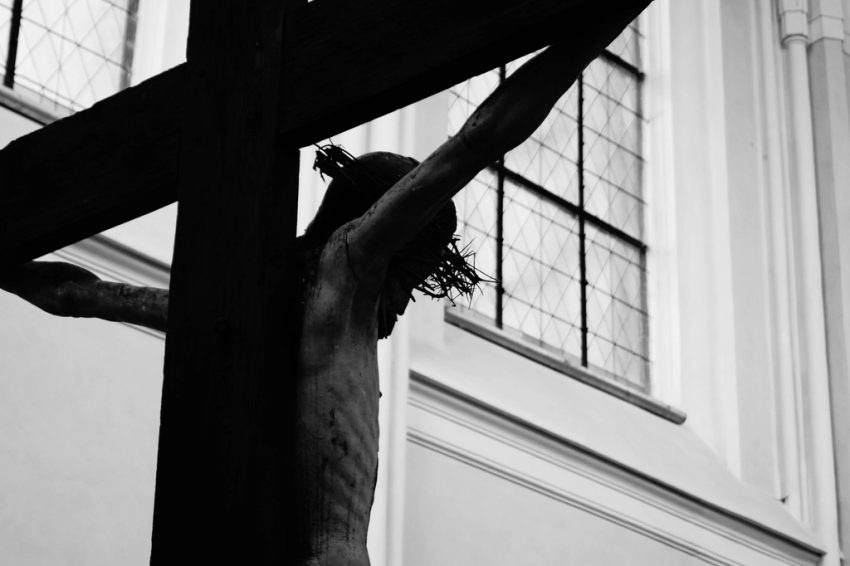
I looked at the man on the cross, His head bowed, lifeless. Blood dripped from His side where one of the soldiers had pierced Him with a spear. He was dead.
And in that moment, the truth hit me with the force of a legion’s charge.
I had overseen the execution of an innocent man. No, more than innocent.
“Truly, this was the Son of God.”
The Rumors of His Return
I did not stay long after. I heard that one of His followers—a rich man—requested His body for burial. Pilate granted it. By evening, they had taken Him down, wrapped Him in linen, and placed Him in a tomb.
For days, I could not shake the feeling that I had witnessed something beyond my understanding. Rome has executed thousands, and the empire will execute thousands more. But never have I seen a man die with such purpose, such control.
Then, three days later, the rumors began.
His tomb was empty.
Some of my own men—hardened soldiers, not given to fantasy—spoke in hushed voices of a great light, of a stone rolled away not by human hands. The priests and rulers in the city were frantic, trying to silence the whispers, but they spread like wildfire.
His followers—those who had fled in fear—now walked the streets boldly, claiming He was alive. People swore they had seen Him. Not a ghost, not a vision, but a man—flesh and blood.
At first, I dismissed it as nonsense. A stolen body, a desperate lie. But as the days passed, I saw something in the faces of those who believed. Not fear. Not grief. But certainty.
And I could not forget what I had seen on that cross.
Jesus of Nazareth died that day. Of that, I have no doubt. But if He truly has risen…
Then perhaps death was not the end.
—
The sacrifice of Jesus on the cross holds profound significance, both spiritually and historically. For Christians, His death is seen as the ultimate act of redemption, paying the price for the sins of humanity. According to scripture, mankind was separated from God due to sin, and no amount of personal effort or religious observance could bridge that gap. Jesus, who was without sin, took upon Himself the punishment that was meant for humanity, offering Himself as the perfect sacrifice. His crucifixion was not just an execution; it was a divine exchange—His righteousness for our guilt, His suffering for our redemption.
Beyond individual salvation, Jesus’ sacrifice also changed the relationship between God and humanity. The tearing of the temple veil at the moment of His death symbolized a new way of approaching God, no longer through high priests or elaborate rituals, but directly through Christ. This opened the door for all people, Jew and Gentile alike, to be reconciled with God. His resurrection, which followed three days later, was proof that His sacrifice was accepted, that death was defeated, and that eternal life was now available to those who put their trust in Him. The cross, once a symbol of Roman cruelty, became a symbol of hope, forgiveness, and new life.
Historically, Jesus’ sacrifice on the cross also reshaped civilization itself. His teachings of love, grace, and self-sacrifice formed the foundation for countless social and moral reforms throughout history. The message of the cross has endured for over two thousand years, inspiring movements of charity, justice, and reconciliation. Even today, the crucifixion stands as a reminder that true power is not in force or domination but in humility and sacrificial love. Whether one believes in His divinity or not, the impact of Jesus’ death—and the hope of His resurrection—continues to shape the world.

Sources
- The Centurion At The Cross | Our Daily Bread Ministries
- Longinus – Wikipedia
- The Bible Says Jesus Was Real. What Other Proof Exists? | HISTORY
- The Centurion and The Good Thief – Corpus Christi Catholic Church
- The Crucifixion | Religious Studies Center – BYU
- The Roman Soldier at the Cross – Clapham School
- The Centurion at the Cross Witness to Jesus Final Moments – YouTube
Disclaimer:
The views and opinions expressed in this post are solely those of the author. The information provided is based on personal research, experience, and understanding of the subject matter at the time of writing. Readers should consult relevant experts or authorities for specific guidance related to their unique situations.