
1,240 words, 7 minutes read time.
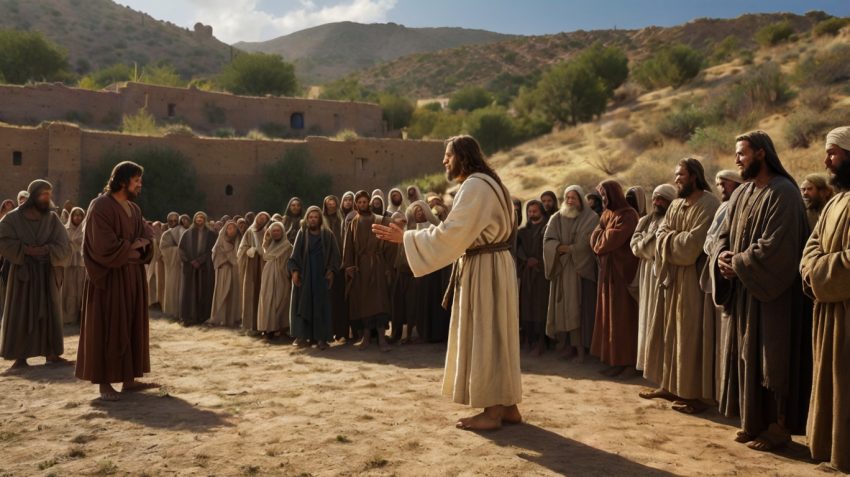
Have you ever felt that deep sense of relief when a problem you have is solved, a challenge you are facing is overcome, or you’ve been granted something that you have really been hoping for? It’s a powerful moment, isn’t it? Now, imagine that feeling multiplied tenfold. That’s what it must have been like for the ten lepers in the Bible, whose story we find in the book of Luke. These men were outcasts, living on the fringes of society because of their disease, which not only caused physical pain but also cut them off from their families and communities. They were the “untouchables” of their time, forced to beg for survival. Then they encountered Jesus, and everything changed. They called out to him for mercy, and Jesus, in a display of compassion and authority, told them to go show themselves to the priests. As they went, they were healed. It was a miracle, a complete transformation of their lives, a moment of overwhelming joy, relief and hope. But here’s where the story takes a turn: only one of them came back to say thank you.
Now, before we judge the nine, let’s consider their situation. They had been outcasts, and their return to their communities was not guaranteed and would be a complicated process. Perhaps their minds were racing ahead to their families and the lives they had been forced to leave behind. As one blogger put it, “They were thinking ahead. The purpose of visiting a priest after a cure was so the cured person could officially resume his place in society.” Alyce McKenzie, “An Attitude of Gratitude?” Maybe they were simply overwhelmed, eager to return to their old lives after such a long and difficult time of separation and pain. We need to acknowledge that they had the presence of mind to seek help from Jesus and they obeyed his instructions. And we also have to realize that their experience of healing was life altering and dramatic, something that could easily overwhelm a person. But there’s a crucial difference between being cured and being whole. The nine were physically healed, but they missed something profound. They experienced a physical cure, which was a gift, but they did not take the next step, that would have transformed them further by returning to acknowledge the source of the cure with thankfulness.
The one leper who returned was a Samaritan, a person considered an outsider by the Jewish community. He didn’t just quietly acknowledge what had happened, he came back “praising God with a loud voice”. He “prostrated himself at Jesus’ feet and thanked him”. This wasn’t just a polite thank you, it was a display of heartfelt gratitude. He recognized the source of his healing, not just the healing itself, and that made all the difference. Jesus even notes the unexpectedness of the Samaritan’s gratitude, highlighting how a supposed outsider had grasped something essential that others had missed. As one writer puts it, “Separated by disease and doctrinal error, God brings the Samaritan into the heavenly kingdom.” Warren Nozaki, “Gratitude and Faith from the Tenth Leper”.
This is more than just a lesson about good manners. It’s about the power of gratitude to transform our lives. When we pause to express thanks, we acknowledge the good in our lives, which opens us to a deeper experience of God’s healing. “When I acknowledge a gift received, I acknowledge a bond that binds me to the giver,” wrote David Steindl-Rast, “The one who says ‘thank you’ to another really says, ‘We belong together.’ Giver and thanksgiver belong together”. The leper who returned built a relationship with Jesus through his thankfulness, and this led to a deeper sense of wholeness, a “spiritual affirmation from the Lord,” as one source puts it Warren Nozaki, “Gratitude and Faith from the Tenth Leper”. This is what Jesus meant when he told the Samaritan, “your faith has made you well”. He wasn’t just physically healed; he was made whole in body, mind, and spirit. The other nine were “cleansed,” but this Samaritan was made “well”.
What does this mean for us today? Well, it’s easy to get caught up in the hustle and bustle of daily life, so busy that we forget to appreciate the blessings we already have. We often focus on what we lack instead of what we have. We may even think that we need to acquire more before we can be truly grateful. But gratitude isn’t about having a perfect life; it’s about recognizing the good, even amidst challenges. It’s a perspective shift, a choice to see the “surf and turf with an ocean view” instead of just “cheap canned food under a pier,” as one analogy goes. It’s about seeing the blessings in our lives, big and small: our families, our friends, our health, life itself. Gratitude isn’t just a feeling, it is also a practice, something we can cultivate every day.
The story of the ten lepers challenges us to ask ourselves: how do we respond to the good things in our lives? Do we rush on, focusing on our needs, or do we take the time to acknowledge the source of those blessings? Do we just want to be cured, or do we also seek to be whole? One practical way we can do this is to start a gratitude journal, where we write down three things we’re thankful for each day. We can also make it a point to express appreciation to those around us, and to begin our prayers with thanksgiving. We can learn to slow down and notice the good things around us. As one article stated: “Being grateful won’t always be the same as feeling grateful; it comes down to a choice.” Medi-Share, “Finding Gratitude in Every Season and Circumstance”. It’s not always easy, but choosing gratitude, choosing to return like that one leper can change our lives and deepen our relationship with God. It can move us from being “cured” to being “whole”. This is a path that’s open to all of us, regardless of our background or circumstances.
“Thanksgiving—the giving of thanks to God for all His blessings—should be one of the most distinctive marks of the believer in Jesus Christ,” the evangelist Billy Graham once said Medi-Share, “Finding Gratitude in Every Season and Circumstance”. When we live with an attitude of gratitude, we become more attractive people and we become a witness to others. This is not about earning God’s favor, but about recognizing the love and grace that are already freely given. As another blog puts it: “God’s grace, even though it is extended to all, does not mean that all gain salvation. God blesses humanity in a general way, but only the responsive who appreciate what he has done in Christ receive his full blessing and acceptance.” Warren Nozaki, “Gratitude and Faith from the Tenth Leper”
We can choose to be like the one leper who returned, not because we have to, but because we recognize the transformative power of gratitude. The other nine lepers experienced a physical healing, but they missed the deeper healing that comes from a heart of gratitude. They received a gift, but only the tenth leper truly “got it”. May we all learn to live with this mind-blowing power of gratitude, recognizing God’s goodness in every season of life, and may we experience the wholeness He offers when we do.
