
1,480 words, 8 minutes read time.

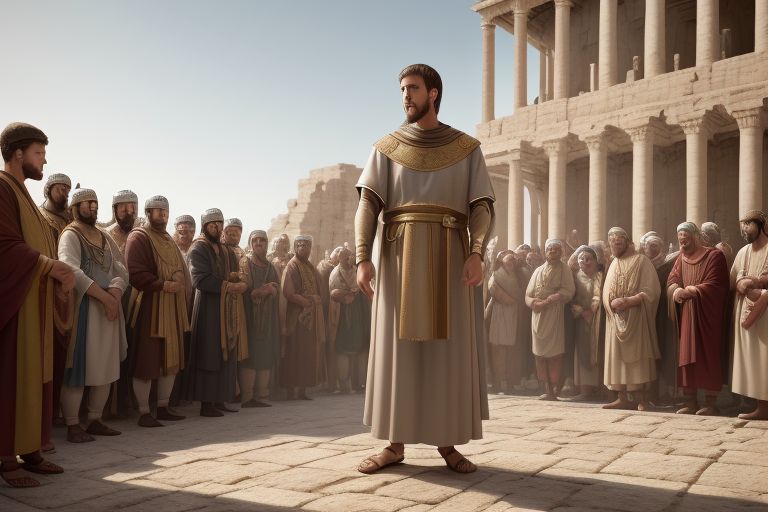
Image source: theaipixelprophet
Pontius Pilate is a figure that elicits strong reactions and profound reflections within Christian traditions and broader historical discussions. Known primarily for his role in the trial and crucifixion of Jesus Christ, Pilate embodies the complexities of moral choice, the fragility of power, and the weight of human responsibility. His story not only captures a pivotal moment in history but also serves as a powerful lens through which we can examine our own ethical dilemmas and the consequences of our decisions.
Who Was Pontius Pilate?
Before diving into the deeper implications of his story, it’s essential to establish who Pontius Pilate was. Pilate served as the Roman governor of Judea from around AD 26 to AD 36. He was appointed by Emperor Tiberius and tasked with maintaining order in a province fraught with religious tensions and political unrest. His leadership style, described by the Jewish historian Flavius Josephus and other contemporaries, often came across as heavy-handed. Pilate’s decisions, particularly regarding Jewish customs and laws, frequently provoked outrage among the local population.
Pilate’s historical portrayal indicates that he was a man caught in a web of conflicting loyalties. As a Roman official, he was tasked with enforcing imperial rule while navigating the complex sociopolitical landscape of Judea, a land rich in religious fervor and historical grievances. His role in the crucifixion of Jesus ultimately turned him into a symbol of moral failure, a reluctant enabler of injustice.
The Crucifixion: A Moment of Moral Failure
The Gospels provide a vivid account of Pilate’s interaction with Jesus during the trial leading up to the crucifixion. According to the accounts in Matthew 27, Mark 15, Luke 23, and John 18-19, Pilate faced immense pressure from the Jewish religious leaders and the crowd demanding Jesus’ death. Although he recognized Jesus’ innocence and sought to release him, Pilate ultimately succumbed to the clamor of the mob. This moment—a flashpoint of moral failure—highlights the tension between upholding justice and the desire to maintain order and appease the masses.
A pivotal part of Pilate’s decision-making process was his symbolic act of washing his hands, as described in Matthew 27:24. This gesture, meant to absolve himself of responsibility for Jesus’ death, became emblematic of cowardice in the face of moral duty. The act of washing his hands, intended to demonstrate his non-involvement, only served to highlight his internal conflict and guilt. It raises important questions about the nature of power and moral responsibility. How often do we find ourselves in situations where we choose convenience over justice? Pilate’s story serves as a stark reminder of the ethical complexities faced by those in power.
Fear, Cowardice, and the Consequences of Inaction
One of the most poignant aspects of Pilate’s story is how it reflects the dangers of fear and cowardice in leadership. His reluctance to stand up for truth under pressure led to a decision that not only impacted the course of history but also forged a lasting legacy of moral ambiguity. In Christian thought, Pilate is often portrayed as a tragic figure—a man whose fear of losing power blinded him to the moral imperatives of justice.
The societal dynamics at play during Pilate’s time further complicated his decision. Jerusalem was on edge due to the Passover festival, and any hint of unrest could have resulted in brutal crackdowns from the Roman authorities. Pilate’s fear of rebellion, coupled with his desire to maintain his position, ultimately led him to prioritize political expediency over moral integrity. This tension between the demand for justice and the desire for stability is a recurring theme in human history, and it challenges us to consider how we might act when faced with similar pressures.
Claudia Procula: A Voice of Conscience
Adding another layer to Pilate’s internal struggle is the figure of Claudia Procula, Pilate’s wife. In the Gospel of Matthew (27:19), she is depicted as having a disturbing dream about Jesus and urges Pilate to have nothing to do with that “righteous man.” Her voice serves as a critical moral counterpoint to Pilate’s indecision. Although she plays a minor role in the biblical narrative, her intervention highlights the importance of conscience in the face of overwhelming pressure.
Claudia’s dream could be interpreted as a divine warning, a moment of clarity in a convoluted moral landscape. It begs the question: how often do we ignore our inner voices or the warnings from those close to us when faced with difficult choices? In the modern context, her character can inspire discussions about the importance of heeding conscience, the moral voices of those around us, and the courage it takes to act upon them.
The Resurrection: A Crisis of Legitimacy
After the crucifixion, the resurrection of Jesus further complicated Pilate’s legacy. According to Matthew 28:4-15, the guards at Jesus’ tomb reported that he had risen, causing significant turmoil among the Jewish leaders. Pilate’s attempt to suppress the truth about the resurrection by bribing the guards is a desperate attempt to maintain control in the wake of a transformative event. This incident underscores the notion that truth cannot be easily suppressed; it demands acknowledgment and reckoning.
For Pilate, the resurrection represented a crisis of legitimacy. If Jesus had risen, it not only validated his claims of divinity but also meant that Pilate had unjustly condemned an innocent man. The weight of this realization would have been unbearable for someone already grappling with guilt and shame over his earlier decisions. The resurrection, a cornerstone of Christian faith, amplifies the moral implications of Pilate’s actions, forcing us to consider the lasting consequences of our choices.
Pilate’s Downfall: Political Consequences
Pilate’s governance was marked by increasing tensions between the Roman authorities and the local Jewish population. His inability to maintain peace led to escalating unrest, eventually culminating in his recall to Rome. Historical accounts suggest that he faced a rigorous investigation, reflecting the precarious nature of political power in the Roman Empire. In this context, Pilate’s downfall serves as a cautionary tale about the ramifications of poor governance and ethical lapses.
The complexities of Roman rule, particularly in provinces like Judea, highlight the challenges of maintaining order while respecting local customs and traditions. Pilate’s decisions not only affected his political career but also had lasting repercussions for the Jewish community. His actions were indicative of a broader struggle between imperial authority and local autonomy, a theme that resonates through history.
The Mysterious End of Pilate’s Life
The end of Pontius Pilate’s life remains shrouded in mystery and speculation. Various traditions suggest different narratives: some accounts propose that he committed suicide, unable to bear the weight of his actions, while others suggest a potential conversion to Christianity. The ambiguity surrounding his fate adds to the tragic dimension of his character and serves as a reminder of the enduring nature of guilt and the quest for redemption.
Eusebius of Caesarea, a 4th-century church historian, mentions Pilate’s suicide under the reign of Caligula, while apocryphal texts depict him as seeking absolution for his role in the crucifixion. These diverse narratives reflect the complexities of human nature and the struggle for redemption, emphasizing that even figures like Pilate are not beyond the reach of grace.
Pilate’s Legacy: A Call to Ethical Reflection
Pontius Pilate’s legacy is multifaceted, serving as a mirror for our own moral and ethical dilemmas. His story challenges us to reflect on our responsibilities and the impact of our decisions in both personal and societal contexts. The questions raised by his actions—about courage, integrity, and the pursuit of truth—are timeless and relevant in today’s world.
In modern discussions, Pilate’s narrative has been used to explore themes of justice, power dynamics, and ethical leadership. His failure to act decisively in the face of injustice is a stark warning against moral complacency. In a world where external pressures often cloud judgment, Pilate’s story urges us to stand firm in our convictions and prioritize truth over convenience.
As we reflect on the complexities of Pilate’s character, we are invited to consider how we might navigate similar challenges in our own lives. In the face of moral dilemmas, how can we cultivate the courage to act justly, even when the stakes are high? Pilate’s legacy is not merely a historical account; it is a profound call to examine our own hearts and strive for integrity in our decisions.
Conclusion
In conclusion, the figure of Pontius Pilate transcends time and tradition, representing the struggle between power, morality, and the consequences of our choices. His tragic narrative serves as a reminder that the pursuit of truth and justice must remain our highest priorities, even when faced with immense pressure. The complexities of his life invite us to engage in self-reflection and strive for ethical leadership in our own contexts. As we navigate the challenges of our time, let Pilate’s story inspire us to act with courage, integrity, and a commitment to justice.
