
1,312 words, 7 minutes read time.
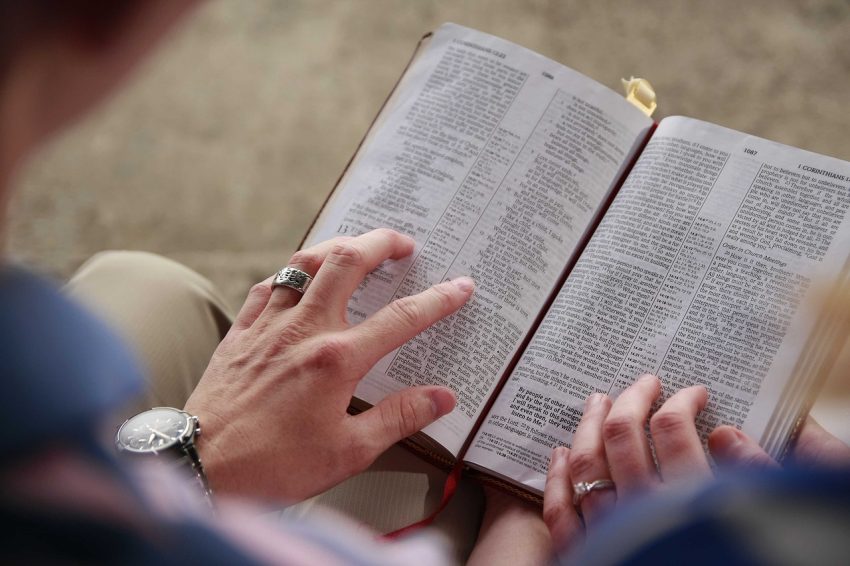
Image by Steve Haselden from Pixabay
In today’s world, Christians are constantly faced with challenging questions about their faith, especially from skeptics or seekers who genuinely want to know why we believe what we believe. These questions can be complex, and answering them can feel overwhelming. However, as believers, we are called to be ready to give a reason for the hope that is in us (1 Peter 3:15). This is where apologetics, the art and science of defending the Christian faith, comes into play.
Apologetics helps us build a case for Christianity, not just in philosophical terms but also through history, science, and logic. In this post, we’ll explore five key apologetics questions that every Christian should learn to answer confidently and lovingly. Whether you’re a seasoned theologian or just beginning your journey in defending your faith, these questions will serve as a foundation for meaningful conversations about Christianity.
1. Have the New Testament Documents Been Corrupted?
One of the most common challenges to the Christian faith is the claim that the New Testament has been corrupted over time. The argument goes something like this: since the Bible has been copied by hand for centuries, surely errors have crept in, and the text we have today is not reliable.
This concern is understandable, but it is important to know that the New Testament is the best-attested ancient document in existence. We have over 5,800 Greek manuscripts, many of which date to within a few centuries of the original writings. Compared to other ancient works like Homer’s Iliad, which only has around 1,800 manuscripts, the New Testament stands alone in terms of textual evidence.
Scholars use a method called textual criticism to evaluate these manuscripts, and the overwhelming consensus is that the New Testament we have today is an accurate representation of the original text. Less than 1% of the textual variants affect the meaning of the text, and none of those impact any core Christian doctrine. When skeptics claim that the New Testament has been corrupted, they are not engaging with the overwhelming manuscript evidence in favor of its accuracy.
If you’re looking to explore this topic in more depth, I recommend the book Myths and Mistakes in New Testament Textual Criticism by Peter Gurry and Elijah Hixson. It’s a valuable resource that dives into the specifics of how the Bible has been preserved over time.
2. Is There Evidence That the Resurrection of Jesus Actually Happened?
The resurrection is the cornerstone of Christian faith. As Paul writes in 1 Corinthians 15:14, “If Christ has not been raised, our preaching is useless and so is your faith.” So, it’s no surprise that skeptics often challenge the historical reality of the resurrection.
Fortunately, there’s a wealth of evidence supporting the resurrection, much of which is widely accepted even among secular scholars. For instance, historian Gary Habermas has compiled over 1,400 critical works on the resurrection, and he notes that most scholars—whether they’re Christian or not—agree on several key facts:
- Jesus died by crucifixion.
- His disciples believed He rose from the dead and were willing to die for that belief.
- The apostle Paul, a former persecutor of Christians, became a follower of Christ after an experience he believed was the risen Jesus.
- James, the brother of Jesus and a skeptic, also became a believer after encountering the risen Christ.
The best explanation for these facts, when taken together, is that Jesus did indeed rise from the dead. While alternative explanations like the disciples stealing the body or hallucinations have been proposed, they fall short in explaining all the data. The resurrection remains the most compelling historical explanation for the birth and spread of Christianity.
For further study, The Case for the Resurrection of Jesus by Gary Habermas and Michael Licona is an excellent resource that lays out the historical evidence for the resurrection in a clear and compelling way.
3. Has Science Disproved God?
In an age where science is highly regarded, many people ask whether science has made belief in God unnecessary or obsolete. It’s important to recognize that science and faith are not inherently at odds. In fact, many of the great pioneers of modern science, such as Isaac Newton and Johannes Kepler, were Christians who saw their work as a way to explore God’s creation.
Science deals with the material world, while God, by definition, is not a material being. Therefore, science cannot disprove or prove God’s existence. Philosopher and apologist Frank Turek makes a great point when he compares this to saying a mechanic can disprove the existence of Henry Ford because he can’t find him under the hood of a car. It simply doesn’t follow.
Many scientists today are open to the idea of a designer behind the universe. The fine-tuning of the universe for life, the complexity of DNA, and the existence of the moral law all point to a reality beyond what science alone can explain. Science can lead us to the edges of understanding, but it’s faith in God that provides the ultimate answers to life’s biggest questions.
If you’re interested in how science and faith interact, check out Has Science Buried God? by John Lennox, a brilliant exploration of this important question.
4. Does the Bible Condone Slavery?
One of the more difficult questions for modern Christians to answer is whether the Bible condones slavery. This issue can be especially challenging because when most people hear the word “slavery,” they think of the brutal transatlantic slave trade. However, the form of servitude described in the Bible is quite different.
In ancient Israel, what is often translated as “slave” is more accurately understood as a form of bonded labor. In many cases, individuals would voluntarily enter into servitude to pay off debts. While this system was not without its flaws, the Mosaic Law provided many protections for servants. They were given food, shelter, and legal rights, and after seven years, they were set free.
In the New Testament, slavery under the Roman Empire was different but still not the same as what we think of today. The Apostle Paul’s teachings elevated the status of slaves, emphasizing that all people are equal in Christ (Galatians 3:28). These biblical principles eventually influenced abolitionists like William Wilberforce and John Wesley to work toward ending slavery altogether.
If you want to dive deeper into this question, Paul Copan’s book Is God a Moral Monster? offers a thorough examination of the Bible’s teachings on slavery and other moral issues.
5. Is There Evidence Outside the Bible That Jesus Existed?
Every so often, you’ll come across the claim that Jesus never existed, and that He’s merely a myth or a legend. However, this claim is not supported by the vast majority of historians, Christian or otherwise. In fact, there are multiple non-Christian sources that confirm the existence of Jesus, including:
- The Jewish historian Josephus
- The Roman historians Tacitus and Suetonius
- The Roman governor Pliny the Younger
- The Jewish Talmud
These sources, written within 150 years of Jesus’ life, provide external corroboration for the basic facts of Jesus’ existence. Even skeptical scholars like Bart Ehrman acknowledge that Jesus was a real person.
If you’re looking to learn more about this, Gary Habermas has an excellent interview titled Undeniable Historical Evidence for the Existence of Jesus, which goes into much greater detail.
These five questions represent some of the most common challenges to the Christian faith today. By learning how to answer them, we not only strengthen our own faith, but we also become better equipped to share the good news of Jesus with a world in desperate need of hope.
Remember, when engaging in these conversations, it’s important to do so with gentleness and respect (1 Peter 3:15). Apologetics isn’t just about winning an argument—it’s about helping people encounter the truth of the gospel in a way that resonates with both their hearts and minds.
2 thoughts on “5 Essential Apologetics Questions Every Christian Must Be Ready to Answer”