
1,012 words, 5 minutes read time.
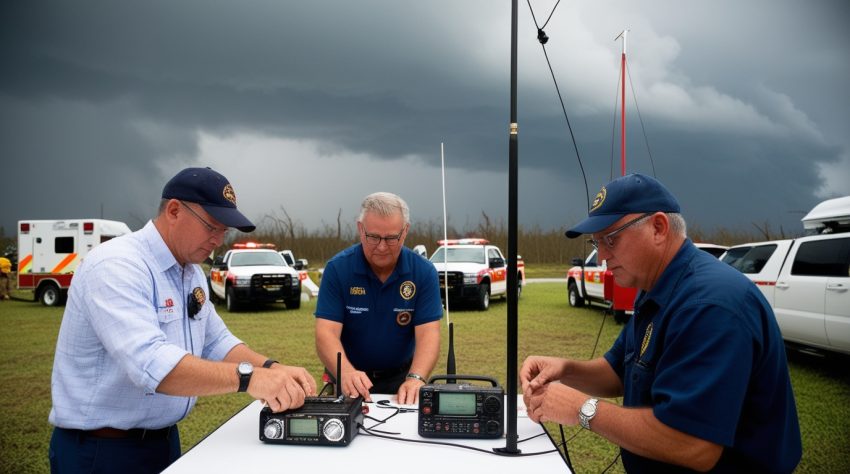
Ham radio enthusiasts often wonder about the range they can achieve with their equipment. As a licensed amateur radio operator, or “ham,” you might be curious about how far your voice can travel. In this blog post, we’ll explore the fascinating world of ham radio range, the factors that influence it, and some tips on how to maximize your communication capabilities. By the end, you’ll have a better understanding of what to expect from your ham radio and how to optimize your setup for effective communication.
Understanding Ham Radio Range
Before diving into the specifics, let’s clarify what we mean by range in the context of ham radio. Range refers to the distance over which you can effectively communicate with another operator. This distance can vary greatly, ranging from just a few miles to thousands of miles, depending on several factors.
Factors Affecting Ham Radio Range
- Frequency Band: The frequency band you choose plays a significant role in determining your communication range. Ham radio operators use a variety of bands, each with its unique characteristics. For instance:
- HF Bands (High Frequency): These bands, ranging from 3 MHz to 30 MHz, are known for long-distance communication. HF signals can bounce off the ionosphere, allowing you to connect with operators thousands of miles away.
- VHF Bands (Very High Frequency): Ranging from 30 MHz to 300 MHz, VHF signals typically have a line-of-sight range. This means that, under optimal conditions, you can communicate effectively up to about 50-100 miles.
- UHF Bands (Ultra High Frequency): Operating from 300 MHz to 3 GHz, UHF signals also rely heavily on line-of-sight but can penetrate buildings better than VHF. However, their range is usually limited to 10-30 miles.
- Antenna Type and Height: The type and height of your antenna are crucial to your ham radio range. A well-designed antenna can significantly enhance your signal strength and coverage. For example, a vertical antenna may work well for VHF and UHF frequencies, while a dipole or yagi antenna is better suited for HF communications. Additionally, the height of your antenna matters; the higher it is positioned, the better your signal can reach further distances. Ideally, placing your antenna at least 30 feet above ground will optimize its performance.
- Transmitter Power: The amount of power your transmitter outputs can also impact your range. Ham radios are allowed to transmit up to 1500 watts in some cases, but most operators use much lower power settings. A common practice is to operate at the minimum power necessary to make a successful contact. Higher power settings can increase your range, but they also increase the risk of interference with other operators. It’s essential to strike a balance between power output and effective communication.
- Terrain and Obstructions: The environment plays a critical role in ham radio range. Open areas with minimal obstructions, such as hills or buildings, allow signals to travel further. In contrast, mountainous or heavily forested regions can hinder signal propagation. Understanding your local geography and adjusting your antenna placement accordingly can improve your communication range.
- Atmospheric Conditions: Atmospheric conditions, including weather, temperature, and solar activity, can significantly affect ham radio communication. For example, during a solar storm, the ionosphere can become more reflective, enhancing HF communication. Conversely, heavy rain or thunderstorms can cause signal degradation. Monitoring these conditions can help you choose the best times for long-distance communication.
- Propagation: Propagation refers to the way radio waves travel through the atmosphere. Different times of day and seasonal variations can impact propagation. HF bands tend to be more effective at night, while VHF and UHF bands are better during the day. Understanding propagation patterns can help you plan your communications for optimal results.
Maximizing Your Ham Radio Range
Now that we’ve covered the factors affecting range, let’s discuss some practical tips to maximize your ham radio communication capabilities:
- Invest in Quality Equipment: Quality matters in ham radio. Invest in a reliable transceiver and high-performance antenna. Research different models and read reviews to ensure you’re purchasing equipment that suits your needs.
- Experiment with Antenna Designs: Don’t hesitate to experiment with different antenna designs and configurations. Building your antennas can also save you money and improve performance. There are plenty of resources available online to help you with antenna construction and optimization.
- Choose the Right Frequency: Depending on your communication goals, choose the frequency band that best suits your needs. For long-distance communication, HF bands are generally the best option. However, for local communications, VHF or UHF may be more suitable.
- Utilize Repeaters: Repeaters are a great way to extend your range. These devices receive signals from your radio and re-transmit them at a higher power, effectively increasing your communication distance. Look for local repeaters in your area and familiarize yourself with their frequencies.
- Participate in Contests and Events: Joining contests and special events can help you make contacts and practice your skills. These events often attract operators from various locations, giving you a chance to test your equipment and techniques.
- Keep an Eye on Propagation Reports: Use online tools and apps to monitor propagation reports. Websites and forums dedicated to ham radio often provide real-time data on conditions affecting various bands. This information can help you choose the best times for long-distance communication.
- Stay Updated on Licensing: Ensure you are familiar with the licensing requirements in your country. Different licenses may grant you access to various frequency bands and power limits. Keeping your license up to date ensures you can operate legally and effectively.
Conclusion
In conclusion, the range you can achieve with your ham radio depends on several factors, including frequency band, antenna type, transmitter power, terrain, atmospheric conditions, and propagation. By understanding these elements and following the tips provided, you can maximize your communication capabilities and enjoy the many benefits of ham radio. Whether you’re a seasoned operator or just starting, there’s always more to learn and explore in this exciting hobby.
As you venture into the world of ham radio, remember to share your experiences and insights with others. The ham radio community thrives on collaboration and knowledge sharing. Happy communicating!
